ع
ع


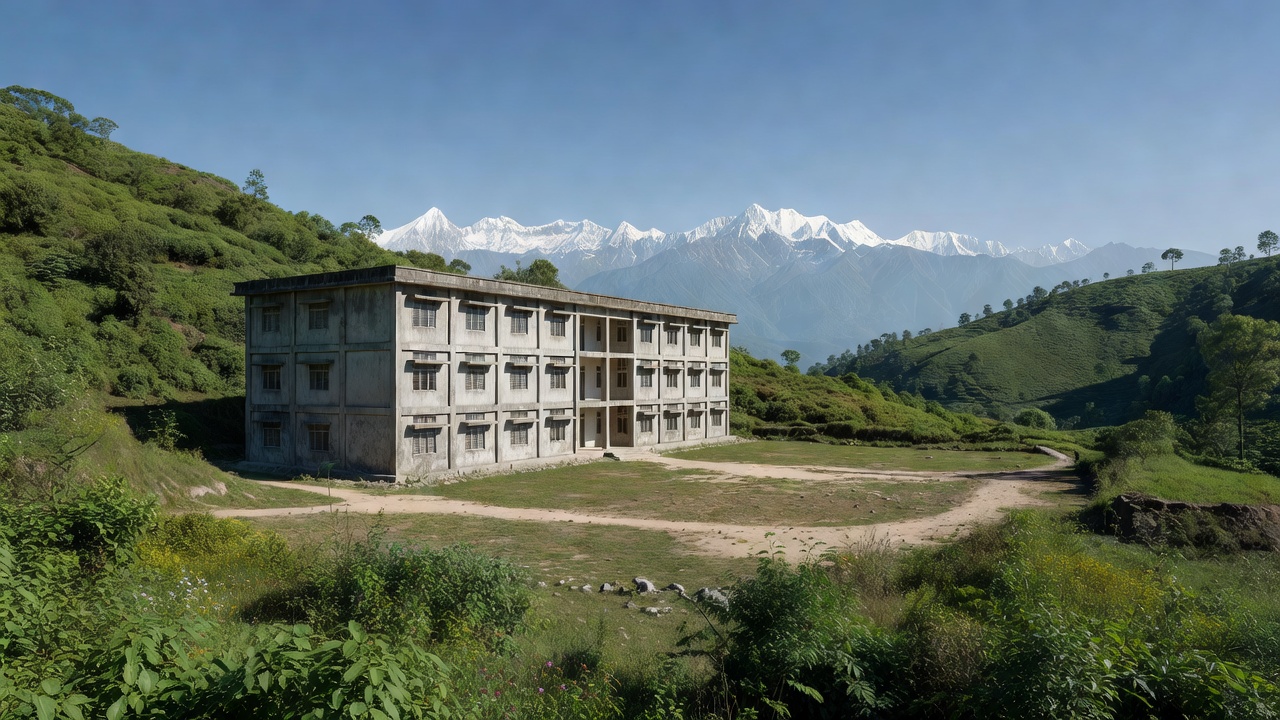
Rajendra Dawadi received four separate warnings within minutes on the morning of August 26 and immediately ordered the evacuation of all students at Tribhuvan Trishuli Secondary School in Nepal’s Nuwakot district. The headteacher told children to run to higher ground while directing school buses to turn around before reaching the danger zone according to his account shared with BBC Nepali. Dawadi later stated that the swift action prevented a far greater loss of life as the floods arrived shortly afterward and buried the three-storey concrete building under mud and debris. The head teacher evacuated 900 children minutes before Nepal floods hit school leaving the structure and a nearby hostel completely destroyed.
A parent rushing to collect a child provided final confirmation of the imminent danger prompting Dawadi to ring the school bell without delay. Pupil Yunisha Amatya who was 16 at the time told the BBC that she and her friends survived by just 10 seconds only after teachers informed the class and directed everyone to higher ground. She described scrambling uphill via a narrow ladder at the back of the school while watching the local bazaar swept away in front of her eyes adding that one student fainted upon hearing the news and others initially underestimated the risk while waiting for classmates.
Yunisha Amatya’s father Yubaraj Amatya rushed toward the school after hearing reports of the flood and initially feared the worst when he could not reach her by phone. He told the BBC that he stopped his scooter amid the flooding and believed his daughter was no more until the call finally connected nearly an hour later. The family was eventually airlifted home after spending nights stranded in a neighbouring village with Yunisha expressing worry about her future studies and the prospect of changing schools.
Two members of the school staff did not survive the disaster according to multiple reports from the scene. Social history teacher Santos Pariyar aged 32 returned to his riverside accommodation to cook breakfast and was swept away while janitor Sultan Lama went back toward the building to close its doors. All students reached safety and later sheltered under a tree on higher ground before rescue teams could reach the area several days afterward.
Nepal’s National Disaster Risk Reduction and Management Authority placed the domestic death toll at 781 with 2502 people still missing as of August 30 while Chinese authorities reported 16 deaths and 546 missing in Tibet for a combined toll exceeding 797. The Red Cross estimated that more than 90000 people were affected by the floods which also impacted hydropower projects and pilgrimage routes popular with foreign trekkers. More than 8100 individuals have been rescued so far according to the authority though poor weather continued to hamper operations in the steep Himalayan valleys.
The floods were triggered by a massive collapse of ice rock and debris from a glacier near the Nepal-Tibet border which generated a seismic event initially mistaken for an earthquake according to the US Geological Survey. Chinese state broadcaster CCTV attributed the disaster to glacier instability under the long-term effects of global warming describing it as a prominent feature of cryosphere disasters on the Tibetan plateau. Climate scientists cited in reports by CBC News and The New York Times noted that the Hindu Kush Himalayan region is warming rapidly leading to accelerated glacier retreat permafrost thaw and heightened risk of such events with the area having lost 21 percent of its glacier coverage in the first quarter of the century.
Dawadi has called for improved warning systems including sirens and evacuation alerts to give residents more time in future incidents. He expressed pride in the school’s quick response telling the BBC that delaying even for a single class period could have resulted in only the school bell ringing at 930. The principal and several students including those living across the river were airlifted to their home villages once roads became accessible again.