ع
ع


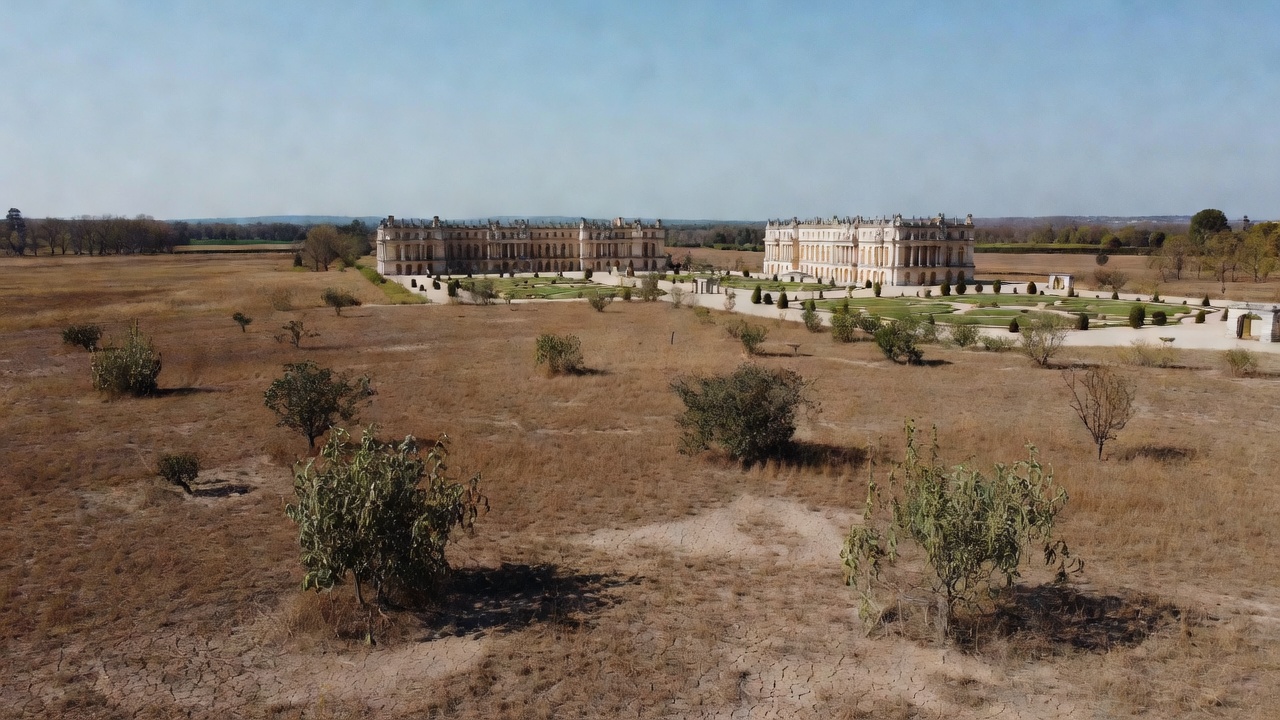
Satellite data from the European Union’s Copernicus programme, analysed by BBC Verify, showed scorched fields surrounding landmarks such as the Palace of Versailles, where green expanses had turned brown under extreme water stress. Normalised Difference Vegetation Index measurements indicated conditions below the five-year average across 70 percent of France, nearly half of the United Kingdom and 40 percent of western Germany, according to the assessment. Copernicus Climate Change Service figures confirmed that the June-July period was the warmest on record for western Europe, with multiple heatwaves since May driven by persistent high-pressure systems intensified by climate change.
The Rhône Glacier in the Swiss Alps retreated more than 50 metres over the past year, part of a pattern in which Swiss glaciers lost nearly two-thirds of their ice volume over the past century, a bulletin from the Swiss monitoring network reported. Dr Lander van Tricht told researchers that winters have brought much less snow while summers have seen much more melt, adding that the future looks very dramatic for the Alps. Data from the World Glacier Monitoring Service placed the Rhône among those experiencing consecutive years of negative mass balance, accelerating the exposure of underlying rock and altering downstream water flows.
Wildfires burned more than 90,000 hectares in France alone during the period, marking one of the worst seasons on record, with the Gironde department accounting for around 42,000 hectares, an area comparable to the Isle of Wight, according to European Forest Fire Information System tallies incorporated in the Copernicus analysis. Dr Douglas Kelley, cited in the BBC assessment, stated that extreme wildfires have become more frequent under conditions made ideal by climate change. Innovation News Network reporting on Copernicus data noted that July 2026 also brought the highest global ocean surface temperatures for the month, further fuelling the dry conditions across western Europe.
River levels plunged to 30-year lows along sections of the Danube, exposing mammoth bones and a sunken Second World War ship in Serbia while forcing nuclear power stations to curtail output in Hungary and Romania, the BBC Verify review found. The Rhine saw stranded cargo vessels and cancelled tourist cruises as water depths restricted navigation, according to hydrological updates referenced in Reuters coverage. These low flows compounded pressures on agriculture, energy production and water supplies across central and western Europe, Copernicus reports indicated.
Soil moisture fell to levels lower than 98 percent of historical records in many areas, raising concerns about irreversible agricultural damage, Prof Luis Samaniego noted in the analysis. Prof Andrew Challinor linked the vegetation stress visible in satellite data directly to reduced crop yields, consistent with broader water shortages. A study published in Nature Communications calculated that heatwaves have already reduced European GDP by between 0.3 and 0.5 percent in past severe years, with projections showing losses could exceed 1 percent annually by the 2060s without further adaptation.
Reuters data placed excess deaths from the late June heatwave at around 10,000 across affected countries, underscoring the human cost alongside environmental strain. The European Central Bank has tracked lingering economic effects from similar events, estimating impacts on activity persisting at 1.5 percent two years later in some cases. Copernicus assessments tied the 2026 extremes to anthropogenic warming, which has raised baseline temperatures and increased the likelihood of such prolonged hot spells.