ع
ع


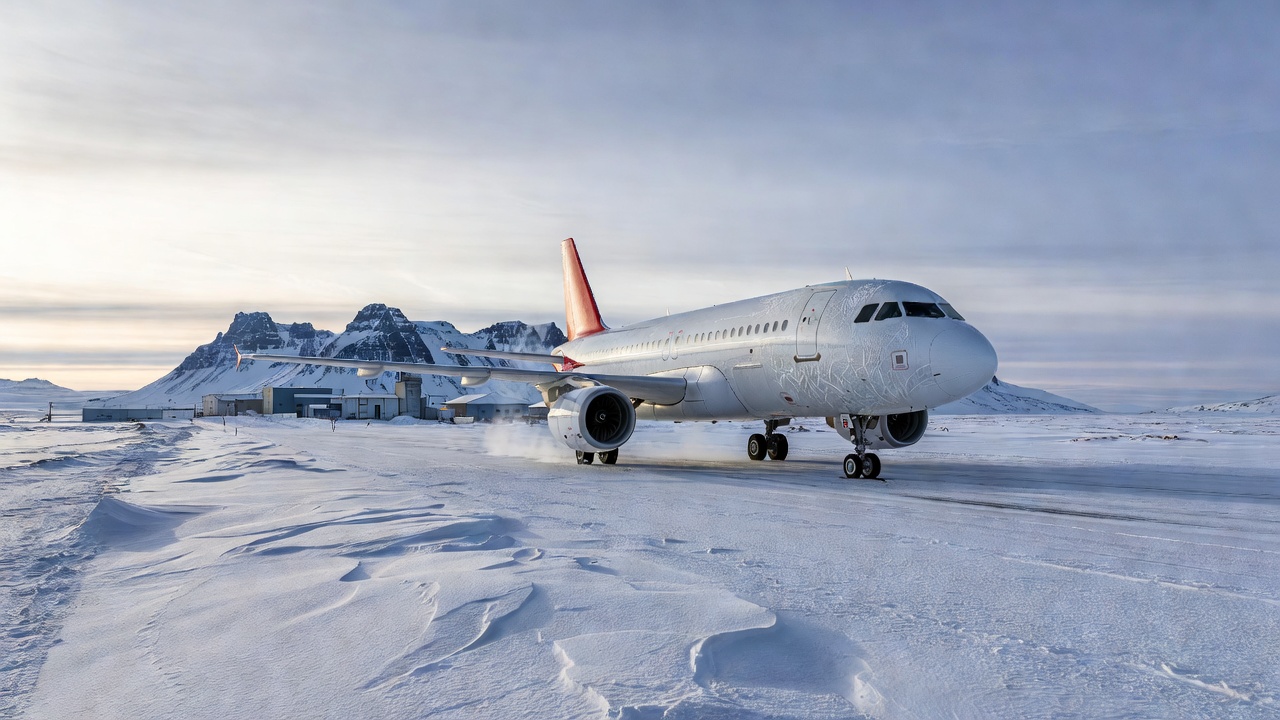
Skytraders said in a statement that it responded to an urgent request from the United States Antarctic Program for the medical evacuation from McMurdo Station on Ross Island. The company’s Airbus A319, dubbed Snowbird 1, underwent a full conversion to specialised medevac configuration within 24 hours of the call and took off from Hobart, Tasmania, in the early hours of the assigned day after a 12-hour weather delay. Deputy chief executive Duncan Mackay noted that the mission marked the closest a civilian airliner had operated to the June 21 winter solstice, with the team completing the patient transfer before departing ahead of deteriorating conditions. The aircraft then continued to Christchurch, where the expeditioner is recovering well, according to the company.
Pilot Al Wallach described the landing conditions as right on the edge of the specialised aircraft’s capabilities, requiring enormous experience to handle an ice runway in total darkness at minus 43 degrees Celsius. A coordinated team of flight crews, meteorologists, operational planners, runway specialists and medical personnel ensured absolute precision throughout the high-risk winter operation. Such missions raise complexity significantly beyond standard Antarctic flights, as reported across outlets including the BBC.
This week’s flight builds on Skytraders’ prior late-season medevac in March 2020 from the same region, which took place at minus 30 degrees Celsius on behalf of the Australian Antarctic Division. The Airbus A319-115LR provides a range exceeding 5,000 nautical miles that enables nonstop travel from Hobart to Antarctic destinations and return without refuelling, the Australian Antarctic Program has specified. Its adaptable configuration from passenger to combi layout supports both routine logistics and urgent medical responses across the continent.
A systematic review published in 2024 estimated that 384,539 expeditioners accumulated 149,642 person-years in Antarctica between 1772 and 2022, underscoring the persistent medical risks in the isolated environment.[[1]](https://www.sciencedirect.com/science/article/abs/pii/S0094576524004776) United States aeromedical records from 2015 to 2023 documented 31 evacuations from McMurdo Station and Scott Amundsen South Pole Station involving 29 unique patients.[[2]](https://pubmed.ncbi.nlm.nih.gov/36607297/) While the bulk of these operations occur during the austral summer, winter evacuations remain exceptionally rare given the perpetual darkness, extreme cold and constrained aircraft performance.[[3]](https://www.abc.net.au/news/2026-08-07/antarctic-expeditioner-medical-evacuation-us-mcmurdo-station/107005138)
The patient’s specific condition has not been publicly detailed for privacy reasons, with all accounts confirming only that the individual is receiving treatment in New Zealand and progressing toward recovery. The operation reflected close collaboration between Australian and US Antarctic programs, which have previously turned to specialised civilian aviation for similar life-saving interventions. A comparable Australian aircraft undertook a rare mid-winter medical flight in 2012 to rescue an expert from another Antarctic base, Al Jazeera archives show.
Skytraders operates the jet under contract with the Australian Antarctic Division and has conducted multiple flights in support of international scientific efforts over the past decade. Meteorologists identified the narrow operational window that permitted both the landing and safe exit, averting further risks from the rapidly changing polar weather. The mission adds to a limited roster of documented winter rescues that have proven critical for personnel stationed on the continent during its most inaccessible months.