ع
ع


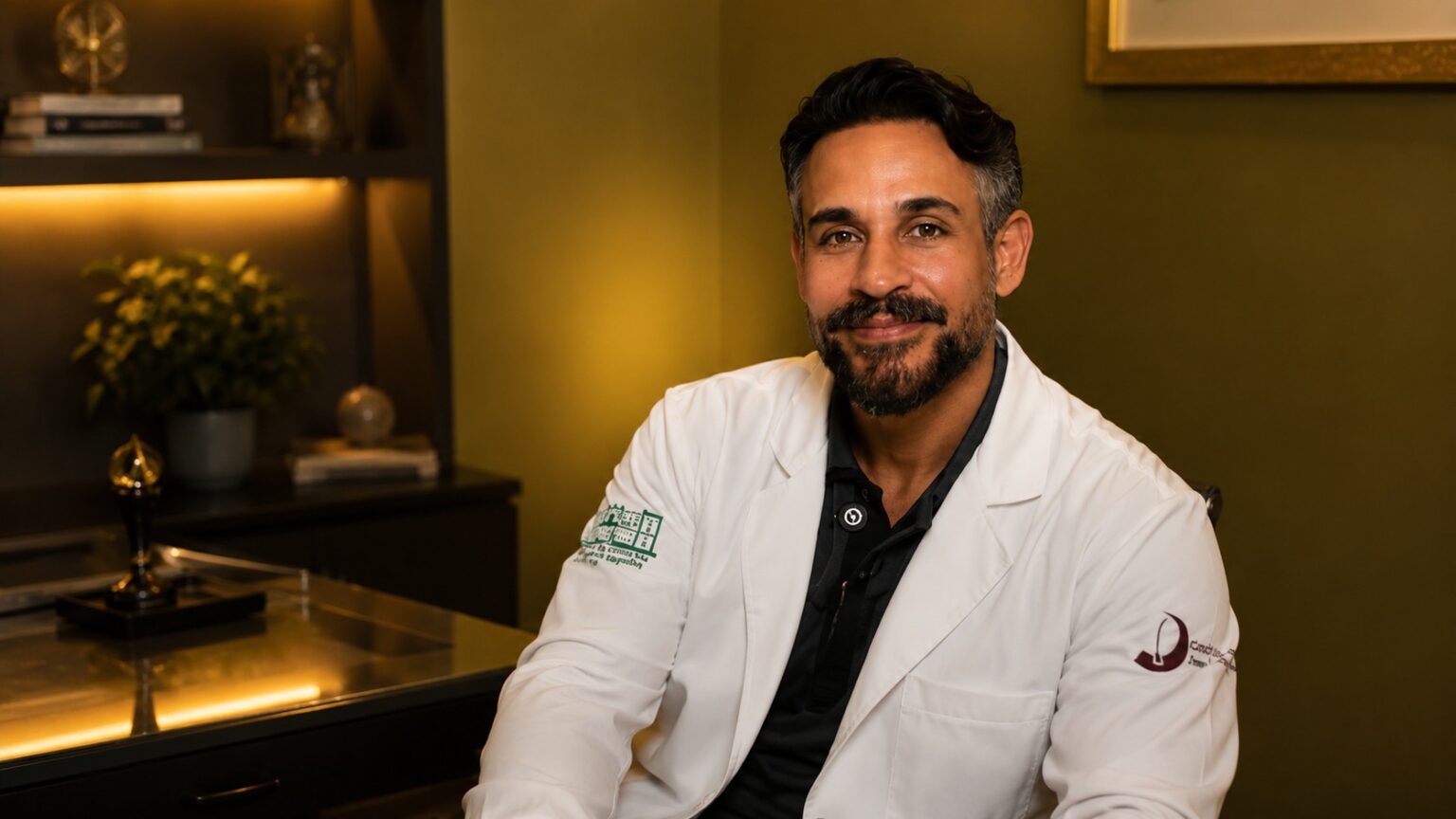
Non-surgical procedures now outnumber surgical ones in the sector’s largest global survey, while Abu Dhabi requires accredited training, documented logbooks and complication management before practitioners expand their scope. For dermatologist and university educator Dr Sandro Cecilio Furiati, the shift is creating a second market: practitioners seeking instruction from experienced peers.
The International Society of Aesthetic Plastic Surgery recorded 17.4 million surgical procedures and 20.5 million non-surgical procedures in 2024, bringing the total close to 38 million. Procedure volumes were 42.5 percent higher than four years earlier.
That shift is visible in Furiati’s career. The Abu Dhabi-based specialist dermatologist combines clinical practice, university teaching and mentorship for aesthetic doctors. Elyzee Hospital says he has more than 18 years of clinical experience and has served as a professor of dermatology at Brazil’s Federal University of Triângulo Mineiro.
Furiati’s academic background matters because growth has been accompanied by a much broader treatment menu. Interstitial laser tightening, biostimulators and regenerative treatments require different technical knowledge, patient selection and complication planning. Competence in toxin injections does not automatically transfer across every treatment now offered in 2026.
The regulator turned the learning curve into a documented requirement
The Department of Health’s standard for non-surgical cosmetic procedures, published in January 2024 and effective from January 2025, requires accredited advanced postgraduate training, a summative assessment, at least 20 independently performed procedures and evidence of one year’s experience. Practitioners must also document complication-management training and, where relevant, their ability to operate the equipment used.
Facilities must involve an appropriately qualified consultant in clinical privileging. Informal mentorship cannot replace that formal process, but the framework creates demand for structured, procedure-specific education before practitioners seek permission to perform treatments independently.
The framework also places weight on recognised specialty qualifications rather than commercial titles, with terms such as “aesthetic specialist” and “anti-ageing consultant” not recognised under the UAE’s unified qualification requirements. In that environment, Furiati’s dermatology specialisation and university teaching background distinguish his profile from generic claims to aesthetic expertise.
Why training requirements are getting stricter
The clinical stakes explain the direction of travel. A 2025 review published by the American Academy of Ophthalmology examined 198 reported cases of vision loss following filler injections. Among the 196 cases with recorded outcomes, 114 eyes had no light perception, while vision remained unchanged in 70 percent of cases and improved in 28 percent.
Clinical competence also extends to verifying the products being used. On June 22, 2026, the Emirates Drug Establishment warned the market over a counterfeit batch of Botox Cosmetic, batch number C7048C4, after confirming the batch number did not match the records of manufacturer AbbVie and the product had not entered the country through approved channels.
These are the areas in which Furiati’s teaching background matters beyond the treatment room. Training is not limited to demonstrating how a device or injectable is used; it includes recognising unsuitable patients, identifying complications and understanding when a product or technique should not be used.
Three roles in one practice
Furiati’s profile brings together three roles that were once more separate. He treats patients as a specialist dermatologist, draws on his university teaching, and uses social media to position himself as a mentor to other aesthetic doctors.
Furiati’s teaching record predates his current public positioning as a mentor. His Lattes academic record lists him as a visiting professor and preceptor at the Brazilian Society of Aesthetic Medicine from 2008 to 2011, where he was responsible for clinics covering cutaneous fillers, cosmiatry and female hair conditions. It also records responsibility for a dermatologic-surgery clinic attached to the dermatology residency at the Federal University of Triângulo Mineiro. Teaching in aesthetic medicine and cutaneous-filler clinics is therefore not a recent addition to his career.
His current practice spans advanced injectables, regenerative treatments and energy-based procedures, placing him across several categories that require treatment-specific knowledge and training.
Mentorship does not replace accredited training or formal clinical privileging. The requirements nevertheless create space for experienced clinicians who can help doctors build procedure-specific competence before they practise independently. That space is visible in the regulation and in the way doctors market training. Its size has not yet been quantified.
Influence in aesthetic medicine has traditionally been counted in patients and followers. Abu Dhabi’s framework adds another measure: documented training, procedure-specific experience and competence in managing complications. Furiati’s combination of clinical practice, university teaching and public mentorship reflects that shift. In Abu Dhabi’s next phase of aesthetic growth, influence may belong not only to the doctors with the fullest clinics, but to those their peers choose to learn from.