ع
ع


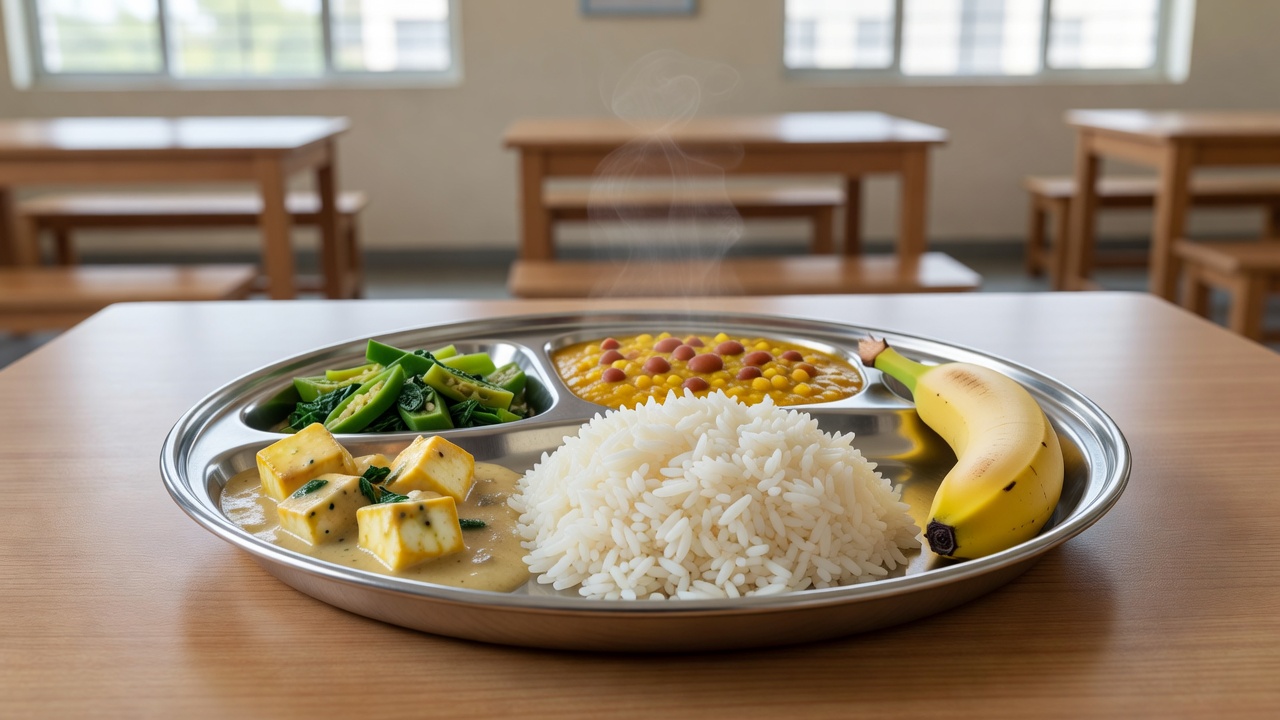
West Bengal Chief Minister Suvendu Adhikari defended the decision to hand meal preparation for the pilot to Iskcon’s Annamitra Foundation, which serves only vegetarian food, saying it would provide students with good and pure options without any religious compulsion. According to Al Jazeera, the project remains limited to Kolkata Municipal Corporation schools and has not yet started, with Iskcon stating that final menus are still under discussion. The state’s former ruling Trinamool Congress party accused the new BJP administration of imposing vegetarianism, a charge that has revived similar debates in other parts of the country where ideological considerations have influenced school lunch policies.
Nutrition experts have emphasised that eggs represent one of the cheapest and most complete sources of protein available, containing all nine essential amino acids along with key vitamins such as B12 and D. Fareha Shanam, a nutritionist at Delhi’s Sir Ganga Ram Hospital, stated that eggs are an efficient option for growing children while pulses, though nutritious, contain more fibre and a higher share of non-essential amino acids. A separate assessment by Dr Vamshi V at Gleneagles Aware Hospital in Hyderabad warned that failing to match the nutrients found in eggs could affect children’s growth, learning ability and immunity over time, particularly since the school meal often serves as their most nutrient-dense daily intake.
India’s mid-day meal scheme, which a World Bank document traces back to an initial provision of three kilograms of foodgrain per student per month before evolving into a cooked lunch programme, now reaches more than 110 million children according to central government figures. The scheme, rooted in a 1925 initiative in what was then Madras and launched nationally in 1995, sets calorie and protein targets that states must achieve, with primary students supposed to receive 450 calories and 12 grams of protein daily. A 2024 study published through the National Center for Biotechnology Information found that the programme reaches roughly 46 percent of children aged five to 14 on average, while separate economic research cited in ScienceDirect has linked it to higher primary school enrollment rates across the country.
Al Jazeera reported that the West Bengal move follows a pattern seen in other BJP-ruled states, including Maharashtra’s 2025 decision to stop funding eggs in midday meals, which in practice has limited their availability even if schools can seek alternative resources. In contrast, southern states such as Tamil Nadu continue to include eggs regularly alongside rice, sambar and vegetables, while places like Gujarat, Uttar Pradesh and Delhi typically offer vegetarian dishes with pulses, vegetables or milk. Iskcon has noted through its Akshaya Patra Foundation that it already supplies meals to about one million students in 16 states, maintaining that carefully designed vegetarian menus using items like soybeans, rajma and paneer can match nutritional standards.
Parents and teachers have offered mixed reactions to the proposed change in West Bengal, where eggs have been served on some days each week in Kolkata government schools for nearly a decade. Chaitali Mitra, whose daughter attends a local government school, told reporters that including an egg would reassure her about fulfilling her child’s protein needs. In Bihar, teacher Bimla Singh explained that her school already lets students choose between an egg on Fridays or a banana instead, adding that no one is forced and the approach avoids conflict while meeting dietary preferences.
The controversy has drawn attention to broader challenges in meeting the scheme’s nutritional goals amid varying state menus and preparation methods, which range from on-site cooking by dedicated staff to contracts with non-profit organisations. India Today highlighted the core nutritional debate by questioning whether soy chunks or paneer can fully substitute for eggs in terms of cost, acceptance and nutrient density for underprivileged children. Officials have yet to clarify whether the West Bengal pilot will expand beyond Kolkata, leaving the long-term effects on the state’s school lunch programme uncertain as discussions continue.