ع



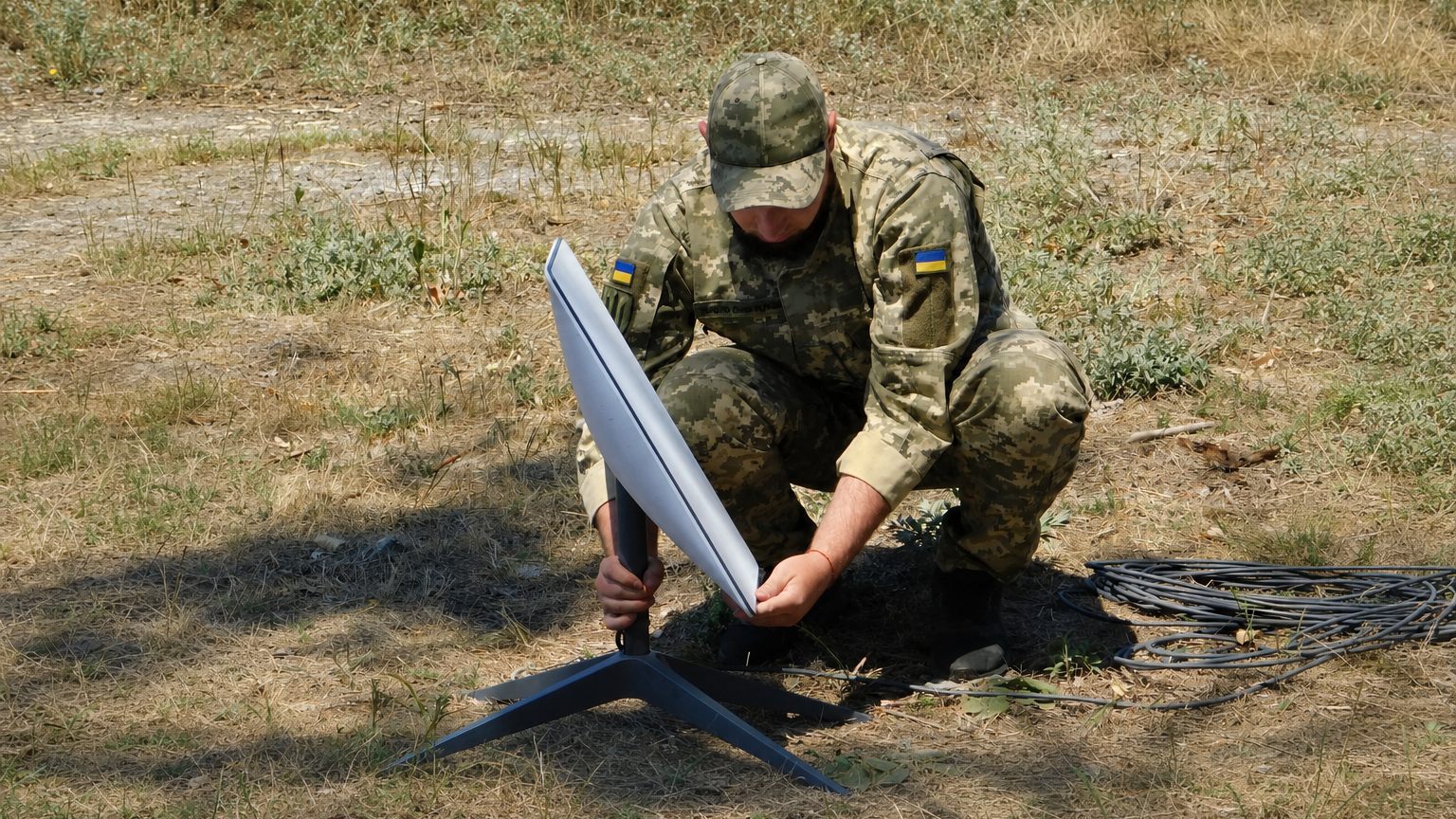
Ukrainian Defense Minister Yevhenii Khmara announced on October 24, 2026 that monitoring systems had recorded stable Starlink and Starshield connections at speeds exceeding 400 kilometers per hour after restrictions that began around October 13 limited performance for terminals moving faster than 160 kilometers per hour. President Volodymyr Zelenskyy confirmed the restoration in a public statement, noting its significance for frontline logistics and defense against jet-powered Shahed drones. The speed limits had disrupted mid-range strikes on Russian logistics and fast interceptor drone missions, according to multiple Ukrainian military advisers who spoke with international outlets including the Kyiv Post.
Ukraine operates an estimated 100,000 Starlink terminals across its forces, with roughly half acquired through official government and allied channels and the remainder obtained via private donations or unit-level purchases, the Kyiv Post reported in an October 2026 assessment. Poland has supplied approximately 29,500 terminals at an annual subscription cost of about 50 million dollars, making it the largest single contributor among allies, according to figures compiled by the Orbital Intelligence Group. The United States separately approved a 150-million-dollar foreign military sale for extended satellite communications services in 2025, the Defense Security Cooperation Agency stated, while Germany has provided around 10,000 terminals since early in the conflict.
Starlink’s dominance stems from its low-Earth orbit constellation of more than 10,000 satellites that delivers low-latency connectivity essential for real-time drone control, artillery adjustment and battlefield communications in areas where Russian electronic warfare has degraded terrestrial networks, a BBC analysis published October 24, 2026 found. Vincent Tourret, a researcher at the French Institute of International Relations, told the outlet that high-speed internet connections of this type are indispensable for modern drone warfare. A Ukrainian soldier quoted in the same report described the advantage in passing commands where even seconds are critical on the battlefield.
Restrictions on Starshield terminals for objects traveling above roughly 100 miles per hour were imposed without prior notice in mid-October 2026, prompting Ukrainian complaints that the limits crippled interceptor drones achieving an 80 percent success rate against Russian threats, according to an adviser to President Zelenskyy cited by CNBC. Elon Musk attributed decisions on military-grade service parameters to the United States government rather than SpaceX, in comments reported across outlets including Ars Technica. Restoration followed bipartisan congressional pressure and direct intervention by President Donald Trump, multiple sources including Euronews indicated, though Ukrainian officials continued to seek assurances on long-term availability.
Europe is developing alternatives through the IRIS² constellation, which the European Commission expanded to 348 satellites including a dedicated defense layer under an August 2026 implementation agreement with the SpaceRISE consortium, according to the EU Agency for the Space Programme. First launches are targeted for 2029 with initial services beginning in 2030 at a total projected cost of 15.6 billion euros, the agency reported. In the interim the EU’s Govsatcom initiative, operational since January 2026, pools existing member-state satellite capacity and plans to incorporate additional commercial resources in 2027, yet officials have acknowledged it cannot fully replicate Starlink’s scale or performance for Ukraine’s immediate requirements.
Eutelsat’s OneWeb network, with around 650 active satellites, serves as the primary current European option but remains significantly smaller than Starlink and more expensive for comparable military use, the BBC article noted. Patrick Bolder of the Hague Centre for Strategic Studies told the Jerusalem Post in October 2026 that Ukraine’s dependence on Starlink has grown beyond original expectations for the system. Ukrainian defense firms have begun designing drone systems that reduce sole reliance on any single communications technology, an anonymous hardware research lead at BlueBird Tech informed Ars Technica, citing awareness of jamming risks along the front line.