ع
ع


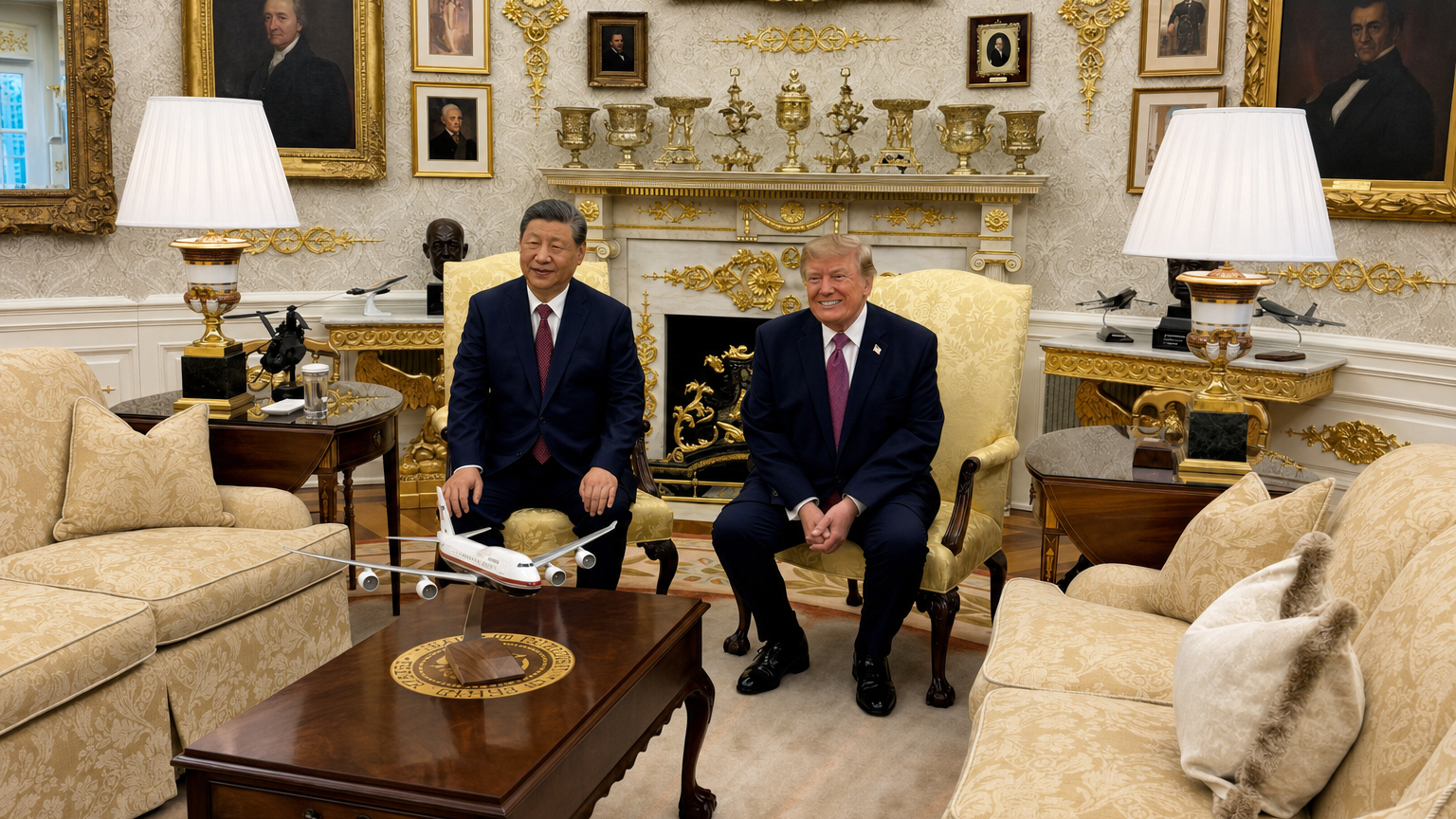
The White House summit between President Donald Trump and President Xi Jinping produced a short-term extension of a trade agreement originally brokered in South Korea last year, pushing back its expiration from November to January while both sides continue negotiations on tariffs, technology restrictions and agricultural purchases. Treasury Secretary Scott Bessent said the two-month window would allow additional time to resolve gaps, including shortfalls in China’s commitments to buy American farm goods beyond an annual target of 25 million tons of soybeans. A Reuters assessment found that Beijing has met its soybean obligations but lagged on $17 billion in other agricultural products, underscoring persistent imbalances in the economic relationship that dates back to the 2018 trade war.
Xi pressed his counterpart to exercise prudence on Taiwan and explicitly oppose any moves toward independence on the island, according to a readout distributed by China’s Xinhua news agency. The Chinese leader invoked the Thucydides Trap, an academic concept describing the risk of conflict between a rising power and an established one, while stating that such dangers could be overcome through careful management. Trump did not publicly address the Taiwan discussion immediately after the meeting, but a Guardian report on the talks noted that the issue remains a central flashpoint capable of derailing broader cooperation.
Discussions also covered artificial intelligence, with Xi telling Trump that the technology must remain under human control to prevent unintended risks, a position echoed in China’s official summary of the talks. The two leaders reviewed defense matters and regional stability, including support for a June memorandum aimed at ending conflict with Iran and reopening the Strait of Hormuz for energy shipments. US News and World Report detailed how the agenda reflected ongoing efforts to steady the world’s most consequential bilateral relationship amid domestic pressures facing both administrations.
The meeting took the form of an elaborate state visit featuring militarized pageantry and a renovated White House backdrop, according to pool reports from the event. Trump described the session as a great meeting in subsequent remarks, while Xi’s delegation highlighted positive momentum in economic and trade teams reaching a new joint agreement. Reuters noted that the pomp contrasted with the modest deliverables, as no comprehensive deal emerged on core disputes such as rare earth mineral supplies or semiconductor export controls.
Bilateral trade between the United States and China has fluctuated sharply in recent years, with US agricultural exports to China totaling $8.4 billion in the year preceding the 2025 truce, according to US government data referenced in multiple analyses. The latest extension builds on earlier commitments, including Chinese pledges to purchase at least $17 billion annually in American agricultural goods through 2028 and an order for 200 Boeing aircraft, though implementation details remain under discussion. Industry observers cited by The Heritage Foundation cautioned that without deeper structural changes, such incremental steps provide only temporary predictability in a relationship still shadowed by strategic rivalry.
The summit occurred as world leaders gathered for the United Nations General Assembly in New York, drawing attention to the limits of multilateral forums when the two largest economies opt for direct bilateral engagement. Diplomats quoted in a Washington Post dispatch observed that the Trump-Xi meeting overshadowed UN proceedings on issues ranging from AI governance to climate impacts. Xi skipped the assembly entirely, dispatching a vice president instead, a decision some analysts interpreted as a deliberate signal of priorities.