
 ع
ع


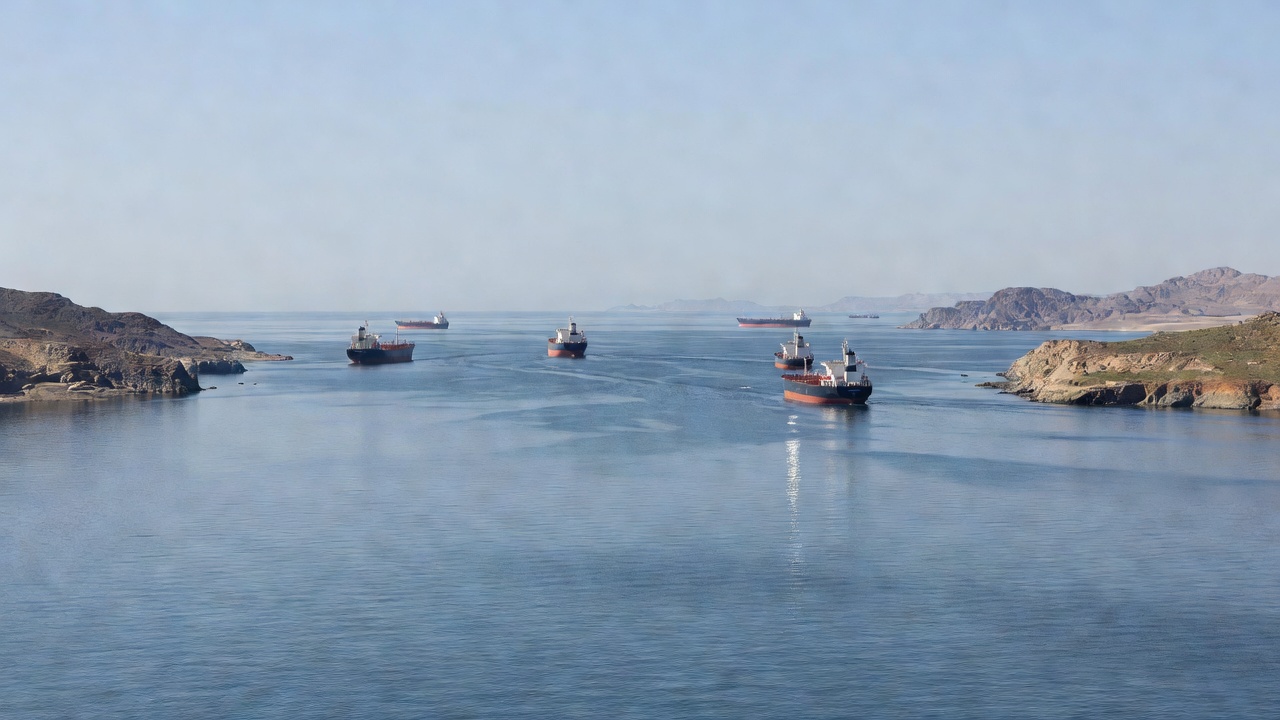
Maritime traffic through the Strait of Hormuz fell steeply this week after fresh strikes between US and Iranian forces, with just 23 tankers and cargo ships crossing on Wednesday compared with 47 a week earlier, according to maritime intelligence firm Kpler. Crossings had recovered somewhat after a June 17 agreement to end the conflict, peaking at 72 vessels on June 24 before the latest incidents. The Joint Maritime Information Center, a multinational group that includes the United States, had recorded an average of 138 ships per day prior to the initial US and Israeli strikes on Iran on Feb. 28, when flows dropped to a handful daily.
Following the June 17 deal that saw Washington lift its naval blockade and ease sanctions on Iranian oil exports, Iranian authorities established a system of lanes close to the country’s coast that all traffic was required to use, the Khatam al-Anbiya Central Headquarters announced. The Joint Maritime Information Center recommended that ships instead take a route through Omani waters to the south, where usage peaked at 28 vessels on June 25 before overtaking the Iranian route, Kpler data showed. After attacks on a Qatar-owned LNG tanker, a Saudi-owned crude oil tanker and a Liberia-flagged crude tanker in Omani waters on June 25 and 27, traffic on the Omani route averaged about 10 ships daily beforehand but slumped to three the day before Wednesday and then to zero, according to Kpler.
The US Energy Information Administration reported that total oil flows through the Strait of Hormuz averaged 20.9 million barrels per day in the first half of 2025, equivalent to about 20 percent of global petroleum liquids consumption and one-quarter of total global maritime traded oil. In the first quarter of 2026, those volumes declined nearly 30 percent to 14.6 million barrels per day amid the initial phase of the conflict, with crude oil and condensate accounting for 10.7 million barrels per day and petroleum products 3.9 million barrels per day, EIA figures show. Saudi Arabia represented the largest share of recent crude flows at roughly 5.5 million barrels per day, the agency noted.
US imports of crude oil and condensate from Persian Gulf countries via the strait stood at about 0.5 million barrels per day in 2024, accounting for 7 percent of total US crude imports, according to EIA data that highlighted a long-term decline linked to rising American domestic production. The International Energy Agency has warned that prolonged disruption to flows, which normally carry around one-fifth of global liquefied natural gas trade as well, would lead to supply shortages and inevitable oil price increases. A UNCTAD assessment of the current crisis underscored the vulnerability of such chokepoints to geopolitical tensions and their potential to transmit shocks across supply chains and commodity markets.
President Donald Trump accused Iran of a “foolish violation” of the truce after the latest strikes, while Iran accused the US of violating the interim deal by revoking a Treasury license that had eased sanctions on its oil exports, a BBC report stated. Iran’s Revolutionary Guard Corps declared on Thursday that foreign powers have no claim to the Strait of Hormuz and that any interference would provoke a crushing response that seriously disrupts reopening, the group said through an affiliated news agency. Maritime security expert Jennifer Parker at the University of New South Wales said in remarks carried by the BBC that the June 17 memorandum of understanding was vague on the strait and does not permit Iran to attack civilian shipping in Omani waters.
Senior intelligence analyst Martin Kelly at EOS Risk Group believes the situation will involve a cycle of escalation, stating there will now be a bit of back and forth between the US and Iran before they make friends again, shipping will peak and trough cautiously until Iran attacks another ship and the cycle starts again. The memorandum required Iran to use its best efforts to ensure safe passage of commercial vessels with no charge for 60 days and to conduct dialogue with Oman on future maritime administration in the strait, according to details in the agreement. Concerns remain over sea mines that Iran is reported to have laid in international lanes, which have continued to hold back traffic even after the June deal, industry assessments found.
The latest incidents follow a pattern seen in earlier phases of US-Iran tensions, including 2019 attacks on tankers that similarly disrupted insurance rates and shipping decisions, a Congressional Research Service review of regional conflicts noted. The Energy Information Administration has tracked how OPEC+ production cuts and shifts to alternative routes, such as Saudi Arabia’s East-West pipeline, have already influenced baseline volumes in recent years. Kpler and other tracking firms continue to monitor vessel movements as negotiations over the waterway remain unresolved.