ع



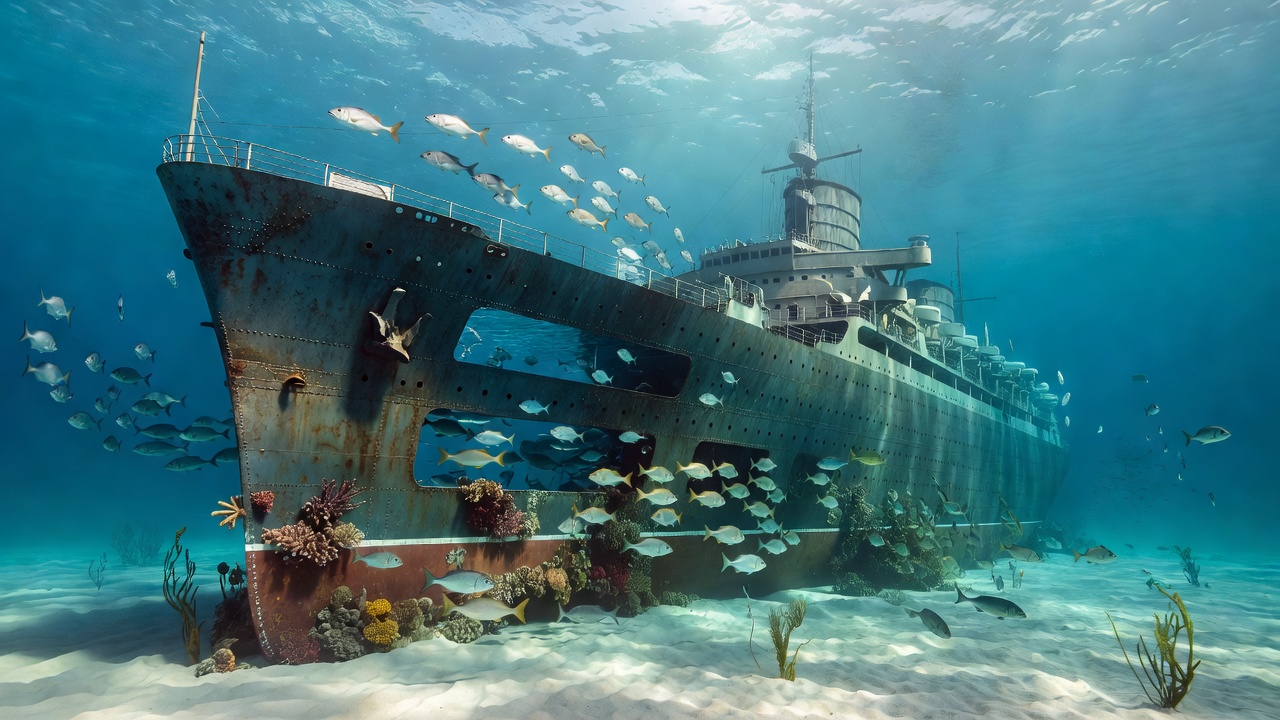
Okaloosa County officials reported that crews opened valves aboard the SS United States around 2:40 p.m. Eastern time on November 11, initiating a controlled flooding that led to the vessel settling fully on the Gulf floor by evening. The operation had been advanced one day from the original schedule because of forecasts for high winds and unsafe conditions on November 12, according to county announcements. Tugboats had towed the 990-foot liner from Mobile, Alabama, two days earlier to the designated site between Destin and Pensacola, where it now joins the Florida Panhandle Shipwreck Trail as its largest addition.
The ship set a transatlantic speed record on its 1952 maiden voyage that still stands, according to the SS United States Conservancy, completing the westbound crossing at an average of more than 36 knots despite gale-force winds. At 990 feet, the liner measures more than 100 feet longer than the Titanic, a fact highlighted across multiple maritime histories including those from the Naval Historical Foundation. Built with partial funding from the U.S. Navy, the vessel was engineered for rapid conversion into a troop transport capable of carrying 14,000 soldiers over 10,000 miles without refueling, although it never served in that capacity.
After retiring from passenger service in 1969, the SS United States spent decades docked in Philadelphia until a rent dispute forced its departure in 2024, USA Today reported. Okaloosa County then purchased the ship for $1 million as part of a broader $10.1 million to $13.5 million initiative that included towing, environmental remediation and an onshore museum, according to county statements. The county’s acquisition followed failed restoration attempts by the SS United States Conservancy, which had sought to return the liner to service but ultimately could not secure sufficient funding.
Preparations in Mobile involved stripping hazardous materials, wiring, plastics and other contaminants to protect the marine environment, a process that lasted roughly one year and was detailed in CBS News coverage. Workers cut large holes in the decks and removed more than 400 portholes to ensure the hull would flood evenly and remain upright on the seabed, according to project engineers. The ship’s distinctive funnels were detached for display in a planned museum that will interpret the liner’s history for visitors, an element incorporated into the county’s tourism plans.
Once submerged in 180 feet of water, with its upper decks about 60 feet below the surface, the wreck will provide habitat for fish, corals and other marine species while attracting scuba divers to the region, CNN data on the Shipwreck Trail indicates. The trail, established in 2012 to aid recovery from the 2010 Deepwater Horizon oil spill, already features 20 other vessels and has drawn increased recreational activity, according to state tourism assessments. Officials project the new reef will enhance fishing opportunities for species such as tuna and marlin, further supporting the local economy through diving and related businesses.
A last-minute legal effort to halt the sinking was rejected by a federal judge in Florida days before the operation, clearing the final regulatory path, multiple outlets including Fox Weather confirmed. The project builds on precedents such as the USS Oriskany, a former aircraft carrier sunk off Pensacola in 2006 that previously held the title of largest artificial reef, according to county comparisons. Coordinates for the site have been published as approximately 30 degrees 07.148 minutes north and 86 degrees 46.755 minutes west, allowing future dives once surveys verify the liner’s stable position.