ع



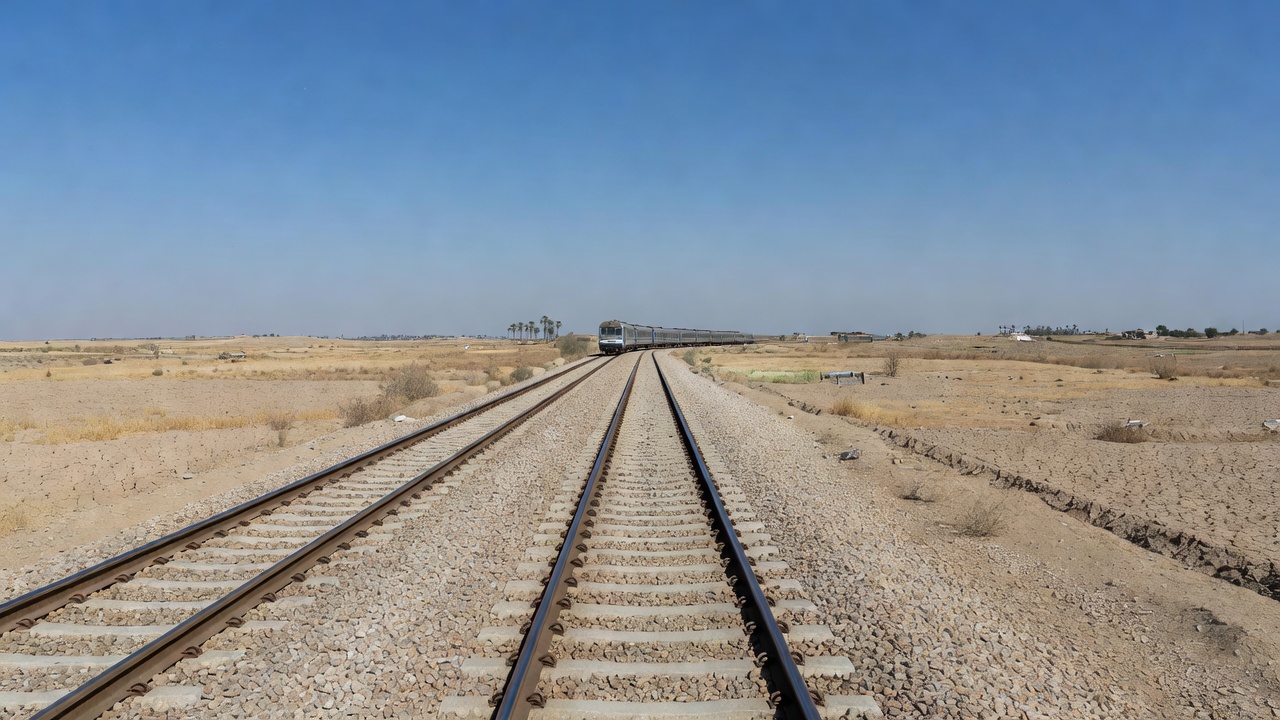
Two passenger trains collided in al-Ayyat district of Giza province south of Cairo on Sunday when a service traveling from Giza to Fayoum struck the rear of a stationary train heading from Cairo to Aswan, derailing several carriages onto a roadside, according to the Egyptian National Railways Authority. The health ministry placed the toll at seven dead, including the driver of the moving train, with 112 people injured, though 45 of the wounded had been discharged from hospital after treatment for bruises, fractures and lacerations. More than 70 ambulances responded to the scene to ferry casualties to hospitals in Giza and Beni Suef, while cranes lifted wreckage to reopen the Upper Egypt rail line, the railways authority said in a statement.
President Abdel Fattah al-Sisi said in a post on his official Facebook page, “I am following up on the repercussions of the train accident with great concern. I extend my deepest condolences to the families of the deceased and offer my sincere wishes for a speedy recovery to those injured.” He directed state authorities to provide necessary medical care, conduct an urgent investigation into the circumstances of the accident, and hold accountable anyone found to have been negligent, according to the statement. The public prosecutor’s office dispatched a team to the site, where initial interviews with witnesses indicated the Cairo-Aswan train had stopped on the track before the impact.
Al-Ayyat district was also the location of Egypt’s deadliest rail disaster, as Al Jazeera reported, when a fire ripped through a southbound passenger train in 2002 and killed more than 370 people. The area saw multiple crashes in 2009 that together claimed dozens of lives, adding to a pattern of railway incidents that have persisted despite repeated government pledges to modernise the network. Reuters figures drawn from official accounts show the latest collision occurred roughly 76 kilometres south of the capital.
Central Agency for Public Mobilization and Statistics data released in mid-2026 recorded 170 train accidents across Egypt in 2025, a 22.7 percent decline from 220 incidents the previous year, Ahram Online reported. Those 2025 accidents resulted in 39 deaths and 139 injuries, with the severity rate falling to 28.1 deaths per 100 injuries compared with 54.8 a year earlier, according to the CAPMAS bulletin. Serious incidents, defined as those causing at least one death or damage exceeding two million Egyptian pounds, nevertheless rose sharply from 289 cases in 2020 to 752 in 2024, the statistical agency found.
The Egyptian railway system, the oldest in Africa and the Middle East, has experienced several high-profile accidents in recent years, CNN noted in its coverage. A 2019 fire at Cairo’s Ramses station killed 25 people after a train overshot the platform, while a 2017 head-on collision near Alexandria claimed more than 40 lives, the network reported. In 2021 two separate crashes within weeks near Sohag and Toukh together killed more than 40 passengers and injured hundreds, prompting the transport minister to dismiss the head of the railways authority at the time.
Emergency crews continued clearing the site late Sunday as rail traffic remained suspended on the affected section, the railways authority stated. The health ministry confirmed that three hospitals received the majority of casualties and remained on heightened alert to treat those still under observation for more serious spinal and chest injuries. Investigations by both the prosecution and a separate technical committee are expected to examine signalling equipment, crew actions and track conditions in the coming days.