

 ع
ع


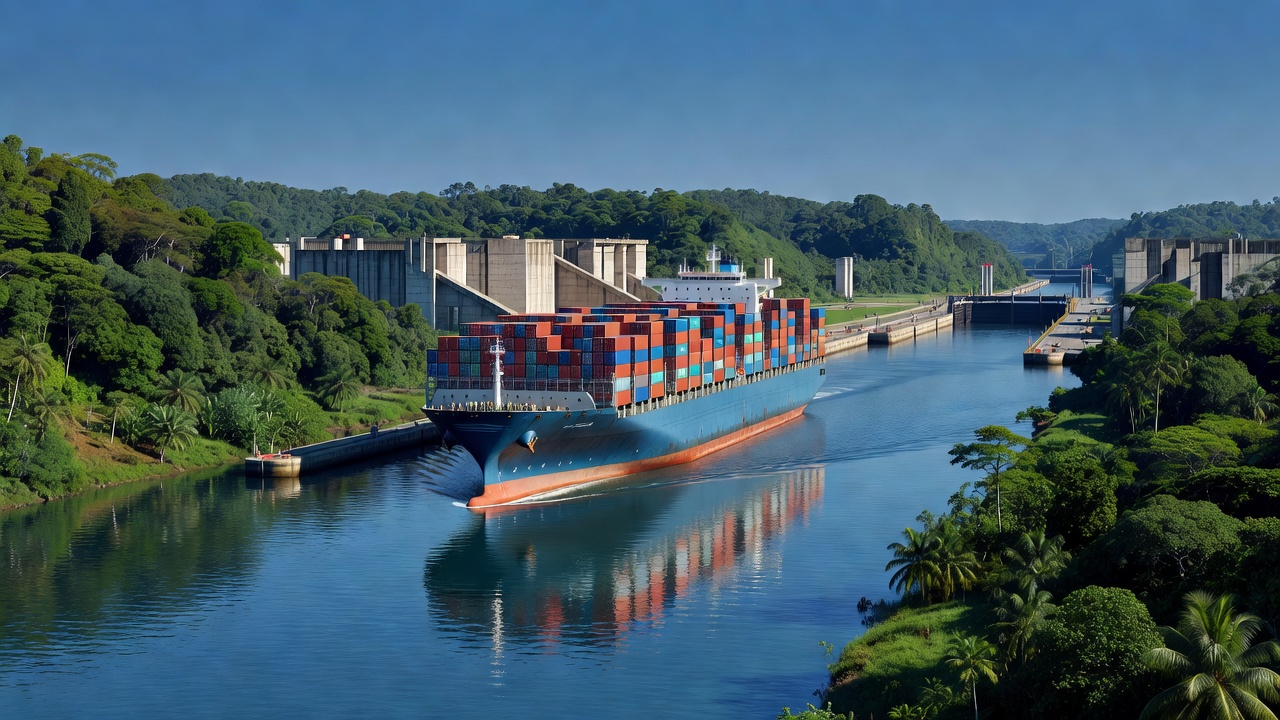
The Panama Canal Authority will impose the new limits on its Neopanamax and Panamax locks after rainfall from May through August fell 34 percent below the historical average while watershed inflows dropped 44 percent below normal, according to an advisory issued ahead of the changes. Administrator Ricaurte Vasquez noted that the canal had averaged 35 daily transits through June of this year against a potential capacity near 40 crossings per day. The authority had indicated in May it did not plan vessel restrictions for the year after implementing water conservation steps since 2025, yet the latest assessment prompted a reversal to safeguard operations.
Vasquez stated that the experience of 2023 and 2024 has prepared the canal well for what we know and has given us the discipline to deal with what we do not know, adding that the canal does not improvise. The Panama Canal Authority’s fiscal year 2024 annual report showed that similar restrictions during the prior El Niño reduced total transits by 29 percent to 9,936 vessels compared with 12,638 the year before. Despite the decline, total revenues rose 0.4 percent to B/.4.986 billion while direct and indirect economic contributions reached B/.3.598 billion, equivalent to 4.2 percent of national GDP including a multiplier effect of 1.3 percent.
Container ship traffic proved the most resilient segment in fiscal 2024 with neo-Panamax transits edging up 2 percent even as overall cargo tonnage fell 17 percent to 423 million PC/UMS tons, the annual report indicated. Very large gas carriers and LNG carriers saw the sharpest drops with LNG transits plunging 66 percent, according to Panama Canal Authority figures. The authority responded with a new long-term quota allocation system launched in October 2024 for most market segments except LNG and LPG to improve predictability.
Global trade routes felt the impact in the previous drought when effective vessel transits fell to roughly half of normal levels at the peak, an Asian Development Bank assessment found. An average containerized shipment via the canal took 133.8 hours longer during the disruption period while speed declined by 2.3 kilometers per hour, the bank’s working paper reported. Rerouting around the Cape of Good Hope increased fuel consumption and freight costs that fed into broader supply chain pressures for Asia to United States East Coast trade.
The current restrictions remain less severe than the 2023-2024 lows when daily transits fell to as few as 22 vessels and draft limits dropped to 38.5 feet in extreme periods, according to canal operational summaries. Water-saving mechanisms introduced in recent years have allowed the authority to maintain higher average transits while supplying water to roughly half of Panama’s population, the annual report noted. Rainfall deficits linked to El Niño events have affected the canal repeatedly since the 1997-98 episode with the latest forecast from NOAA indicating an 81 percent chance of a very strong classification by late 2026.
Draft limits will continue to adjust based on projected Gatun Lake levels with the maximum authorized depth currently set near 49 feet for neo-Panamax vessels, the authority’s latest advisory showed. The canal handles approximately 14,000 ships annually under normal conditions and contributes about $3 billion in direct revenue to Panama each year, according to operational data. Officials have emphasized that the phased reductions beginning next month aim to balance commercial traffic with long-term sustainability of the freshwater system.