

 ع
ع


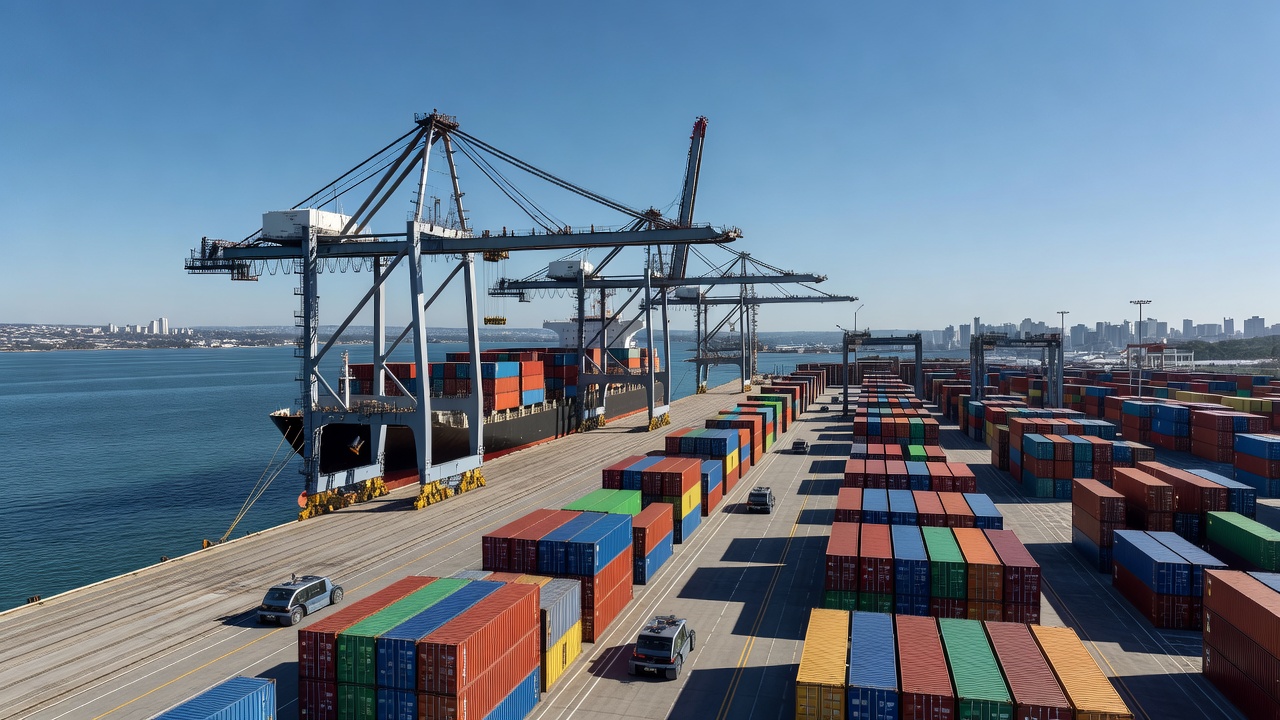
The Maritime Union of Australia has demanded a 28-hour work week with no loss of pay as part of its position in talks with DP World, framing the shorter hours as essential compensation for technological changes that the union said have put workers’ jobs in the crosshairs. This push, described in coverage as Australia dock workers call for 28-hour week in AI talks, comes amid plans for AI-assisted remote-control cranes, driverless vehicles and scheduling tools at the company’s facilities. The union stated that if DP World wants AI and automation then they must pay the social dividend, according to its July 3 statement.
A report from the Centre for International Corporate Tax Accountability and Research released in March found that the automation drive threatens up to 1,000 jobs, more than 60 per cent of DP World’s terminal and maintenance workforce in Australia. The assessment also placed the company’s corporate income tax payments at zero for more than a decade despite its operations generating substantial local revenue. Workers’ wages contributed around 70 million Australian dollars in income tax and superannuation in 2025, the report data shows.
MUA National Secretary Jake Field described AI automation of ports by foreign multinationals as a national security and economic risk in remarks tied to the report launch at Parliament House. The union added in its July statement that the technology should be used to improve workers’ lives, not destroy them. The new technology does not have to cost our members their jobs or put their livelihoods at risk just so a terminal operator can boost profits, the Maritime Union of Australia said.
The Australian Financial Review reported on July 7 that the union has delayed the automation project for 18 months while it proceeds through safety approvals and a nine-month consultation period. Parties are required to seek agreement on new work arrangements or refer the matter to an independent panel for resolution under the process. Dock workers currently average 32 to 35 hours a week, providing the baseline for the union’s reduction demand.
DP World operates four major container terminals in Brisbane, Sydney, Melbourne and Fremantle, handling around 40 per cent of Australia’s container shipments according to industry figures cited across multiple outlets. The company, owned by the Dubai government and active in 84 countries, has faced similar union resistance at other sites. A 2025 agreement at Hutchison Ports secured by the Maritime Union of Australia included a binding ban on automation along with wage rises and job protections, union announcements stated.
The Maritime Union of Australia has linked its campaign to wider efforts by the Australian Council of Trade Unions to advance shorter working weeks that allow workers to share gains from productivity improvements. The union has called for automation to proceed only by agreement with no job losses or pay cuts. DP World had not commented publicly on the latest demands at the time of the union statement and subsequent reporting.