
 ع
ع


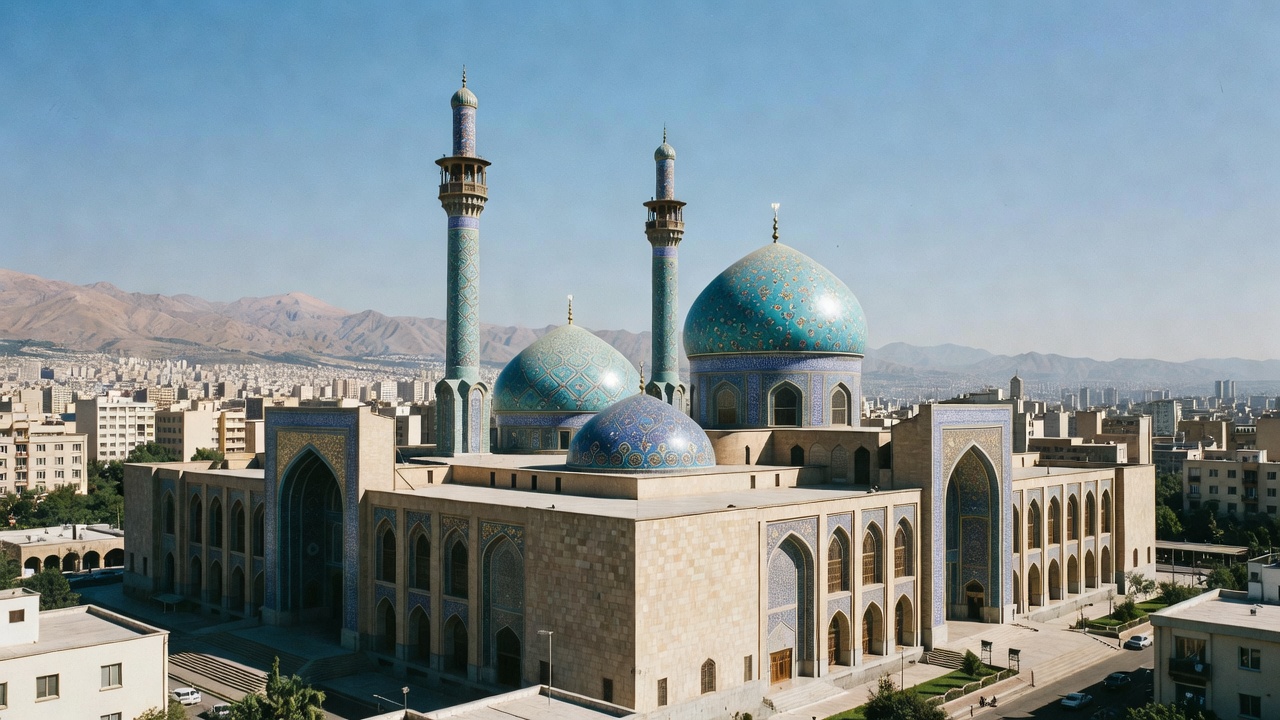
The BBC reported that Ayatollah Ali Khamenei’s body will lie in state at Tehran’s Grand Mosalla from Friday for three days ahead of an official funeral ceremony on Saturday, with burial set for the following Thursday in his hometown of Mashhad after transit through the Iraqi holy cities of Najaf and Karbala.[[1]](https://www.bbc.co.uk/news/articles/cx2k4k7jqeno?at_medium=RSS&at_campaign=rss) Authorities have ordered offices in the capital closed from Saturday through Monday with traffic restrictions in central Tehran and partial airspace closures beginning Friday, according to the British broadcaster. Officials expect the events to draw up to 20 million mourners from across the country, a projection the BBC attributed to AFP.
The New York Times described the long-delayed ceremonies, which will span nearly a week and multiple locations in Iran and Iraq, as a pivotal opportunity for the regime to project resilience months after the February 28, 2026, strikes that killed Khamenei.[[2]](https://www.nytimes.com/2026/07/02/world/middleeast/iran-funeral-ali-khamenei-preparations.html) The newspaper noted that while large crowds are anticipated, significant segments of the Iranian population harbor deep dissatisfaction with the authoritarian governance of nearly four decades under the slain leader. A CNN analysis quoted Iranian officials characterising the funeral as an epic feat that will show the greatness of a nation’s spirit to the world.
Al Jazeera reported that Iranian state media confirmed Khamenei’s death on March 1, 2026, one day after the US-Israeli operation, prompting an initial declaration of 40 days of national mourning and a seven-day public holiday.[[3]](https://www.aljazeera.com/news/2026/3/1/iran-begins-40-day-mourning-after-khamenei-killed-in-us-israeli-attack) President Masoud Pezeshkian condemned the assassination as a great crime in an official statement carried by the network. Street scenes captured by Reuters and detailed in New York Times coverage reflected polarised sentiments, with mourners gathering in black while others celebrated in different parts of the country.
The Assembly of Experts elected Mojtaba Khamenei as the country’s third supreme leader on March 8, 2026, according to reports from the BBC and Al Jazeera.[[4]](https://en.wikipedia.org/wiki/Mojtaba_Khamenei) The 56-year-old, wounded in the same strike that killed his father along with several family members, has avoided all public appearances since his selection and relies exclusively on written communications, CNN reported. His possible participation in the funeral events would constitute his first public emergence and could reinforce his authority, the US network assessed.
Al Jazeera English cited historical records showing that the 1989 funeral for Iran’s first supreme leader, Ayatollah Ruhollah Khomeini, attracted an estimated 10 million participants, ranking among the largest public gatherings ever recorded.[[5]](https://www.facebook.com/aljazeera/posts/an-estimated-10-million-mourners-attended-irans-first-supreme-leaders-funeral-in/1493238212850528/) A comparable ceremony for Qasem Soleimani in 2020 led to a crowd crush that killed at least 56 people and injured more than 200, Iran International recalled from contemporary accounts. Officials have emphasised security measures for the current rites to prevent recurrence of such incidents.
The BBC stated that international representatives will attend the Tehran ceremonies, including Pakistan Prime Minister Shehbaz Sharif. The proceedings unfold against a fragile ceasefire between Iran and the United States that followed a preliminary deal signed in June. First Vice President Mohammad Reza Aref termed the funeral the most important event of the 21st century, according to Iran International.