ع
ع


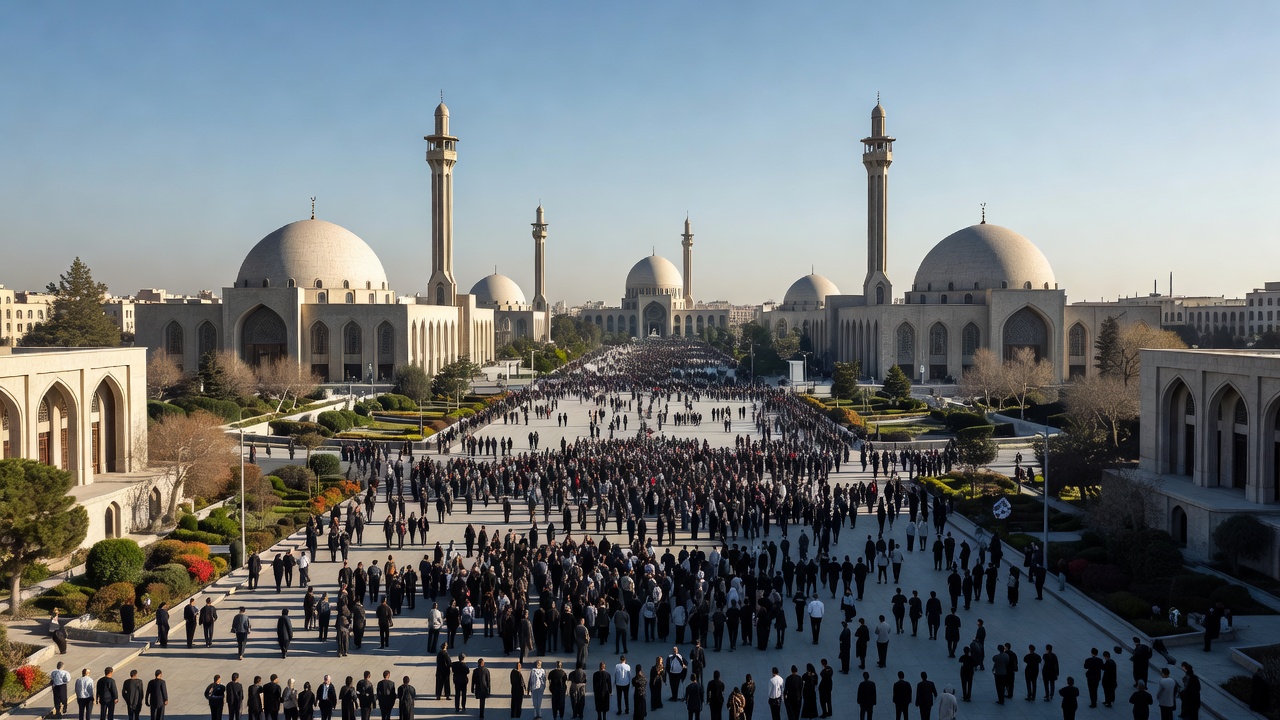
Iranian state media described hundreds of thousands of mourners assembling around the Imam Khomeini Grand Mosalla in central Tehran on Saturday, many dressed in black and carrying portraits of the late leader while chanting anti-American slogans and calls for revenge. The body of Ayatollah Ali Khamenei lay in state there for three days alongside the remains of family members killed in the same attacks, according to CNN reporting on the ceremonies. A 37-year-old professor identified as Reza told AFP that participants had come because they promised to stand by the supreme leader to the end, adding that the leader had ultimately sacrificed himself for them. Arash Rahimi, 40, told Reuters that everyone present sought to avenge the supreme leader’s blood and that Iran maintained a blood feud with the United States.
Al Jazeera reported that the funeral ceremonies run from July 4 to July 9 across multiple sites in Iran and Iraq, with the initial phase in Tehran followed by a transfer to Qom on Tuesday for prayers led by a senior Shia cleric at the Jamkaran mosque. The procession then proceeds to Najaf in Iraq for rites at the shrine of Imam Ali before continuing to Karbala and returning for burial at the Imam Reza Shrine in Mashhad on Thursday, the schedule published by Iranian officials shows. Authorities declared 40 days of national mourning after the death together with additional commemorations planned through the first anniversary of the burial, Wikipedia’s entry on the state funeral noted. Tehran province officials arranged for 5,000 mosques and 700 schools to accommodate pilgrims as part of the logistical effort detailed in that entry.
The Atlantic Council documented that Khamenei died on Feb. 28, 2026, during joint US-Israeli strikes that escalated into a broader regional conflict and prompted Iran to declare an initial period of mourning. NPR reporting at the time placed the strikes against both military and civilian targets, contributing to a death toll that Iranian state media estimated in the hundreds while other accounts varied. The 2026 Iran war entry on Wikipedia added that an interim leadership council operated briefly before the Assembly of Experts named Mojtaba Khamenei as successor in early March.
Channel News Asia cited Iranian authorities projecting 15 to 20 million participants in Tehran ceremonies over the first three days, a figure that could make the event one of the largest gatherings in the country’s history. AP News recalled that Ayatollah Ruhollah Khomeini’s 1989 funeral drew an estimated 10 million mourners, or roughly one-sixth of Iran’s population then, and earned recognition from Guinness World Records for the largest proportion of a national population at a funeral. Iranian International noted that planners emphasized enhanced security measures to avoid repeats of deadly stampedes that occurred during the 1989 event, which killed at least eight people, and at the 2020 funeral of General Qasem Soleimani.
Middle East Eye reported that foreign delegations from more than 100 countries arrived in Tehran, including representatives from Russia, China, Saudi Arabia, Pakistan, India, Turkey, Iraq and Yemen, to pay respects during the opening events. Al Jazeera’s explainer listed Friday’s tribute as the primary gathering for world leaders before public ceremonies expanded over the weekend. The Hindu observed that mourners on Tehran streets waved Iranian flags and sang ceremonial hymns in the lead-up, with the scale underscoring efforts to project national unity following the earlier conflict.
Iranian officials prepared 50 million loaves of bread for distribution, pitched 1,000 tents in Mellat Park, offered 50 percent hotel discounts and deployed 1,000 free cab vans while ordering supermarkets to operate around the clock, according to the Wikipedia compilation of state announcements. The governorate of Tehran province framed these steps as necessary to manage the anticipated influx from across the region, including Shia communities in Afghanistan, Pakistan, India, Bangladesh and Yemen referenced in the same overview. Such measures also addressed lessons from past large funerals where crowd management proved challenging, Iran International reported in its review of planning.
The new supreme leader, Mojtaba Khamenei, has not appeared publicly since his appointment by the Assembly of Experts, multiple outlets including CNN and Al Jazeera observed, leaving uncertainty over whether he would attend any portion of the ceremonies. Wikipedia’s account of the state funeral stated that he was not expected to participate in the proceedings. Iranian state television broadcast images of the crowds and lying-in-state arrangement throughout the first day to reach those unable to attend in person.