ع
ع


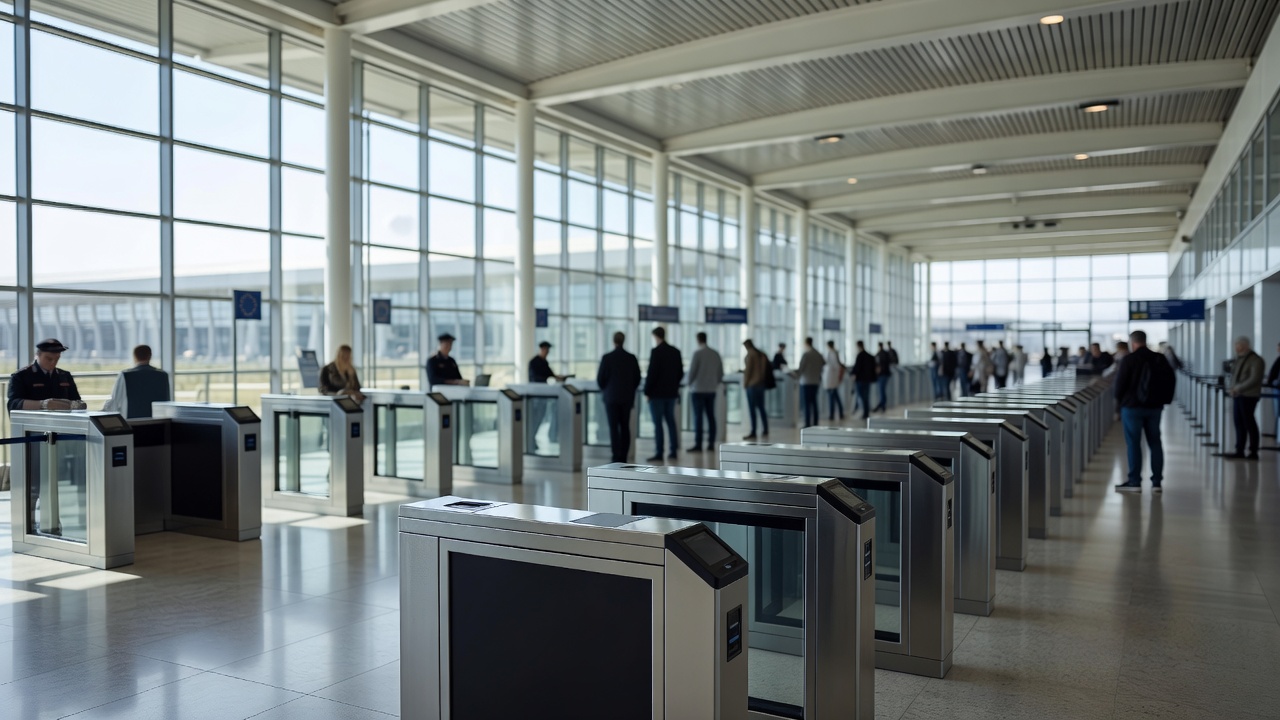
Ryanair warned in a July statement that the EU Entry Exit System is unprepared for peak summer family travel and risks long queues missed flights and unnecessary stress at airports. The carrier urged European governments to suspend the biometric registration process until September after the busiest period passes and advised passengers to arrive earlier for non-Schengen flights. Ryanair chief operations officer Neal McMahon said passengers and families should not be used as guinea pigs for a half-baked passport control system that risks creating long queues missed flights and unnecessary stress at airports this summer.
The system which became fully operational on 10 April 2026 after phased rollout from October 2025 requires non-EU citizens to provide fingerprints and a photo upon entering the 29-country Schengen area according to Euronews. At Rome Fiumicino airport the time for UK nationals to clear border control rose from seven to 20 minutes even after integration with e-gates Ivan Bassato the facility’s chief aviation officer told the BBC. Bassato said the airport was absolutely not okay with waits of one or two hours and called for urgent fixes including elimination of process duplication as well as expanded use of the pre-registration app currently active only in Sweden and Portugal.
Queues at Portugal’s Faro airport have stretched from 10 to more than 30 minutes at times Superintendent Pedro Oliveira who oversees border control told the BBC. He noted that the system’s reliance on interconnected EU servers means outages in one location such as Warsaw can trigger simultaneous crashes elsewhere though such events have decreased in frequency. Portugal has added border officers and routes children under 16 to staffed stations for biometric capture rather than self-service kiosks while insisting that severe delays over an hour remain rare unless unexpected flight bunches occur.
Airports Council International Europe reported that waiting times have climbed to as much as five hours during peak traffic since the April launch affecting both large hubs and smaller tourism airports with processing times up by 70 percent in some cases. The group had pressed the European Commission for operational resolutions and partial suspensions which several member states applied after earlier incidents including seven-hour queues at Lisbon. IATA separately cautioned that waits could reach six hours at the busiest gateways over the peak summer months according to industry assessments.
Travelers interviewed by the BBC in Rome described personal experiences ranging from two-hour queues with children for a Yorkshire family to an American couple missing their driver after a one-hour delay. Visitors arriving via Barcelona reported passport control times nearing the length of their flights with machines frequently out of service contributing to the slowdowns. Similar accounts from Bracknell and other UK points of origin highlighted the gap between expected and actual border clearance amid the new requirements.
The European Commission has said disruption remains limited at most airports and that it will continue to support member states in the system’s implementation to the fullest extent possible. Airlines and airport operators had sought authority for proactive suspensions during busy periods but a meeting earlier this year produced no immediate policy shift the BBC reported. A Guardian article from June indicated that officials expect the situation may not stabilise for one or two years as infrastructure staffing and technical adjustments continue.