ع
ع


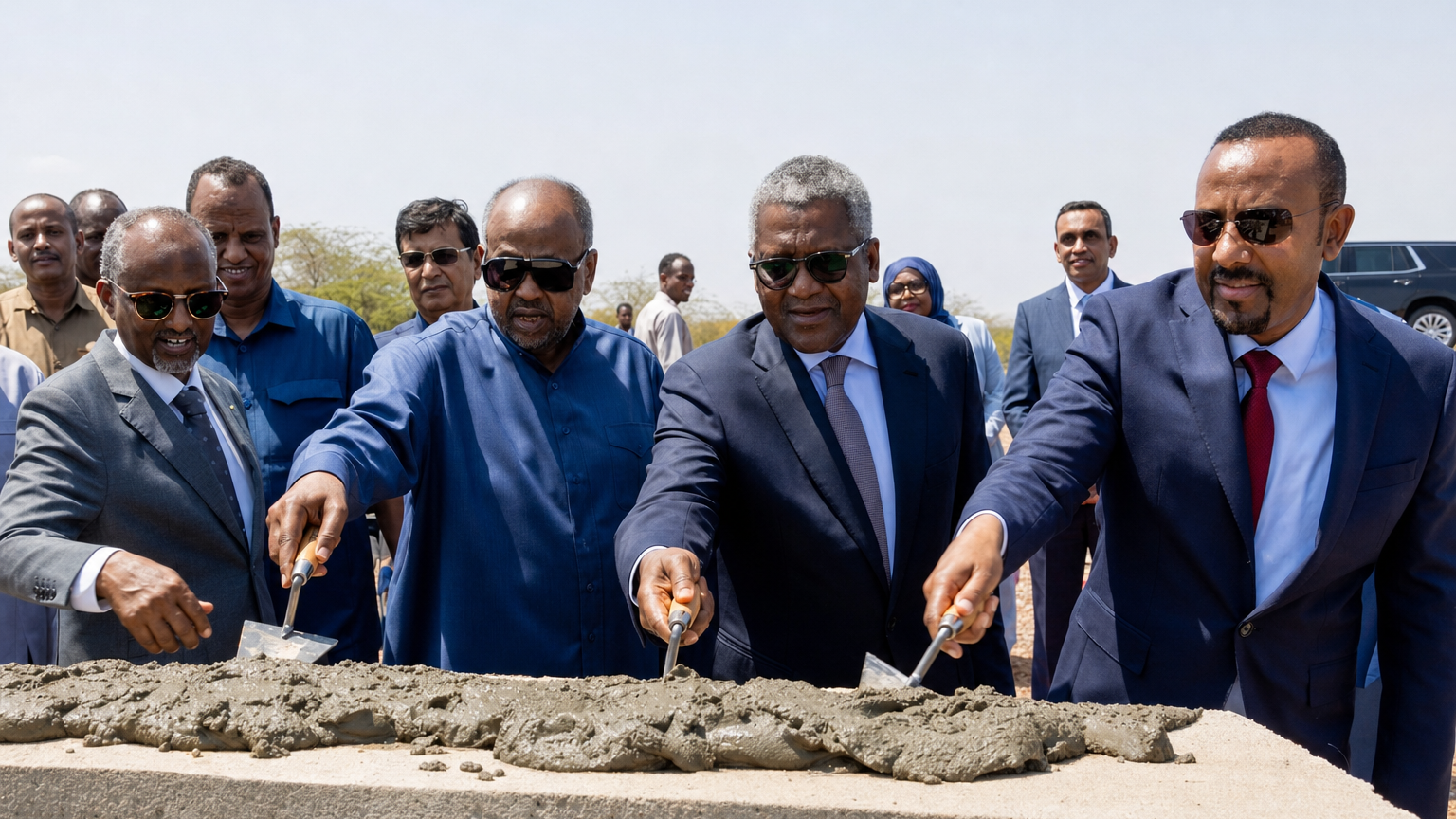
Ethiopian Investment Holdings and the Dangote Group will develop the $660 million refined petroleum pipeline in partnership with Djiboutian authorities, according to a statement from Ethiopian Prime Minister Abiy Ahmed’s office. The 120-kilometre multiproduct line will run from storage facilities at Damerjog on the Djiboutian coast to Dewele on the Ethiopian side of the border, with construction formally breaking ground during a ceremony attended by the three leaders. The infrastructure will add 375,000 cubic metres of storage capacity at Damerjog and 800,000 cubic metres at Dewele, creating a combined buffer of more than 1.1 million cubic metres that developers say will strengthen supply reliability. Ethiopian officials told Reuters the entire system should become operational within 18 months.
The project addresses chronic logistics bottlenecks on the Ethiopia-Djibouti trade corridor that carries the vast majority of the landlocked country’s imports, a report presented by Ethiopian Minister of State for Transport Denge Boru showed last month. Djibouti handled 96.7 percent of Ethiopia’s external freight during the 2025-26 fiscal year, including more than 4.2 million tonnes of fuel, according to the transport ministry data. Prime Minister Abiy Ahmed noted on his X account that fuel shipments currently take five days by truck from the coast to Addis Ababa, adding that the pipeline will cut transit time to less than one day while lowering costs for producers, businesses and households. The initiative also forms part of wider efforts to bolster energy security amid regional tensions affecting Red Sea shipping routes.
Aliko Dangote, whose group is already constructing a $4 billion fertiliser plant and power facility in Ethiopia, described the pipeline as a step toward greater African self-sufficiency, according to a Dangote Group statement issued after the ceremony. “This project is designed to enhance energy security, improve supply-chain efficiency, and create sustainable economic value for both Djibouti and Ethiopia,” Dangote said in remarks carried by TheCable newspaper. Djibouti will gain from increased port activity, revenues and employment while Ethiopia benefits from reduced logistics constraints, he added. The African Export-Import Bank is providing financial backing for the venture, multiple reports from the groundbreaking confirmed.
Ethiopia’s annual fuel import bill exceeds $4.5 billion and has outstripped the country’s total export earnings in recent years, data from the Petroleum and Energy Authority indicated for the 2024-25 fiscal year. The authority’s director general, Destaw Mekuanint, has highlighted capacity limits at Djibouti’s Horizon Terminal, which forced operators to slow loading speeds by around 30 percent even as demand rose by 8 percent to more than 4.3 billion litres. The new pipeline and storage terminals are expected to ease pressure on that system by enabling faster, more predictable deliveries of diesel, petrol and jet fuel. Officials from both countries framed the investment as a direct response to these structural shortages.
The partnership expands Dangote’s footprint in the Horn of Africa beyond the fertiliser and polypropylene projects already under way in Ethiopia, according to an assessment by The Africa Report. Ethiopian Investment Holdings, the government’s sovereign wealth vehicle, signed a memorandum of understanding with the Dangote Group and Djibouti’s Great Horn Investment Holding to govern the pipeline’s development and future operations. Phase one focuses on refined products and should conclude in 18 months, while later stages will add separate lines for crude oil and gas, project documents distributed at the ceremony showed. The scheme connects to a larger petrochemical complex planned for Gode in southeastern Ethiopia.
Abiy Ahmed said the pipeline will deepen strategic reserves and protect supplies during periods of global uncertainty, comments echoed by Djibouti President Ismail Omar Guelleh at the Damerjog Industrial Park event. The two leaders have maintained close coordination on infrastructure since the launch of the Addis Ababa-Djibouti railway more than a decade ago, a collaboration that has steadily increased freight volumes along the corridor. Industry analysts following East African energy projects noted that the storage capacity alone represents a significant addition to regional buffers, though exact allocation between the partners remains subject to final commercial agreements. Construction is now under way following the formal groundbreaking.