ع
ع


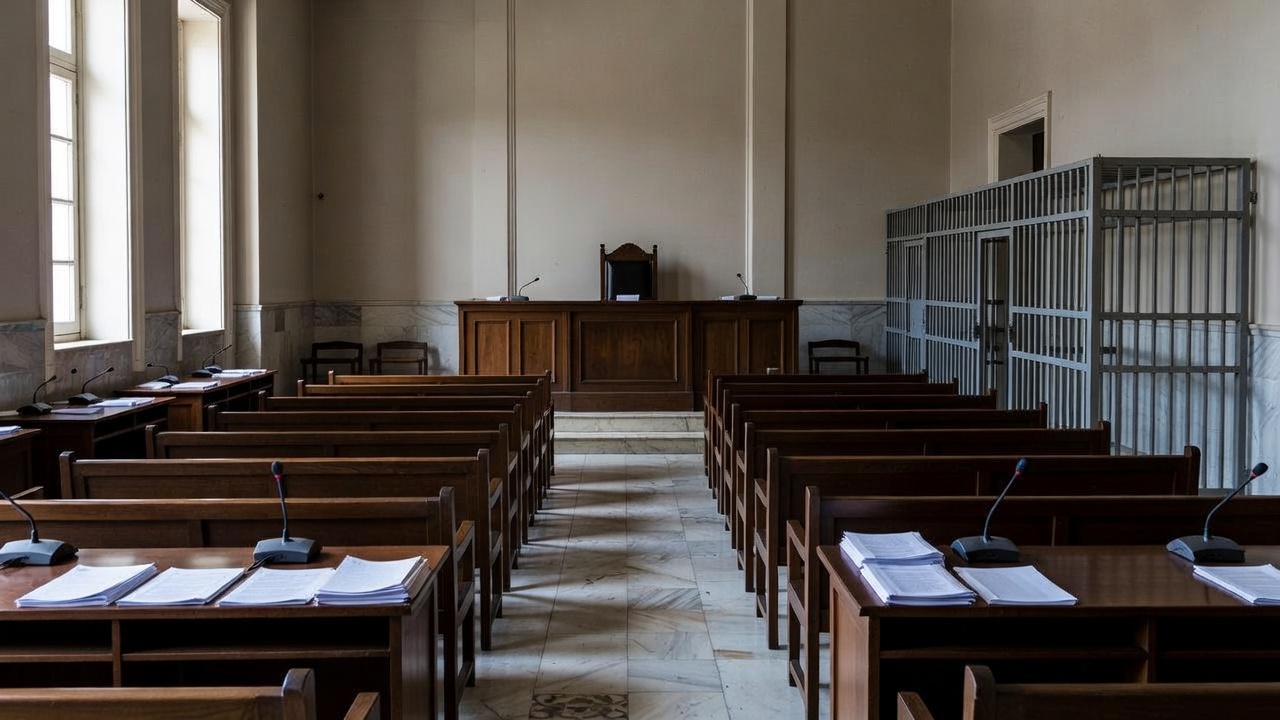
The Fourth Criminal Court in Damascus convicted former President Bashar al-Assad of committing war crimes and crimes against humanity throughout Syria’s civil war, handing down the death penalty in absentia on Tuesday. In the same case the court sentenced his younger brother Maher al-Assad to death in absentia while Assad’s cousin Atef Najib, the former head of political security in Deraa province, received the same penalty after appearing in a courtroom cage. France 24 and Sky News both reported the verdicts as the first convictions of such high-level figures under transitional authorities who launched prosecutions of former regime officials earlier in 2026.
Najib stood accused of directing the violent suppression of protests in Deraa that helped spark the initial uprising against Assad rule. Security forces under his oversight responded to teenagers writing anti-government graffiti in March 2011 with mass detentions, alleged torture and a crackdown that killed demonstrators and ignited wider unrest, according to accounts compiled by Al Jazeera. The events in Deraa, widely viewed as the birthplace of the revolution, escalated into a nationwide conflict that lasted 14 years before Assad’s fall.
The UN Human Rights Council-mandated Commission of Inquiry on Syria has estimated that more than 580,000 people were killed during the fighting with an additional 13 million Syrians forcibly displaced. The Syrian Observatory for Human Rights placed the overall death toll near 650,000 by March 2025 including both civilians and combatants. These statistics from the two monitoring bodies contextualise the scale of the repression for which the Damascus court held Assad and his relatives accountable in Tuesday’s ruling.
Al Jazeera reported that Najib’s trial opened on April 26 2026 in the same Damascus court as the first major public case in the transitional justice process against former Assad-era officials. The proceedings charged Najib with murder, the intentional killing of children under 15, torture leading to death and other violations tied to the early crackdown in southern Syria. Syria’s interim government under President Ahmed al-Sharaa has described the cases as an initial phase of accountability for atrocities committed during more than five decades of Assad family rule.
Assad fled Damascus to Moscow with his family in December 2024 after opposition forces led by al-Sharaa toppled the regime in an 11-day offensive. A Syrian arrest warrant had already been issued against him the previous month on charges of murder and torture, the BBC noted in its coverage. Russia has hosted several senior former regime figures since the fall of Damascus making extradition uncertain according to multiple regional reports.
The new authorities have detained numerous mid-level officials and security personnel since taking power though most top regime associates remain beyond immediate reach in exile. Previous attempts by Syrian opposition figures to obtain convictions against Assad in Western courts produced no results prior to the domestic case. The Tuesday verdicts add another layer of legal proceedings against the ousted leader who continues to live in Russia.