ع
ع


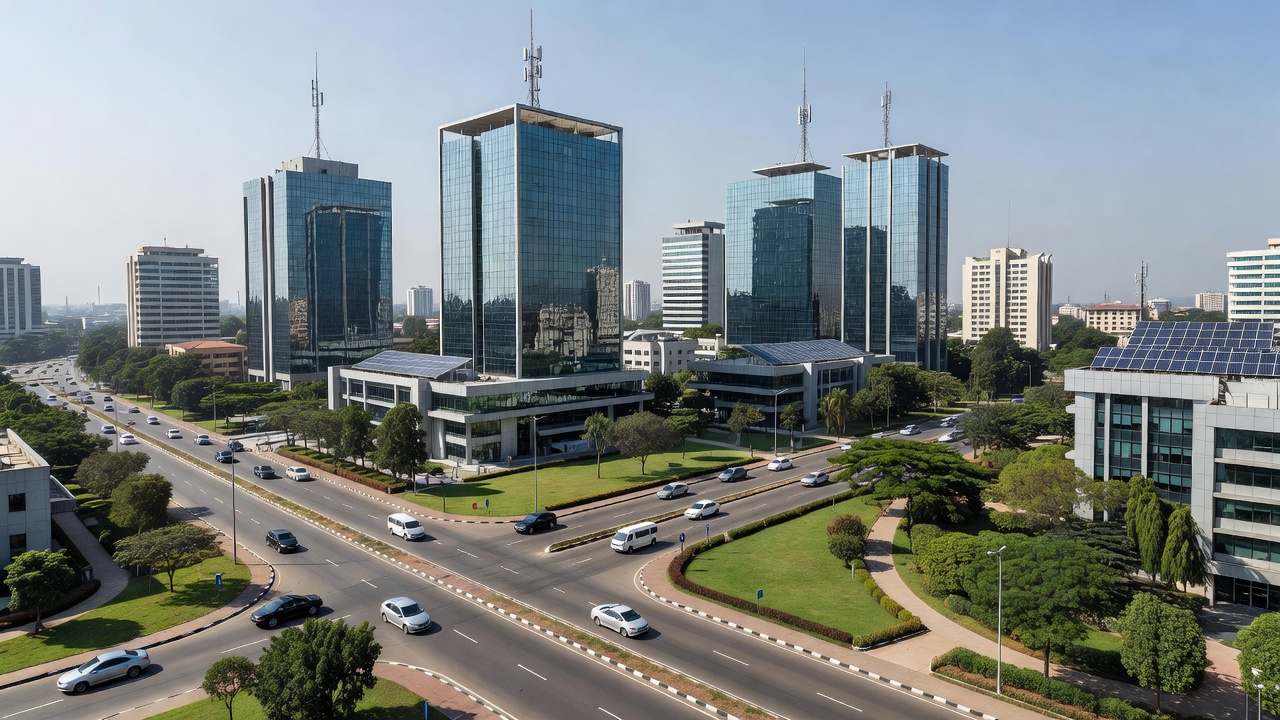
Charity Ekezie has built a following exceeding five million across platforms by responding to ignorant online comments about Africa with deliberate exaggeration that exposes their absurdity, a technique now showcased in a fresh BBC Africa video. In the production, she addresses queries ranging from the existence of water and technology on the continent to whether its residents live alongside wild animals, consistently juxtaposing her words against visible evidence of modern life. The video arrives as her content has accumulated more than 800 million views overall, according to figures on her personal website, transforming a personal frustration into a sustained effort to reshape global narratives.
Ekezie, who holds a mass communication degree from Nnamdi Azikiwe University and previously worked in radio, began posting on TikTok in 2020 after noticing condescending remarks beneath videos of her daily existence in Nigeria. The Guardian reported that early commenters from Western countries questioned how she possessed a phone or whether water existed anywhere in Africa, prompting her to reply with heavy sarcasm that quickly gained traction. One initial clip in which she danced in a lake to refute claims of no water has surpassed 22 million views, Business Insider noted in its coverage of her rise.
In an interview with the UNESCO Courier this year, Ekezie stated that humor serves as a powerful tool for challenging preconceived ideas, explaining how she adds clear visual contradictions such as displaying bottled water while claiming communities collect saliva during monthly festivals. CBC Radio quoted her describing the prevailing mindset as one that reduces Africa to a vast bush or forest lacking technology or organised society. Her videos have similarly tackled notions that Africans walk with lions or charge devices by climbing mountains to harness lightning, always ensuring the surrounding environment undermines the spoken claim.
United Nations data establishes that Africa encompasses 54 countries and more than 2,000 languages, directly contradicting frequent assertions that it constitutes a single nation with one universal tongue. A ONE.org assessment places the continent’s population at 1.2 billion, forecast to double to 2.5 billion by 2050, while noting that three out of four Africans function as entrepreneurs. The same organisation highlights that Cote d’Ivoire and Ghana alone supply 70 percent of the world’s cocoa, underscoring economic realities often omitted from stereotypical portrayals.
Industry reports cited across coverage of Ekezie’s work indicate that more than 3.4 million air conditioning units sold in Africa during 2021, while average annual rainfall measures around 1,000 millimetres over much of the landmass. The Conversation observed that her performances unmask biases by first appearing to endorse them before the background details reveal the joke, a method that has earned her recognition including the TikTok Social Impact Creator of the Year award for Sub-Saharan Africa in 2024. Ekezie has leveraged the platform to engage world leaders, including interviewing Bill Gates on global health innovations and discussing African storytelling at the World Economic Forum.
Her personal website records that she grew up partly in Cameroon before returning to Nigeria, where she has since received additional honours such as inclusion among the 100 most influential people in Africa by multiple publications between 2023 and 2025. Despite attracting praise for educating audiences through comedy, some videos have drawn racist responses that Ekezie has openly confronted. The sustained engagement demonstrates how her content continues to resonate more than half a decade after its inception, offering a counterpoint to persistent misconceptions.