ع
ع


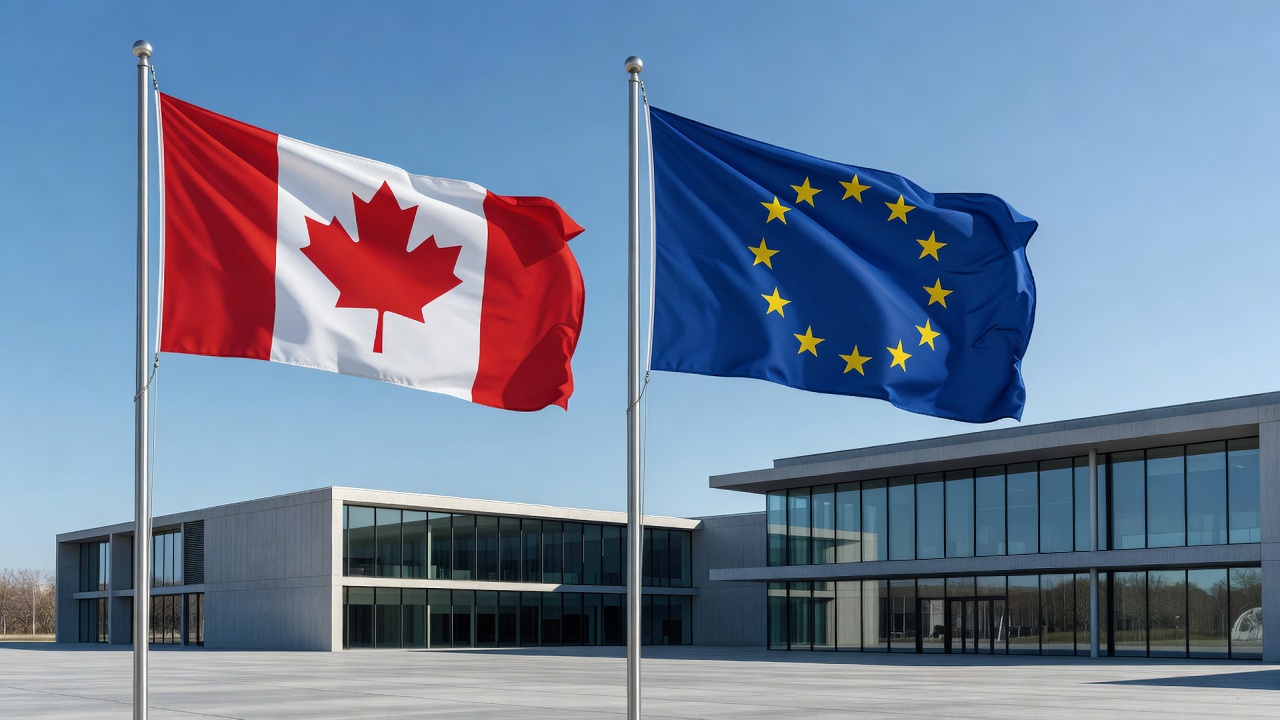
European Commission President Ursula von der Leyen proposed during her State of the Union address on September 16 that Canada become the first associate member of the European Union a status that does not yet exist in EU treaties. She directly addressed Prime Minister Mark Carney who was seated in the European Parliament in Strasbourg telling him the EU wanted to bring relations with Canada to the highest level possible through an alliance for the future. Von der Leyen listed joint work on intelligent manufacturing a tech alliance integrated defence industrial bases the Arctic as a flagship project energy critical minerals batteries AI quantum computing cyber security and economic security as priorities according to her speech carried by multiple outlets including Euractiv and The Guardian.
Carney told the European Parliament on Thursday that Canada was not in a position nor seeking to become a full member of the European Union nor was it an attempt to create a third bloc. He set out key areas for cooperation including artificial intelligence critical minerals defence industrial capacity energy security and the space sector while expressing a desire to move towards membership of the EU’s Erasmus Plus scheme. The prime minister added that Canada and Europe were stronger together in the face of geopolitical rupture a point he reinforced in remarks reported by BBC News and Bloomberg.
The overture comes as Canada seeks to deepen ties with Europe amid strained trade relations with the United States under President Donald Trump according to a Wall Street Journal report cited across coverage from Euractiv and The Globe and Mail. Canada and the EU already operate under the Comprehensive Economic and Trade Agreement although The Globe and Mail reported that 10 of the 27 EU member states have yet to ratify it fully limiting some of its effects. A March 2025 poll referenced in Euractiv found that nearly half of Canadians favour closer EU ties including potential membership though Carney has described the goal as a unique alliance rather than accession.
Von der Leyen framed the proposal as moving beyond the existing free trade deal to create a common prosperity and economic security space with no suggestion that it would involve enshrining associate membership in EU treaties which would require unanimity and ratification by all member states a point emphasised in analyses from The Globe and Mail and Politico. EU officials cited by Politico indicated the arrangement would not grant political rights or free movement of people at least initially and could serve as a model for other like-minded nations such as Australia New Zealand Singapore and Japan. Some European diplomats expressed reservations about creating a new membership category preferring instead to build on current defence and trade agreements according to reports in BBC coverage and The Guardian.
Canada’s incoming ambassador to the EU Jonathan Wilkinson told reporters in Strasbourg that the sides were not yet at the stage of defining associate membership and were instead focused on securing concrete results in the proposed areas of cooperation. Carney’s office stated that the aim was a far stronger more ambitious alliance encompassing critical minerals defence industrial capacity AI compute energy security space financial services and payments. Wilkinson added that discussions had been coordinated in advance and further initiatives were expected to be announced at the EU-Canada summit scheduled for October 29 and 30 in Montreal as detailed in coverage from CBC News and Agence Europe.
The concept of associate membership draws from earlier ideas such as a German proposal for Ukraine to hold such status as an interim step toward accession though that effort did not advance due to pushback from some capitals a detail noted in Euractiv reporting. Senior EU figures including Commissioner Teresa Ribera have described it as a new category that will need to be developed over time without immediate clarity on voting rights or regulatory alignment. Carney has pushed for bold moves in areas from labour mobility to research collaboration that could yield economic gains without compromising sovereignty according to commentary in The Globe and Mail.