ع
ع


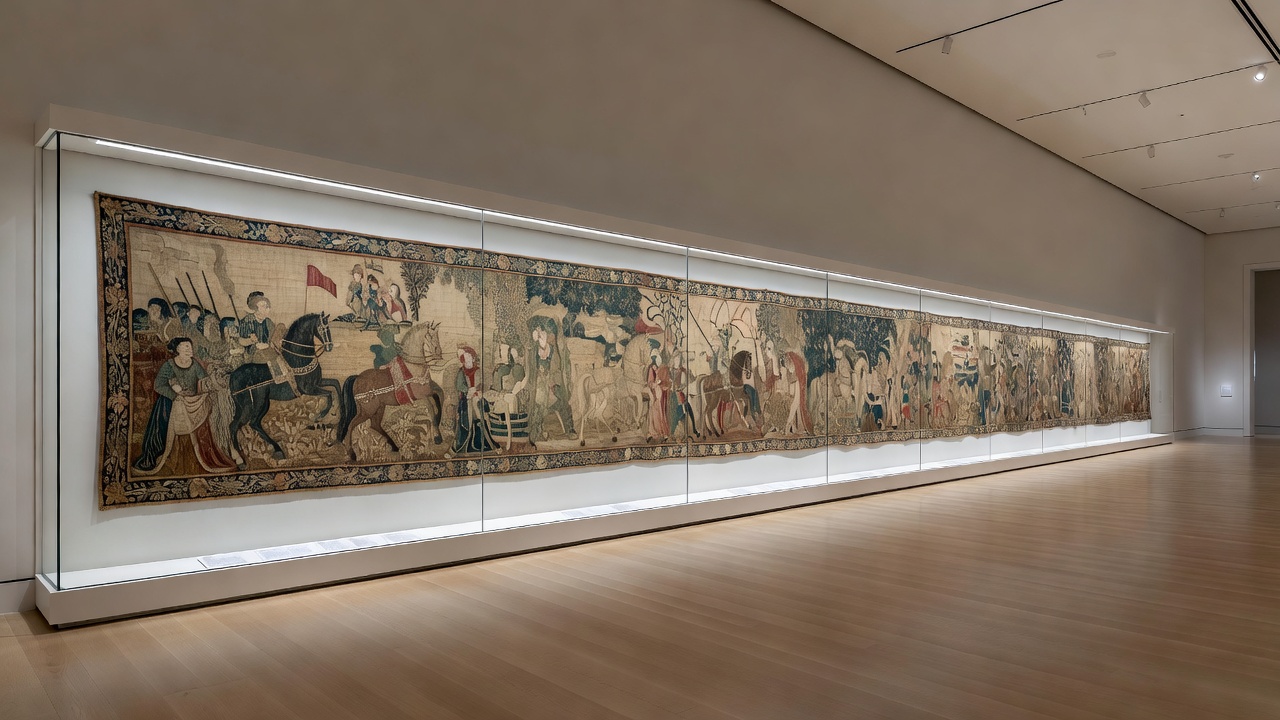
The British Museum has reversed an initial policy permitting non-flash photography of the Bayeux Tapestry and banned images while visitors walk its length less than a week after the exhibition opened. A museum spokesperson told Hyperallergic there has been enormous interest in viewing the tapestry and the priority is to ensure that all visitors have the best experience possible. In order to do this the museum made the decision to restrict photography while people are moving along the length of the tapestry according to statements carried by Time Out and PetaPixel.
The 70-metre embroidery which depicts the 1066 Norman Conquest of England is displayed flat in a continuous line for the first time at the Sainsbury Exhibitions Gallery. The British Museum’s exhibition details show that ticket holders enter in timed groups every 40 minutes with slots priced from £25 to £33 and children under 16 admitted free with an adult. According to a museum press release initial batches of tickets for late 2026 have sold out with further releases planned for October 2026 covering early 2027 dates.
Some early visitors were turned away or saw only part of the artefact before protective lighting was extinguished at the end of the day after previous groups overstayed while taking photographs the museum acknowledged in an apology reported by Yahoo News UK. The institution has committed to contacting affected ticket holders directly. PetaPixel reported that one attendee on a return visit after the ban spent nearly twice as long queuing as actually viewing the work.
Conservators identified two new thread breaks a few millimetres long after the tapestry’s transport from its permanent home in Bayeux Normandy to London the New York Times reported citing a condition assessment shared by the British Museum. The loan which runs until July 2027 prompted pre-opening concerns from some French experts and the late David Hockney who called the move too risky for the fragile 11th-century piece according to coverage in The Telegraph. A British Museum statement noted that trial runs and specialist packing were used to minimise stress during the journey.
Photography remains allowed from the exhibition balcony that offers a full overhead view of the tapestry Time Out reported. The museum’s general visitor guidelines permit handheld cameras without flash in most areas but allow additional restrictions for specific displays such as this one. The flat presentation chosen for conservation reasons enables closer inspection than the horseshoe arrangement used in France according to comments from museum chairman George Osborne carried by The Independent.
The exhibition forms part of a reciprocal cultural agreement that includes British loans of Anglo-Saxon objects to museums in Caen and Rouen an AP News dispatch stated. Project curator Millie Horton-Insch told AP that the tapestry brings viewers closer to the history of 1066 than any text can. Further talks events and publications are scheduled throughout the run the British Museum announced in its May 2026 press materials.