

 ع
ع


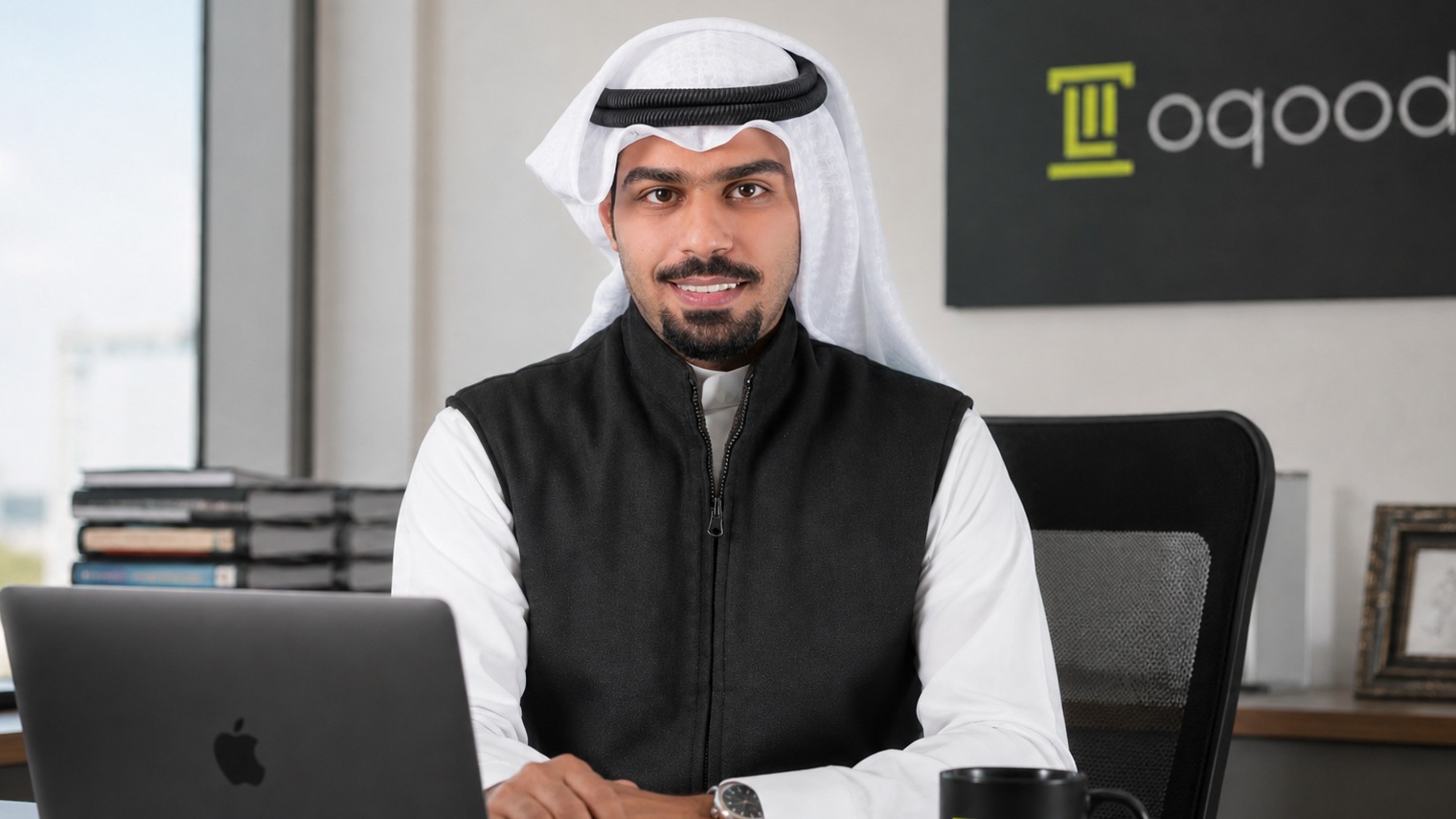
Legal AI is moving faster than almost any corner of professional services. By late 2025, roughly seven in ten legal professionals reported using generative-AI tools for work, more than double the year before. But the surge has been lopsided: concentrated among individual practitioners while firms lag on policy and governance, and built almost entirely on tools trained for English-language common law. In the Gulf, where practice runs on Arabic and on civil-code systems, that leaves a structural gap. Khaled Al Rashed built Oqood AI to fill it.
He came to the problem from inside it. For fifteen years he practised law, most recently as managing partner at Taqneen, a regional firm, where his work moved constantly between Arabic and English and across civil-code statute. He also studied legal technology and AI at MIT and Esade, a combination still rare in a market where founders tend to come from law or from technology, seldom both.
“The available tools were either outdated, or international platforms that don’t support our local and regional work in the best way possible,” Al Rashed says. The diagnosis is a lawyer’s, framed not around features but fit. “The Gulf runs on Arabic and on civil-code systems. Every contract, every pleading, every regulatory filing can move between Arabic and English without warning. A tool that can’t navigate that architecture isn’t just incomplete. It becomes a liability in front of a client.”
The market backs the thesis. The GCC’s roughly 900 law firms look like a modest base, but the value is not in selling software to local firms; it is in owning the Arabic legal-data layer for a region of corporations, governments, and international firms that need legal technology working in both languages to global standards. Al Rashed places the addressable opportunity at around four billion dollars.
The barriers slowing adoption work in a regional builder’s favour. Around four in ten firms name data privacy as a fundamental concern, and a similar share cite security, regardless of size or practice area. Those concerns are sharpened across the GCC by national policy: Saudi Arabia’s data-and-AI authority and the UAE’s data-protection regime treat data residency and sovereignty as matters of state. A platform processing sensitive legal data outside the region, or unable to show how it meets local requirements, fails on regulatory grounds before features enter the conversation.
Oqood is built for exactly those constraints: an enterprise-grade platform for bilingual, civil-code practice, ISO and SOC 2 certified, maintaining data-regulation requirements across the region through a flexible architecture. In a little over two years it has gone from idea to a platform in market, raised a seed round to fund GCC expansion, and secured a strategic partnership with the Kuwait Bar Association, the bet being that legal AI in the region will be defined by who builds it with the institutions that set the profession’s standards, rather than who sells in from outside.
“You can have the most sophisticated tool in the world,” Al Rashed says, “but if it doesn’t understand the legal system you actually practice in, and the languages you actually work in, it’s solving someone else’s problem, not yours.”