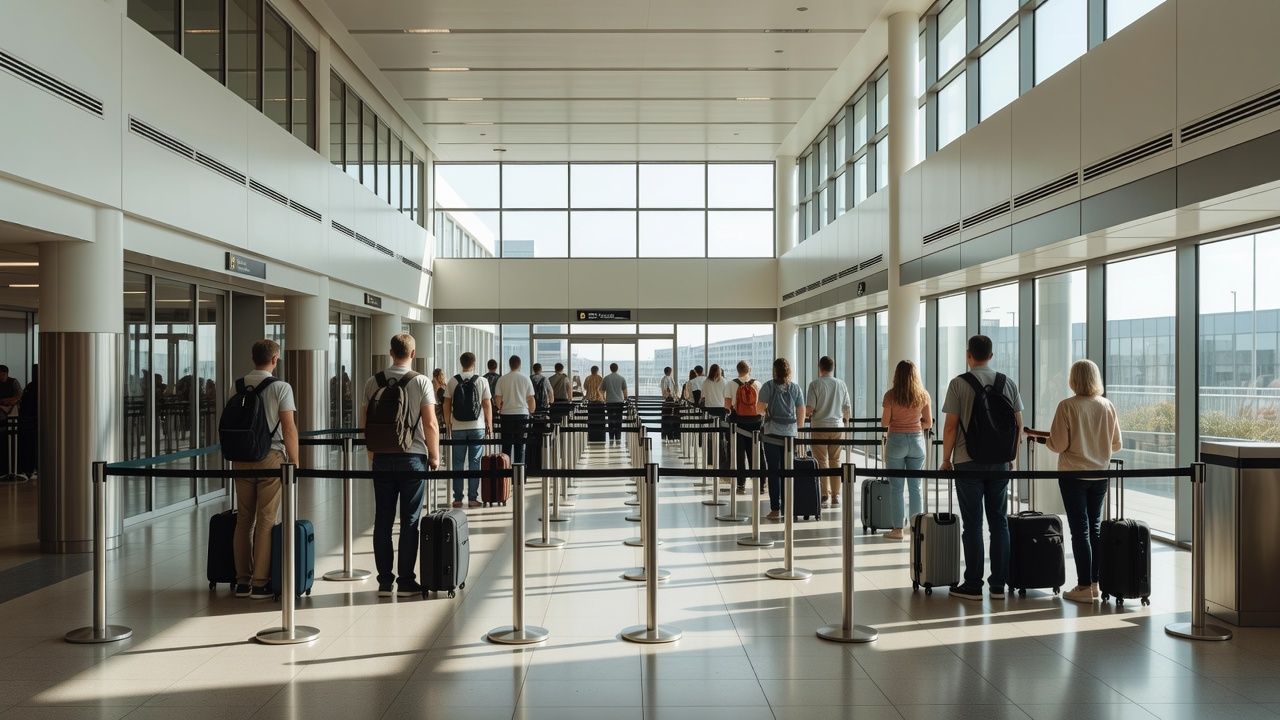
Holiday delay warnings over the EU’s new border system stem from implementation of the Entry/Exit System, which has caused queues of several hours for non-EU travellers since April 2026. Industry groups including IATA and the WTTC have cautioned that summer peaks could see waits of up to six hours, disrupting travel plans and threatening tourism revenue. A WTTC report on June 9 projected risks to 41 million arrivals and $45.4 billion in spending if delays persist.
The WTTC analysis drew on responses from over 2,500 travellers in the UK, US, Canada and Australia. It found that around one-third would be deterred from visiting Schengen countries if faced with regular three-hour or longer waits at borders. Gloria Guevara, WTTC president and CEO, said in the report, “The introduction of EES is an important step forward in modernising Europe’s borders and strengthening security. Our research clearly shows that travellers support digital and biometric border systems and understand the long-term benefits they can deliver.” She noted that solutions such as digital pre-registration already exist to reduce friction.
Airports Council International Europe reported that a survey of 45 airports in 20 EU states on May 26 revealed queues reaching 3.5 hours at peak times, a deterioration from earlier months. The European airports association stated the situation is worsening despite partial suspensions of the system at some locations. This has prompted airlines to update advice for passengers returning from European destinations.
IATA has warned that without improvements, airport queues could extend to six hours during the height of summer, affecting not only arrivals but departures as well. A Wizz Air UK executive advised passengers to arrive three hours early for return flights from the EU, up from the usual two hours. In one incident in April, approximately 100 easyJet passengers missed their flight from Milan to Manchester after being held up by the new checks.
The Entry/Exit System records biometric data including fingerprints and facial photographs to track movements of non-EU citizens across the Schengen zone’s 29 countries. It replaces the manual stamping of passports that previously served the same purpose. European Commission officials have described it as a key tool for improving border security and managing migration flows more effectively.
In response, countries like Greece have allowed busy airports to temporarily disable biometric scanners during peak periods this summer while maintaining overall compliance, according to AP News. Portugal has added extra personnel at key entry points to speed up processing. Ferry operators at Dover have explored capping the number of coaches to prevent excessive backlogs on the UK side.
The WTTC survey also revealed that 55 percent of travellers had heard little or nothing about the EES prior to the study. Despite this, 65 percent expressed support for the system after being informed of its benefits including stronger border security. The council recommended accelerating the adoption of the Travel to Europe app and launching coordinated information campaigns in key source markets.