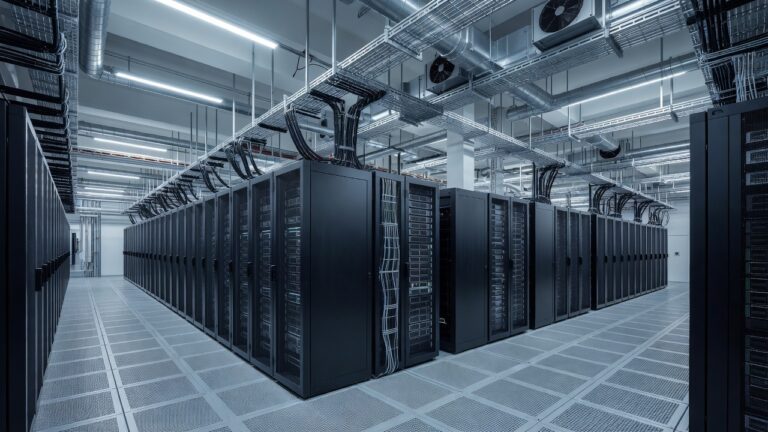
Shenzhen Supercomputer LineShine Achieves Historic CPU-Only Exaflop Milestone to Lead Global Rankings
Chinese supercomputer LineShine claims world’s most powerful title in latest TOP500 list, debuting at the top with 2.198 exaflops on Tuesday’s release. The system from Shenzhen’s National Supercomputing Centre surpassed the U.S. El Capitan and became the first CPU-only machine to exceed 2 exaflops, according to TOP500 organizers. This marks China’s return to supercomputing leadership after a nine-year gap.
The TOP500 list reported that LineShine uses 13.79 million cores across 45,360 304-core LX2 processors developed by Huawei based on the Armv9 instruction set and operating at 1.55 gigahertz. It relies on a custom LingQi interconnect technology and draws 42.2 megawatts of power during operation. The Shenzhen Cloud Computing Center constructed the machine, which the centre said outperforms leading systems from the United States and Europe in the benchmark test. Organizers at the ISC 2026 conference in Hamburg presented the updated rankings incorporating these results.
According to the TOP500 website, five exascale systems now feature on the list following LineShine’s addition as the latest. The previous Chinese leader, Sunway TaihuLight, held the top position from 2016 until it was overtaken in 2018, data from the project show. China has increased its presence on the list in recent years despite international restrictions on advanced chip exports, with the latest edition confirming multiple domestic entries in the upper ranks.
Reuters reported that although LineShine secured first place on the standard TOP500 ranking, it finished fourth on the HPCG benchmark that better simulates artificial intelligence computing tasks. The news service quoted experts who noted that the result underscores China’s focus on developing independent computing capabilities. South China Morning Post confirmed the system’s location in Shenzhen and its performance figures from the Linpack test.
A researcher from the Chinese Academy of Sciences told Global Times that the achievement signals renewed Chinese leadership in the field. Zhang Yunquan highlighted the significance of attaining such performance with a CPU-only architecture. The publication noted that the announcement occurred during the ISC 2026 conference held in Hamburg on Tuesday and detailed comparisons to prior top systems.
The TOP500 ranking has served as a key barometer for high-performance computing progress since its inception in 1993, with updates issued twice annually. Systems are evaluated on their ability to solve dense linear systems using the Linpack benchmark, according to project documentation. LineShine’s debut at number one highlights ongoing global competition in developing technologies for scientific research, weather forecasting and other computationally intensive applications.
Industry analyses from multiple outlets indicate that supercomputing advancements contribute to sectors including materials science and national defense efforts worldwide. The power efficiency and architectural choices in LineShine may influence future system designs across the industry, TOP500 figures suggest. Organizers of the list continue to track developments as more nations pursue exascale computing goals with varying hardware approaches.