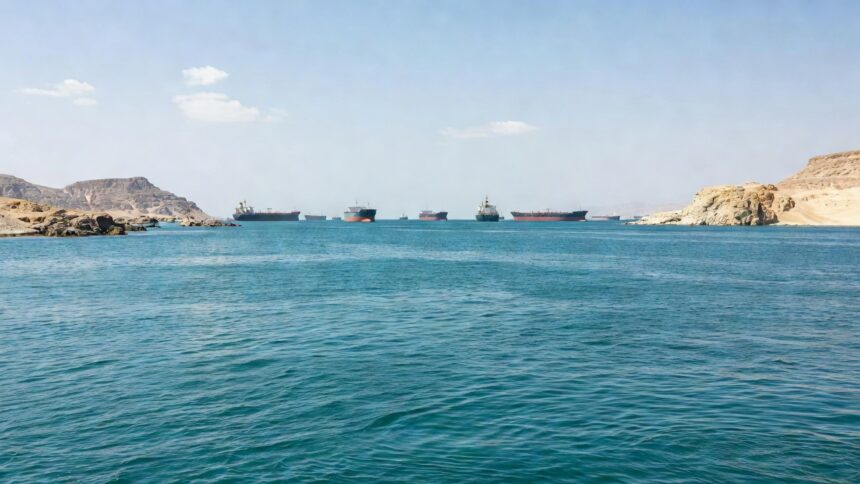
Foreign ministers from Egypt, Pakistan, Saudi Arabia and Türkiye affirmed on June 21 that any US-Iran agreement must ensure Gulf region security and stability. The position was outlined after their meeting in Cairo as part of ongoing coordination on the peace deal, the Emirates News Agency reported. The four nations, active in mediation efforts, called for protections including freedom of navigation in the Strait of Hormuz.
The meeting is the fourth among the R-4 group of foreign ministers, Pakistan’s Foreign Ministry said, with Pakistan’s Mohammad Ishaq Dar joining his Egyptian, Saudi and Turkish counterparts. Discussions centered on recent regional developments and ways to support peace and stability. Egyptian President Abdel Fattah El-Sisi told the ministers that the final agreement must guarantee the security of GCC states and all Arab countries, according to the Egyptian presidency.
WAM reported the group welcomed the US-Iran agreement as a positive development that could lead to sustainable peace in the region. Saudi Arabia in particular has pushed for swift progress in the talks that were set to occur in Switzerland. Egypt described the agreement as a highly significant step that will restore regional and international security and stability.
An analysis from the Al Jazeera Centre for Studies indicated that the foreign ministers had met previously in Riyadh on March 19, 2026 to explore a new regional security framework in response to vulnerabilities exposed by the US-Israeli campaign against Iran. The four countries’ diplomatic channels provide complementary tools for managing conflicts. Their alignment could extend beyond immediate security to promote wider stability.
A post by UN official Rebeca Grynspan highlighted that the peace agreement was reached through mediation by Pakistan, Qatar, Egypt, Saudi Arabia and Türkiye. The deal is seen as good news for a world needing positive developments. The current meeting in Cairo allows the ministers to align on next steps following the postponement of direct Iran-US talks.
The Egyptian presidency stated that the deal should lay new foundations for cooperation and create an environment supportive of peace. This reflects a consistent position from Cairo supporting Gulf security as integral to its own national security. Similar sentiments were expressed by the other participating nations in their joint deliberations.
In addition to political aspects, the agreement’s success could stabilize energy markets, given that the Strait of Hormuz is a critical route for global oil transport. Past tensions have demonstrated the potential for economic fallout from insecurity in the Gulf. The ministers’ emphasis on these elements aims to address both security and economic dimensions in the accord.