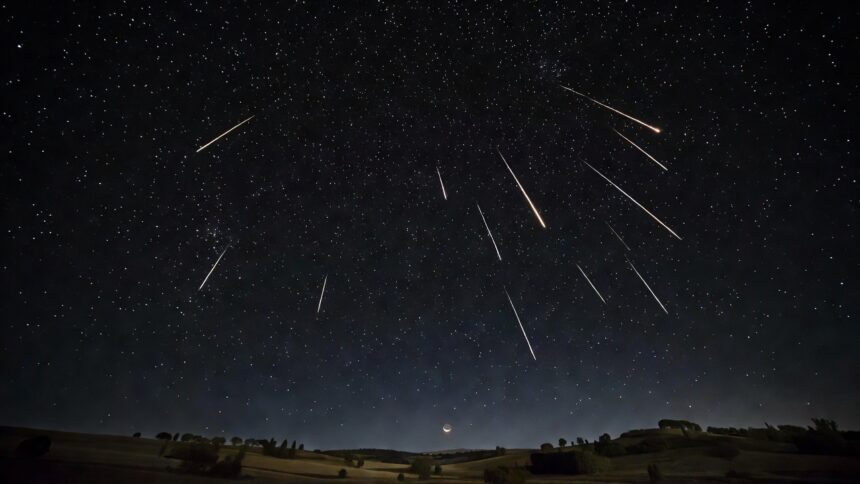
The Lyrid meteor shower peaked April 21-22, 2026, offering up to 20 shooting stars per hour with favorable conditions from a dim crescent moon that set early, NASA reported. Visible best in the Northern Hemisphere and originating from comet Thatcher’s debris trail, the display ranks among the oldest known with sightings over 2,500 years old, while the Associated Press provided guidance on optimal viewing after midnight in dark locations.
A NASA assessment found the Lyrids active from around April 17 to 26 with the peak occurring in the early hours of April 22 as Earth traversed the densest part of the comet’s debris. Space.com reported that spectacular photos of the meteors were captured from both Earth and space during the nights surrounding the peak. The shower produced fast-moving shooting stars radiating from near the star Vega in the constellation Lyra. Maria Valdes, who studies meteorites at the School of the Art Institute of Chicago, said in an Associated Press interview, “We only get to see the actual comet once every 415 years. But we pass through the grains that have been left in its wake every year around the same time.”
The Associated Press explained that meteor showers occur when Earth plows through debris trails left by comets, heating the particles to produce fiery streaks known as shooting stars. Most such events stem from cometary debris rather than asteroids. A handful of random meteors are visible on any given night but predictable showers like the Lyrids offer a greater spectacle. The 2026 peak benefited from low moonlight allowing clearer views for dedicated observers.
To maximize chances of seeing the Lyrids the Associated Press recommended heading outside after midnight and finding a spot away from city lights and tall buildings. Eyes require at least 15 to 30 minutes to adapt to the darkness during which time one should avoid using phones. Lawn chairs or sleeping bags can make the wait more comfortable as patience is needed for the meteors to appear. They seem to originate from the constellation Lyra in the northeastern part of the sky.
Astronomer Lisa Will with San Diego City College told the Associated Press, “A meteor looks like a trail of light in the sky. What you tend to detect is the motion against the background.” This description helped many first-time watchers understand what to look for during the April event. Following the Lyrids the Eta Aquarids meteor shower originating from Halley’s comet was due to appear in early May. NASA figures show the Lyrids have been observed for more than 2,700 years.
Data from NASA places the typical Lyrid rate at around 15 to 20 meteors per hour under ideal conditions during the peak. In 2026 reports from Space.com indicated the shower put on a spectacular show with images captured showing meteors blazing through the atmosphere near Vega. Activity continued at lower levels until about April 25. The event served as a reminder of the annual celestial calendar that includes several major showers throughout the year.
Historical records compiled by astronomers show Lyrid sightings extending back over 2,700 years according to NASA. This longevity underscores the consistency of the comet’s orbit and debris path. For those who missed the 2026 display similar opportunities arise every April with varying conditions based on moonlight and other factors. The next prominent shower after the Lyrids in 2026 was the Eta Aquarids in May as noted in the Associated Press coverage.