ع
ع


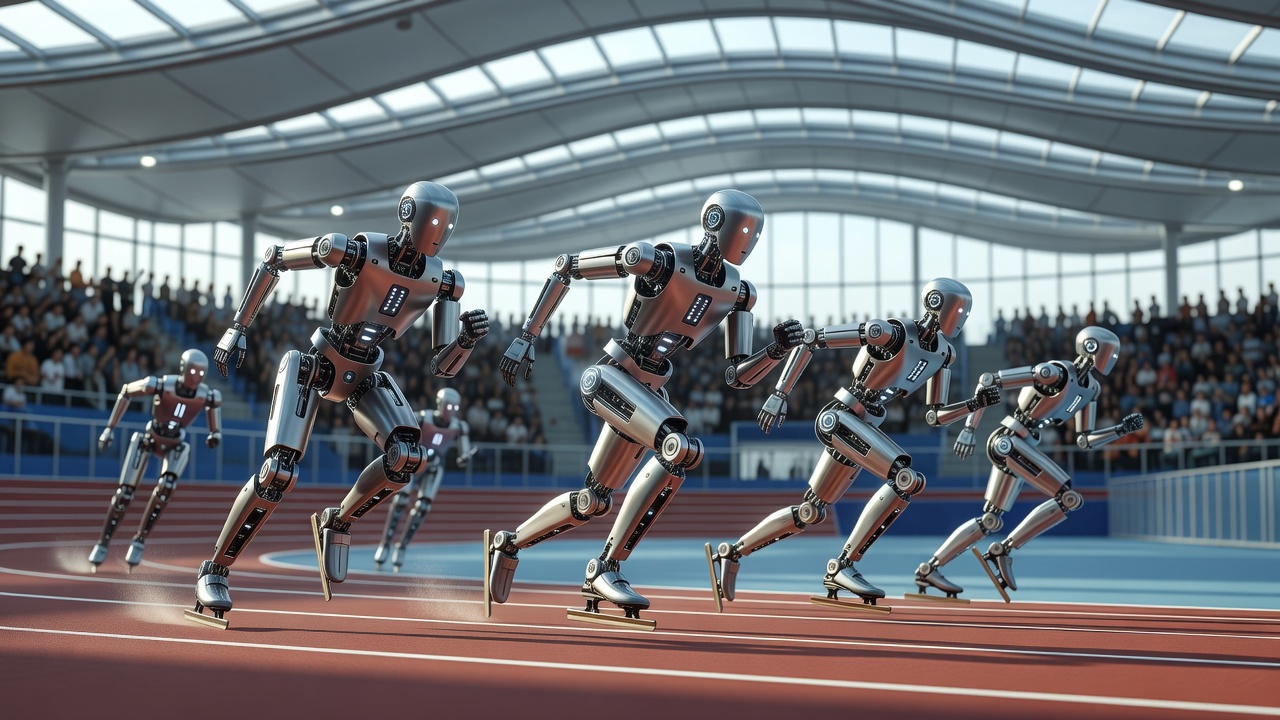
The second World Humanoid Robot Games opened on August 22, 2026, at Beijing’s National Speed Skating Oval with a record number of entrants, according to Global Times data. A total of 666 teams fielded 2,056 robots from 16 countries spanning six continents, representing more than a fourfold increase in participating machines from the previous year. The event features 51 competitions, combining athletic contests with practical workplace simulations, as organizers seek to advance humanoid technology.
Robots compete in boxing, football and sprinting at World Humanoid Games, drawing on demonstrations that included a machine performing Cristiano Ronaldo’s signature ‘Siuuu’ celebration after scoring. In the football exhibition, teams of seven robots each took to the pitch in a match that showcased improved abilities in dribbling and diving saves compared with prior outings. A Business Insider report observed that while progress was evident, the pace remained deliberate and occasional collisions occurred.
Sprinting events produced times that eclipsed human benchmarks on the opening day. One humanoid robot completed 100 meters in 9.39 seconds, beating Usain Bolt’s longstanding record of 9.58 seconds, a Global Times report stated. Another covered 400 meters in 39.7 seconds, faster than the human world record, though braking difficulties led several competitors to crash into padded barriers positioned past the finish line.
Additional athletic demonstrations encompassed high jump, table tennis and martial arts displays, with one robot achieving a standing high jump of 288.43 centimeters. Boxing matches and tug-of-war contests have been added to the program this year to test strength and coordination. Human athletes participated alongside the machines in several showcase events to highlight comparative performance levels.
Beyond sports, more than 40 percent of the contests require full autonomy, according to a Huawei assessment relayed by Reuters. Scenario-based challenges include operating in simulated restaurants by preparing snacks in microwaves, sorting items in warehouses and performing precision tasks such as connecting electrical cables or prying open bottle caps. Xinhua news service detailed how these tests evaluate the robots’ capacity for perception, decision-making and fine motor skills in environments mirroring real industrial and service sectors.
The games build directly on the inaugural edition held in 2025, when 280 teams and roughly 500 robots competed in 26 events over three days. This year’s expanded schedule encompasses 1,301 individual matches, nearly triple the previous total, organizers indicated. A robotics investor attending the event told Reuters that the heightened intensity has imposed greater demands on battery management and thermal systems in the competing machines.