ع
ع


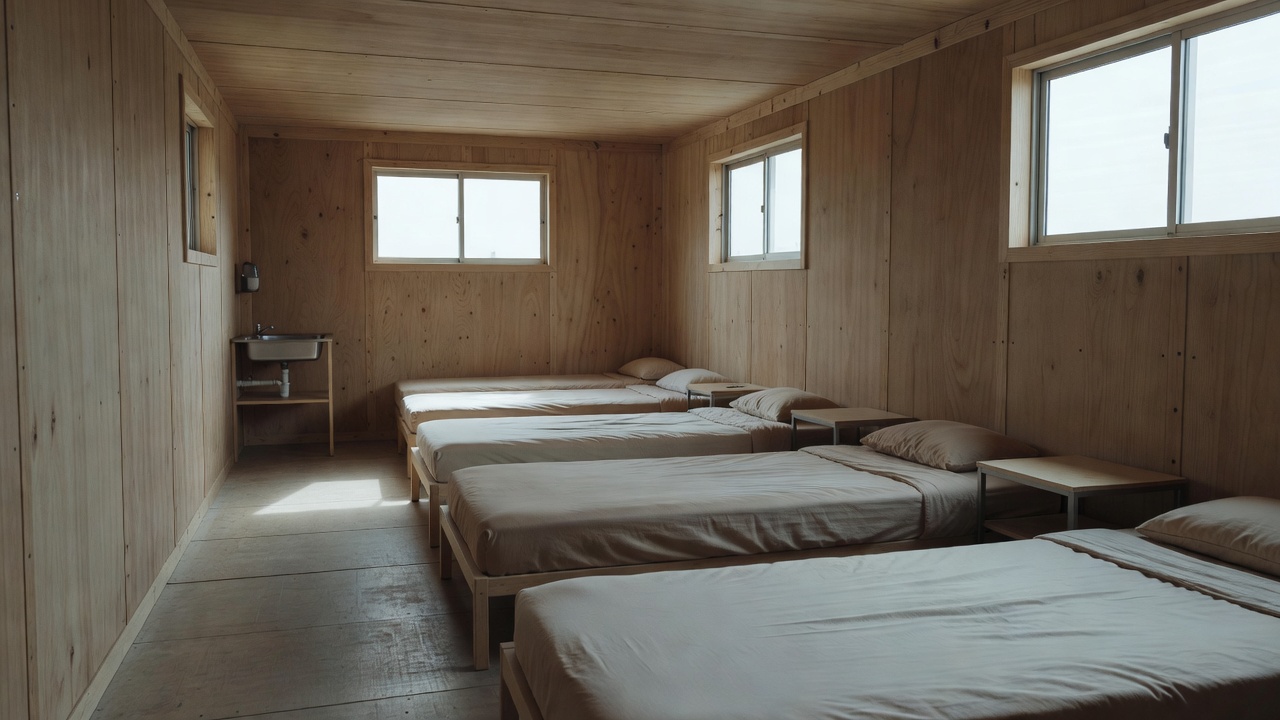
A vice president of the Korea Basketball Association described conditions in the temporary wooden container units as the worst he had encountered in his experience while noting that beds measuring 1.95 metres prevent athletes over two metres tall from stretching their legs. Jung Jae-yong said the arrangement was unreasonable for taller basketball players assigned to the container village near Nagoya port according to reports from multiple outlets including Al Jazeera.[[1]](https://www.aljazeera.com/sports/2026/9/14/south-korean-officials-decry-worst-ever-asian-games-accommodation) Byeon Jun-hyeong a guard on the South Korean men’s basketball team posted a video on social media showing a leaking sink that left the floor soaked in his hut with the caption “Please help us” as early arrivals settled in ahead of competitions already underway.
The Aichi-Nagoya Games opted against constructing a dedicated athletes village in favour of cost-cutting and environmentally conscious measures that distribute roughly 15,000 to 17,000 participants across hotels a cruise ship and the container complex. Yonhap News Agency reported that about 9,000 athletes will stay in hotels 4,000 aboard the 114,000-ton Costa Serena vessel and 2,000 in the container units where each can hold up to six people.[[2]](https://en.yna.co.kr/view/AEN20260915004000320) A Korean Sport and Olympic Committee official told reporters that shortages have affected not only the South Korean delegation of 1,052 athletes and officials but representatives from all 45 participating nations with some national Olympic committees receiving 20 fewer rooms than promised.
Complaints have extended beyond South Korea with Chinese media quoting athletes who likened parts of the setup to a refugee camp rather than a games village while Philippine officials resorted to Airbnb bookings for some coaches and support staff. Hundreds of athletes were evacuated briefly from the accommodation last week due to flooding from record rainfall that also caused leaks at several venues according to coverage in The Straits Times.[[3]](https://www.straitstimes.com/sport/asian-games-cruise-ship-arrives-as-accommodation-complaints-grow) South Korean basketball association officials added that temporary cabins on the cruise ship appeared even worse than the container units based on second-hand accounts from their delegation.
Organisers have acknowledged the dissatisfaction and pledged concrete improvements to living conditions. Accommodation manager Yuta Matsuo told Reuters that the committee is fully aware of concerns from athlete delegations and is taking steps to resolve them rather than simply noting the issues.[[4]](https://www.reuters.com/sports/asiad-organisers-pledge-address-accommodation-complaints-cruise-ship-arrives-2026-09-15/) Matsuo suggested athletes make full use of shared spaces on the cruise ship despite some smaller cabins while emphasising ongoing efforts to ensure participants feel the journey to Aichi and Nagoya was worthwhile.
In late August the Aichi-Nagoya Asian Games Organising Committee and the Olympic Council of Asia issued a joint statement confirming that all athletes and officials registered before the July entry deadline had secured appropriate accommodation despite registrations rising from an initial 15,000 to more than 17,000. Reuters reported that Governor Hideaki Omura who heads the committee had earlier cited limited manpower and budget as reasons additional late entries could not be easily housed.[[5]](https://www.reuters.com/sports/asian-games-organisers-oca-say-accommodation-secured-despite-entry-surge-2026-08-28/) The games will feature competitions in 41 sports with some such as basketball and football already in progress ahead of the official opening on Saturday.
Japanese team officials struck a more positive note with deputy chef de mission Mizutori Hisashi highlighting the inclusion of washing machines in each container unit as a welcome feature that eases a common burden for athletes. He acknowledged that the container housing might feel cramped for larger groups or taller individuals but described the overall village atmosphere as functional if somewhat subdued compared with past events. The setup reflects a broader shift toward streamlined multisport events in Japan following the spectator-limited Tokyo Olympics in 2021.