ع



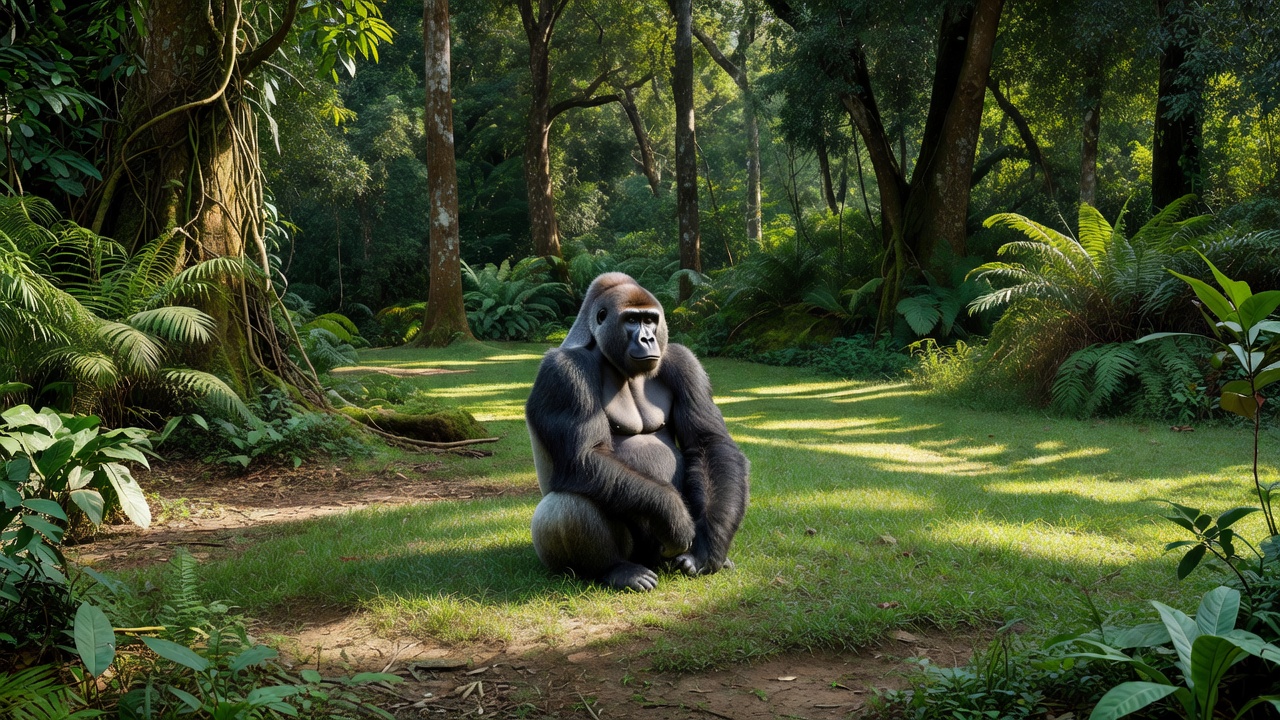
The Lekedi Foundation hopes to identify either another rescued gorilla or one transferred from an accredited zoo that aligns with Jojo in terms of genetics, health, personality and compatibility. An international committee would assess and approve any such move, the BBC News report stated. No one at the sanctuary can predict how the long-isolated male will react to sharing his environment after years without gorilla company. Carers believe the introduction could allow Jojo to develop social bonds that have been absent throughout his life.
Jojo was snatched from the wild as an infant when poachers killed his family, according to the BBC News account. The young ape then endured nearly his entire early life inside a tiny cage at a private zoo in Gabon before his rescue at age 11. He first stepped onto grass in 2015 upon arrival at the Lekedi Foundation sanctuary, where he has since adapted to a more natural setting yet remains the only gorilla in residence.
A primatologist consulted in the BBC report emphasised that gorilla social life extends beyond active interaction to include simply sitting together and sharing space quietly. Jojo has never had the chance to engage in such behaviour with another of his species. The foundation is considering either a female or a compatible male as a potential companion for the now prime-aged ape.
Keeper Makaba told the BBC, “It would be good for him to have a companion. Because being alone is like being cut off from the world – it’s like being in prison. Having another gorilla there would be a good thing for him.” The statement underscores the psychological toll of prolonged isolation on an animal wired for group living. Sanctuary staff continue to monitor Jojo closely while exploring options for his future social integration.
Western lowland gorillas are listed as critically endangered, with the Gorilla Organization placing the wild population at fewer than 150,000 individuals. The subspecies faces ongoing pressure from bushmeat hunting, habitat clearance linked to logging and mining, and devastating disease events including Ebola outbreaks, according to the organisation’s assessment. These threats have prompted expanded focus on both in-situ protection and ex-situ management programmes.
The European Association of Zoos and Aquaria reported that its Endangered Species Programme managed 409 western lowland gorillas across 67 institutions as of September 2025. A genetic analysis published in the journal Animal Conservation this year found high heterozygosity and allelic richness in contemporary captive populations comparable to historical wild samples, with no detected loss of nuclear genetic diversity or signs of inbreeding. The study, led by researchers examining European zoo holdings, highlighted that such programmes help sustain viable insurance populations amid wild declines.
Careful compatibility assessments remain central to any introduction attempt at the Lekedi Foundation. Similar efforts in other sanctuaries have shown that successful pairings can significantly improve welfare for previously isolated great apes. The outcome for Jojo could inform approaches to other rescued gorillas facing parallel circumstances across Central Africa.