ع



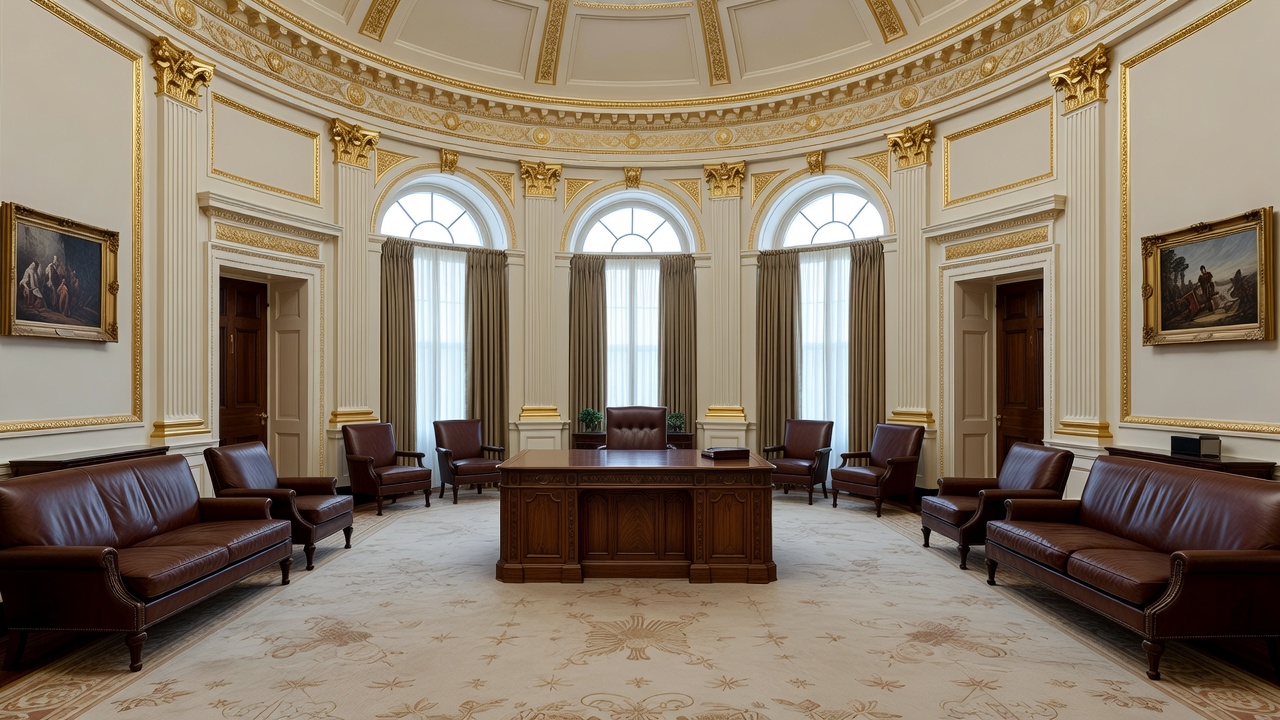
President Donald Trump signed a proclamation on Thursday that designates the Oval Office, Cabinet Room and adjacent areas as a national monument, his first formal action after Republicans lost control of Congress in the midterm elections two days earlier. Trump, speaking to reporters while seated at the Resolute Desk, stated that the move would prevent future presidents from altering or destroying the redesign he has implemented. “We’re making it a national monument, and it will not be allowed to be touched by anybody, destroyed, ripped down by stupid people, in order to build something in a slightly different shape,” Trump said, according to multiple accounts of the event. He added that the designation would make it “impossible for anybody to ever destroy this incredible space.”
The proclamation, issued under the Antiquities Act, requires the Interior secretary to manage the spaces and mandates documentation, review and consideration of alternatives before any substantial alterations or demolition, a Politico report on the announcement detailed. However, an Associated Press assessment found that the document explicitly does not restrict a president’s authority to redecorate, select furnishings or make operational and security modifications that do not impair the historic structure or architectural character. Trump separately claimed that major changes would require congressional approval, though that stipulation does not appear in the proclamation text itself. A successor could also revoke the designation, as Trump did with national monuments established by previous presidents.
The action comes amid Trump’s heightened focus on physical projects in Washington this week, including remarks at the Lincoln Memorial Reflecting Pool on Monday and discussions of an opulent ballroom, the Guardian reported. It marks the latest in a series of White House “beautification” efforts since he returned to office, which have included a permanent granite helipad on the South Lawn and the demolition of the East Wing for a $600 million ballroom. The proclamation signing occurred as Trump shifts attention to legacy-building measures following voter dissatisfaction with his economic policies that delivered a Democratic takeover of both chambers of Congress.
Since resuming his second term, Trump has overseen extensive modifications to the Oval Office, incorporating numerous golden accents on the walls, additional portraits, a copy of the Declaration of Independence and other decorative elements, according to a PBS News summary of the changes. He has also made cosmetic updates to the nearby Cabinet Room, where presidents traditionally meet with their cabinet secretaries. These alterations align with Trump’s background as a real estate mogul and his emphasis on what he describes as enhancing the aesthetic of the executive spaces.
The White House and its grounds have held National Historic Landmark status for decades, a designation intended to guard against abrupt modifications to the building, a BBC report on the proclamation noted. Trump’s order adds a layer of specific recognition as the Oval Office National Monument and calls for maintenance by the National Park Service to protect its historic character, architectural integrity and ties to the presidency. White House Historical Association records indicate that nearly every president since William Howard Taft, who created the room in 1909 with olive green wallpaper and dark wood furniture, has personalized the space, including Franklin D. Roosevelt’s 1934 relocation after a West Wing fire and Richard Nixon’s bold blue and gold scheme.
Trump’s latest proclamation arrives against the backdrop of ongoing debates over executive authority and the limits of one administration’s ability to bind its successors, as highlighted in Newsweek coverage of the event. The president suggested he would personally intervene if future alterations were attempted, stating in remarks covered by the Los Angeles Times that officials should “call me wherever I may be, and I will come back here and I will make sure it never happens.” Such statements underscore the personal investment Trump has placed in the redesign while highlighting questions about the proclamation’s long-term enforceability.