ع



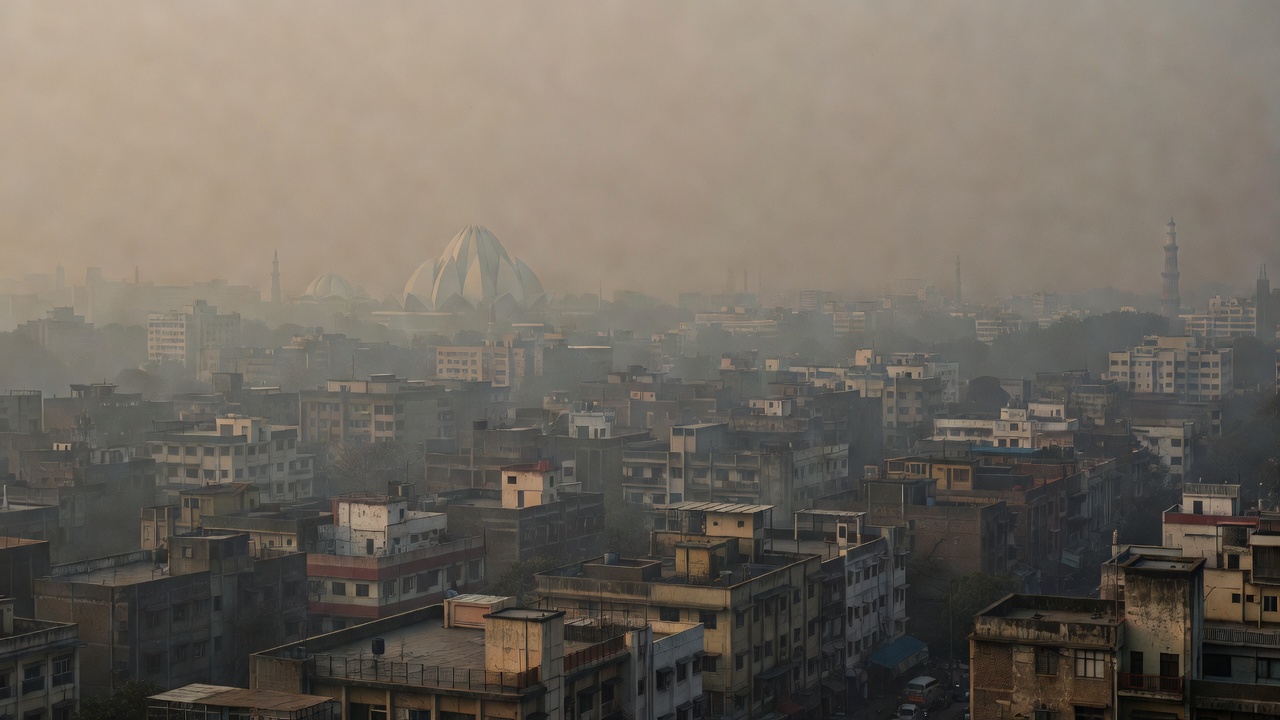
Central Pollution Control Board data placed Delhi’s overall Air Quality Index at 451 early on November 3 before it climbed to 488 by the morning of November 4 with several stations recording severe readings above 400. Rohini reported 429 Punjabi Bagh 424 and Bawana 408 according to the board while other areas including Patparganj and R K Puram stayed in the very poor category above 350. The Commission for Air Quality Management invoked Stage II measures on November 2 after Stage I failed to arrest the rise that began in late October when daily averages first crossed 200.
India’s environment ministry figures show vehicles account for 23 percent of the capital’s winter pollution biomass burning including farm stubble contributes 20 percent and industry adds nine percent. These steady sources combined with cooler November temperatures that limit vertical mixing to push PM2.5 concentrations more than 30 times the World Health Organization daily guideline in places. Monitoring firm IQAir recorded peaks above 461 micrograms per cubic metre on November 4 according to its network of sensors.
The Supreme Court allowed manufacture sale and use of certified green firecrackers in Delhi and neighbouring areas but only for limited windows on November 7 and 8. Crackers may be burst solely between 6am and 7am and between 8pm and 10pm local time during the Diwali weekend while all fireworks remain banned within 300 metres of hospitals schools care homes and other silence zones. Enforcement has historically proved challenging despite repeated outright bans on conventional firecrackers in prior years.
Delhi’s average daily AQI of 410 on November 3 already exceeded last year’s festival-day reading of 345 and the day-after figure of 351 according to India Today analysis of historical Central Pollution Control Board bulletins. The current trajectory means pollution has reached post-Diwali severity before celebrations begin on November 8. Health platforms equate conditions around 480 to the equivalent of smoking approximately 14 cigarettes a day.
Prolonged exposure to these fine particles can trigger respiratory ailments and aggravate heart and lung conditions with children the elderly and those with pre-existing illnesses at greatest risk according to public health advisories. The Graded Response Action Plan Stage II adds curbs on diesel generators construction dust and non-compliant trucks entering the city alongside higher parking fees and bans on coal-fired ovens in restaurants. Delhi Police have stepped up checks at borders such as Ghazipur to verify emission standards and pollution under control certificates.
The Commission for Air Quality Management has directed civic agencies to increase mechanical sweeping and water sprinkling on roads before peak traffic hours while the Indian Institute of Tropical Meteorology forecast indicates stagnant air will keep levels elevated through the festival period. Comparisons with October data show 2026 recorded no good-air days yet posted a monthly average 15 percent lower than 2025 according to AQI.in tracking. Authorities have also promoted public transport and electric vehicles to reduce the transport sector’s contribution in the critical pre-winter weeks.