ع



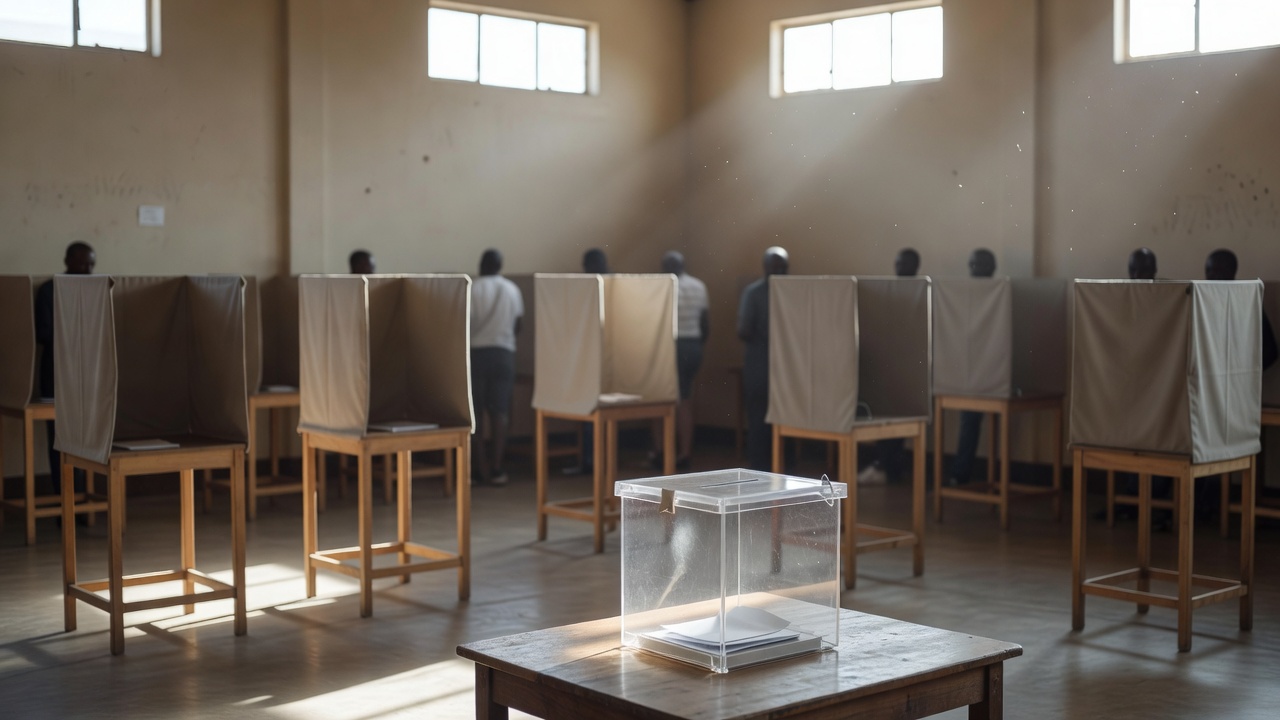
Polls ahead of South Africa’s local government elections on November 4 2026 indicate the African National Congress could see its support drop to as low as 31 percent in some surveys down from more than 60 percent in the 2011 municipal vote a Reuters report said. The fragmentation of the vote has made outright majorities harder to achieve in major municipalities forcing parties into coalition negotiations that will shape governance of key cities. Louw Nel a senior political analyst at Oxford Economics Africa told Reuters that the ANC’s declining support reflects voters dispersing among parties including the Democratic Alliance the Economic Freedom Fighters and uMkhonto weSizwe.
Statistics South Africa data published in September 2026 showed the economy contracted by 0.2 percent in the second quarter as mining output fell 3 percent manufacturing declined 1.8 percent and trade dropped 1.9 percent. The contraction came against a backdrop of projected annual growth of only 1.2 to 1.5 percent for 2026 well below the sub-Saharan African average of 4.5 percent forecast by the International Monetary Fund. Reuters reports have highlighted that youth unemployment remains above 60 percent while the overall jobless rate stood at 33.6 percent in the second quarter of 2026 one of the highest levels globally.
A voter identified only as Moroka told Reuters at a Democratic Alliance rally that she had shifted away from the ANC after seeing persistent poverty and a lack of change in her township. Such sentiments echo broader frustration with service delivery infrastructure collapse and corruption that analysts say have driven the ANC’s slide from 69.7 percent of the national vote in 2004 to 40.2 percent in 2024. The Institute of Race Relations 2026 polling placed ANC support at 36 percent while four recent national surveys compiled by Daily Maverick showed the party falling at least six percentage points below its 2024 result.
On November 3 2026 the ANC issued a statement rejecting the United States decision to terminate South Africa’s eligibility for duty-free access under the African Growth and Opportunity Act from January 2027 describing it as the weaponisation of trade against the country’s transformation agenda. The party said it would not allow economic pressure to dictate foreign policy or abandon land reform broad-based black economic empowerment and employment equity programmes. Reuters analysis indicated that while the move could lead to limited job losses in specific sectors such as automotive the broader economic impact would be contained since nearly 90 percent of South Africa’s exports to the United States already fall outside AGOA preferences.
The local elections come as the ANC navigates a government of national unity formed after its 2024 national election losses with coalition stability in municipalities viewed as critical for attracting investment and improving services according to the Mapungubwe Coalition Barometer. Oxford Economics Africa has noted that the Democratic Alliance is not capturing all disaffected ANC voters with support instead spreading across smaller parties complicating post-election talks. Public Authority data and economic assessments from bodies including the Bureau for Economic Research have consistently pointed to weak fixed investment and manufacturing sentiment remaining in contraction territory for multiple months.
Recent improvements in electricity supply have reduced the economic cost of power cuts by 83 percent from 2023 levels a Council for Scientific and Industrial Research report found yet challenges in water roads and safety persist as documented in multiple independent surveys. The ANC’s statement on the AGOA withdrawal further blamed domestic campaigns by groups including AfriForum Solidarity and the Democratic Alliance for contributing to international pressure. With results expected to confirm continued erosion of its urban base the party faces internal debates over future coalitions and policy direction in the coming weeks.