ع



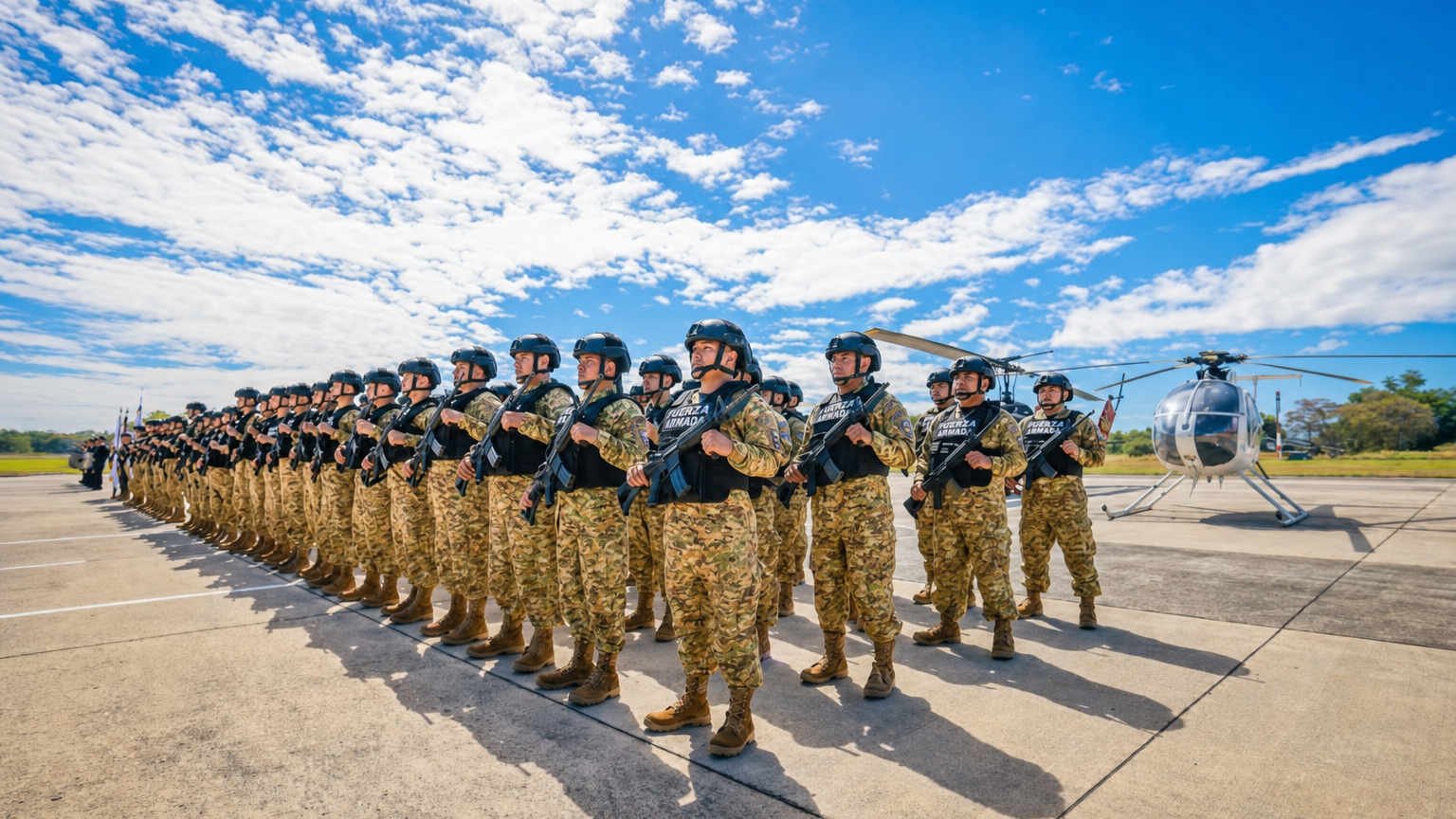
The Salvadoran foreign ministry announced the deployment of more than 2,000 soldiers on Wednesday following a phone conversation between President Nayib Bukele and Haitian Prime Minister Alix Didier Fils-Aime. The troops will focus on rescuing the four missing nationals while also assisting broader operations against armed groups that control swathes of the Caribbean nation. The ministry described the mission as a large-scale effort backed by several countries and international organizations. Bukele had previously ordered reinforcements after the October 18 incident, expanding an existing Salvadoran presence in the country.
The four missing Salvadorans served as aviation technicians with the UN-authorized Gang Suppression Force and were returning from a market to their base in an armored vehicle when attackers struck in the Croix-des-Bouquets area east of Port-au-Prince. Gunfire and explosives set the vehicle ablaze, forcing the occupants to leap out before they vanished, the Salvadoran armed forces reported. No gang has claimed responsibility for the ambush, though local outlets have linked it to groups active in the Plaine du Cul-de-Sac region. Haitian authorities classified the event as a kidnapping and declared locating the men an absolute priority.
Prior to the ambush, El Salvador maintained roughly 124 personnel in the Gang Suppression Force according to a United Nations report, a number that has now surged with the new arrivals. Reuters cited a Haitian security official as saying around 1,000 Salvadoran troops had reached Haiti in recent days, with subsequent updates from the Salvadoran government and outlets such as the Associated Press placing the total above 2,000. The influx makes El Salvador the largest single contributor to the force, which a Reuters assessment found stands at approximately 2,000 personnel overall, or just over one-third of its authorized ceiling of 5,550. This deployment represents the most substantial military commitment by any one nation in Haiti since the close of the prior UN stabilization mission in 2017, Infobae reported.
Bukele rejected an earlier claim that four bodies recovered in the area belonged to the missing technicians, posting on X that the remains included a child and did not match the profiles of his personnel. “They are not our men,” Bukele said, adding that the remains included a person in a uniform from another army and even a Chadian identification card. The Salvadoran leader had warned in a message written in Haitian Creole that gangs would face severe consequences if the four were not returned alive and unharmed.
A October briefing to the UN Security Council stated that gangs had killed more than 1,000 people and abducted over 100 between July and September, underscoring the scale of violence the Gang Suppression Force was created to confront. The force, which replaced a struggling Kenyan-led mission, has expanded its operations but remains constrained by resources and the reach of armed groups that have displaced 1.5 million people and driven acute food insecurity for 5.8 million others, according to UN figures. Jack Christofides, the Special Representative for the Gang Suppression Force, warned that deploying personnel without adequate tools endangers both troops and civilians. El Salvador’s contribution of aviation support had focused on medical evacuations rather than direct combat prior to the ambush.
The additional Salvadoran forces include special operations units that arrived in waves beginning October 22, with flights continuing through the weekend as reported by the Miami Herald and tracked on aviation monitoring sites. A US military official told Reuters that Southern Command provided C-130 transport aircraft to assist with some troop movements. The precise command structure for the enlarged Salvadoran contingent and the expected duration of its stay have not been publicly detailed. Haitian officials have stressed that any operations must avoid harming civilians living in gang-influenced neighborhoods.