ع



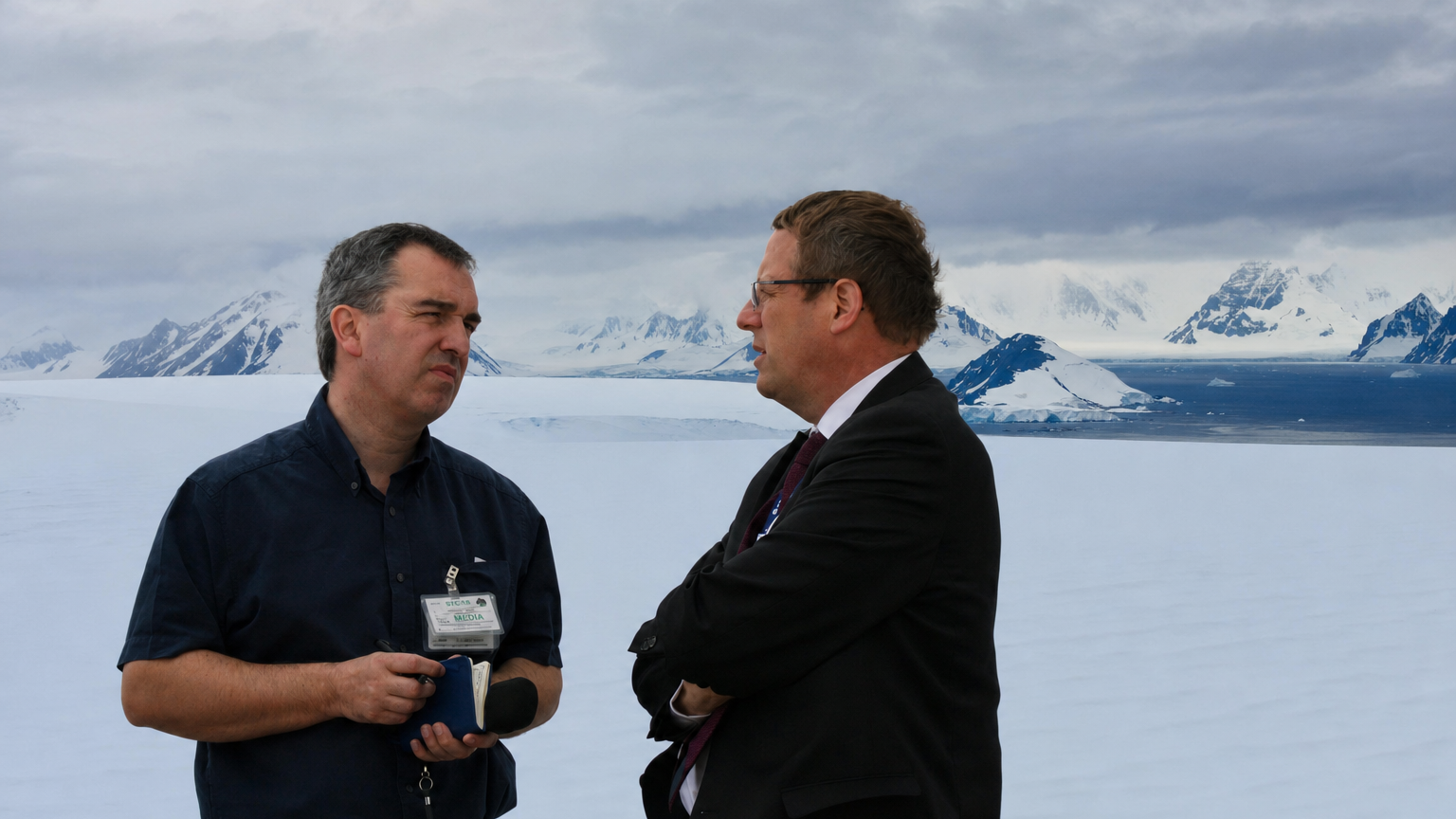
The British Antarctic Survey confirmed that a 12-kilometre-long glacier on Adelaide Island now carries the name Amos Glacier following approval by the UK Antarctic Place-names Committee. Jonathan Amos spent more than two decades at the BBC covering polar science, including multiple expeditions that examined ice loss and its global implications. His work helped translate complex glaciological data into accessible stories for international audiences, the survey noted in its summary of recent naming decisions.
According to the UK Antarctic Place-names Committee guidelines available on the GOV.UK portal, proposals for new names must demonstrate a clear and enduring link to Antarctic activity before they can be endorsed by the territory’s commissioners. The committee was established in 1945 to standardise naming conventions across the British Antarctic Territory and coordinates with other national bodies through the Scientific Committee on Antarctic Research. Its decisions feed into the Composite Gazetteer of Antarctica, which AntarcticGlaciers.org reported in 2026 now holds entries for roughly 19,000 distinct features.
A comparable honour occurred in December 2020 when the University of Bristol announced that a glacier on the same island had been named after Professor Jonathan Bamber for his three decades of satellite altimetry research that mapped the continent’s bedrock and ice thickness. Bamber described the recognition as completely unexpected yet aligned with the United Kingdom’s long record of Antarctic investigation. Such designations highlight the breadth of contributions ranging from field data collection to public communication that sustain scientific interest in the region.
The British Antarctic Territory spans approximately 1.7 million square kilometres, equivalent to nearly twice the size of the United Kingdom itself, according to official territorial descriptions maintained by the Foreign, Commonwealth and Development Office. Place names within it record both early explorers from the 19th and 20th centuries and contemporary figures whose work has advanced understanding of climate processes. The UK Antarctic Place-names Committee evaluates submissions against international standards to avoid duplication and ensure names support safe navigation and accurate scientific referencing.
Amos retired from full-time BBC duties in 2024 after filing reports from research stations including Rothera and Halley that detailed everything from emperor penguin colonies to the calving of giant icebergs. His coverage frequently emphasised the connection between Antarctic change and rising sea levels affecting coastal communities worldwide. The newly named glacier lies in an area where British scientists have conducted extensive radar and seismic surveys of subglacial features for decades.
In 2023 the British Antarctic Survey publicised three additional names honouring a polar engineer, a subglacial researcher and a geochemist, illustrating the committee’s ongoing recognition of diverse roles in sustaining Antarctic programmes. These names, like the latest addition, appear on updated maps and in the territory’s gazetteer to aid logistical planning for future field seasons. The process ensures that the human stories behind Antarctic science remain embedded in the continent’s official geography.