ع



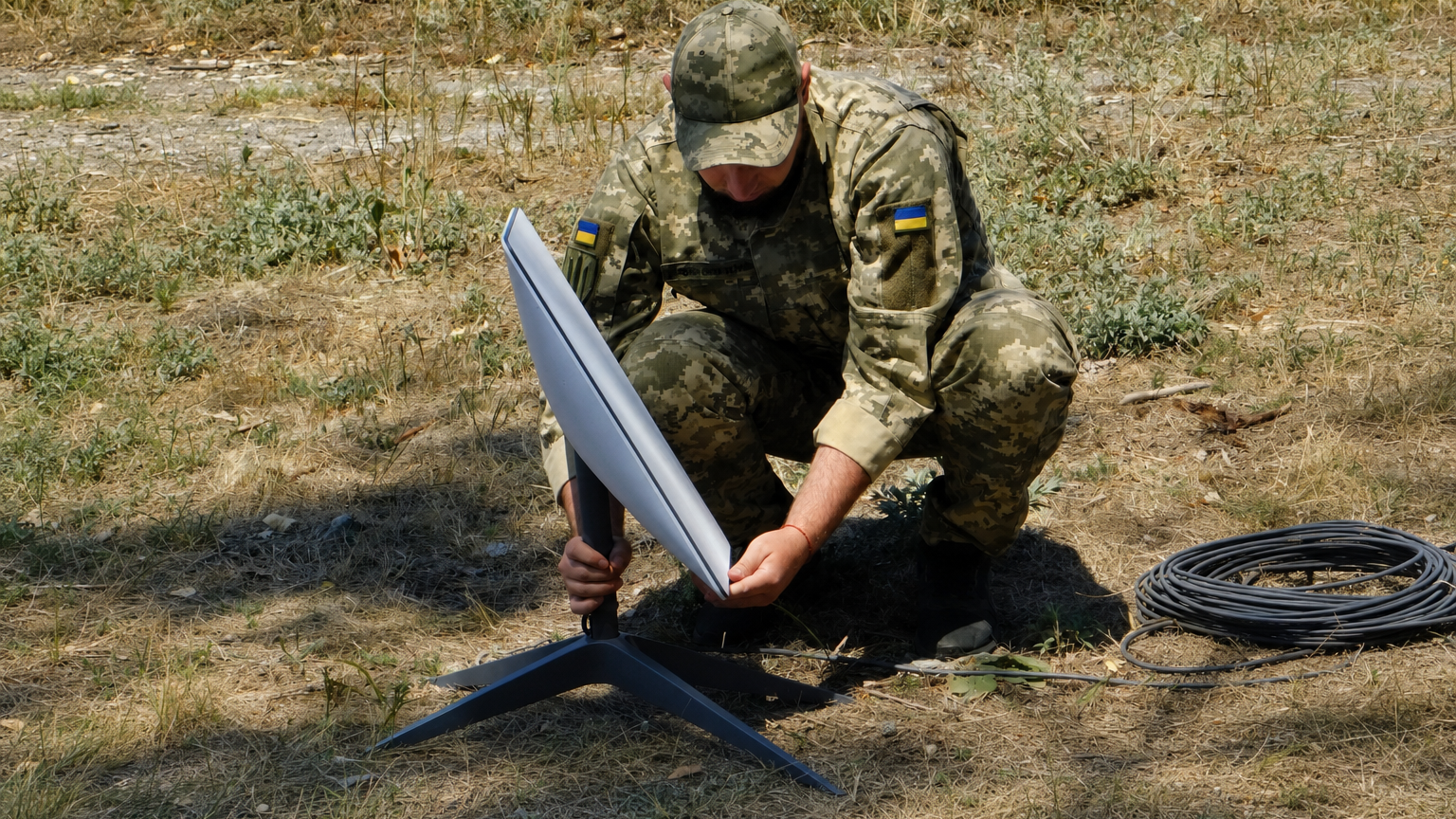
Elon Musk announced that SpaceX had restricted Ukraine’s access to its Starlink satellite internet service because the country’s military violated the terms of service. The billionaire posted on X that Ukrainian forces had used the civilian system for offensive drone strikes aimed at killing people, describing it as a loophole that was closed the previous week. Musk added that using Starlink, a civilian commercial service, for such purposes had never been allowed nor should it be.
Ukrainian officials rejected the accusation and confirmed the restoration of service. Defence Minister Yevhenii Khmara said monitoring systems recorded stable connections at speeds exceeding 400 kilometres per hour. President Volodymyr Zelenskyy stated that Starlink and its military version Starshield had resumed operations at pre-restriction speeds, which he described as crucial for frontline logistics and defending against Russian Shahed drones.
The restrictions, which limited connections on equipment moving faster than 160 km/h, had disrupted Ukrainian air defences and drone operations for more than a week, according to a Reuters assessment. Ukrainian military units reported having to cancel missions due to connection drops and reduced control over drones. Presidential adviser Serhiy Beskrestnov noted that the country is physically unable to use Starlink for long- and medium-range attack drone operations.
The throttling occurred amid heightened tensions between Washington and Kyiv over Ukrainian strikes on Russian oil infrastructure, Reuters reported. US President Donald Trump had criticised such attacks for driving up global energy prices and pressed Ukraine to halt them. Reports from multiple outlets indicated the slowdown came after a broader row, with conflicting accounts over whether the White House or SpaceX initiated the limits.
Starlink has served as a critical communication tool for Ukrainian forces since Russia’s full-scale invasion in 2022, a fact highlighted across reporting by Reuters and CNN. A March 2026 assessment by the SkyCommons Observatory placed the total number of Starlink terminals in Ukraine at over 160,000, with approximately 100,000 dedicated to military use. The system provides resilient internet resistant to jamming, enabling battlefield coordination, supply drops and drone guidance, and no equivalent European alternative exists in the short term.
Musk defended his company’s record in the post, stating that SpaceX has done more to defend Ukraine than any private company on Earth by far. He distinguished between the commercial Starlink and the military-grade Starshield, which he said is controlled by the US government. Ukrainian officials maintained that their drone operations complied with agreements and used the appropriate systems.
Beskrestnov further clarified in a Telegram post that Ukraine does not rely on Starlink for strikes on Russian territory, including refineries, which operate at lower speeds of 70 to 90 km per hour. The restoration followed interventions including a reported call from Trump to Musk to reinstate access, according to a CNN account from a person familiar with the matter. The episode has highlighted the strategic importance of satellite communications in modern warfare, as noted in a Financial Times analysis of the conflict.