ع
ع


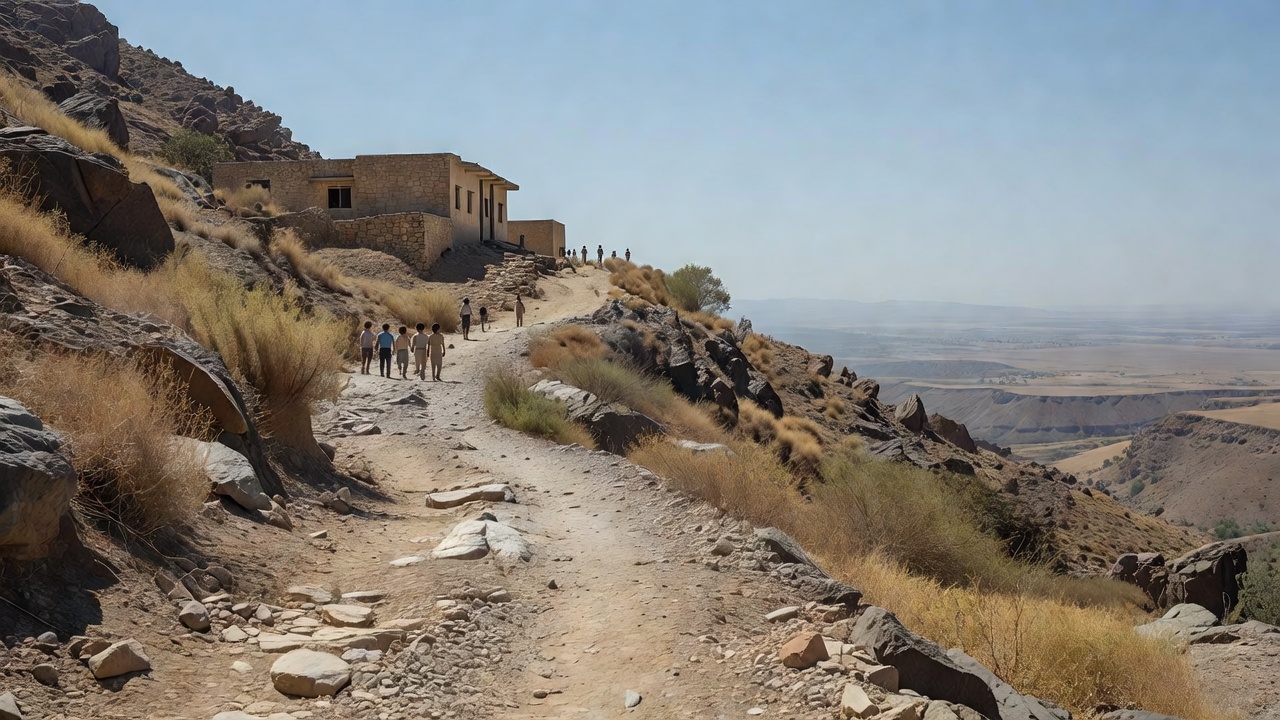
BBC News reported from Taiz this week that 10-year-old Rafeef walks uphill each morning to her mountainside school with her back to Houthi sniper positions across a contested no-man’s land valley, where government troops hold one side and the Iran-backed group controls the other. The journey fills her with fear even as she looks forward to seeing friends and studying subjects that include mathematics, Arabic and Islamic education, with English lessons set to begin next year. Rafeef’s family relocated to Taiz from the Red Sea port of Hudaydah nine years ago in search of safety after the Houthis seized that city, yet the new location has brought its own perils, including a mortar strike two years ago that sent shrapnel through their home while the children were briefly away.
According to a UNICEF assessment released in mid-September 2026, renewed hostilities across western Taiz and other areas have displaced more than 104,000 people including over 57,000 children in just two weeks, while at least nine children have been killed and 12 injured in related violence. The clashes, which escalated in early September after a period of relative calm since a 2022 truce, have disrupted 26 health facilities and led to the closure or suspension of 243 schools affecting more than 137,000 students. UNICEF data places the total number of children requiring humanitarian assistance in Yemen at 12.2 million, with 3.2 million already out of school before the latest upsurge and more than 2.2 million children under five suffering acute malnutrition.
Al Jazeera reported in April 2026 that a 14-year-old boy named Ibrahim was killed by a suspected Houthi sniper while walking to school in Taiz with his siblings, an incident that occurred along a road just 150 metres from his home and highlighted the persistent threat in the governorate where a United Nations Civilian Impact Monitoring Project assessment found that 66 percent of all sniper fatalities in Yemen had occurred. The boy’s 11-year-old sister described how he was joking moments before being shot from roughly a kilometre away and collapsing in her arms. Such attacks form part of a pattern in which Taiz’s mountainous terrain provides snipers with vantage points over civilian routes including paths to schools and water sources.
A Guardian dispatch from late September 2026 detailed how a missile strike near one Taiz school triggered panic, crying and long-term psychological trauma among pupils, forcing the facility educating more than 600 children to shut its doors amid fighting on multiple fronts to the south, west and north. The principal told the newspaper that resuming classes remained impossible while the area stayed chaotic, depriving students of any sense of normality in a region where many families have already fled renewed Houthi advances. Similar incidents have compounded an education crisis in which Save the Children found that roughly one-third of children surveyed in parts of southern Yemen had never attended school at all while another quarter had dropped out.
The Halo Trust, a demining organisation, stated in a September 2026 briefing that Yemen ranks among the countries most contaminated by explosive remnants of war, with landmines and unexploded ordnance killing 260 civilians including 44 children in 2024 alone as youngsters mistake devices for toys or encounter them en route to school or while herding livestock. Project Masam, another clearance initiative, documented that Houthi forces had laid mines and improvised explosives around at least 344 schools across six governorates including Taiz, resulting in damaged classrooms, teacher flight and parents keeping children at home. These hazards have pushed some families to choose child labour or early marriage over education as economic pressures mount.
Anadolu Agency reported at the end of September 2026 that Houthi mortar fire killed a 12-year-old boy returning from school in Taiz city’s Salah neighbourhood along with four other people in a separate missile strike on the town of Al-Turbah, part of a broader escalation that has included shelling in multiple districts. The incidents occurred as government ministers documented civilian casualties without immediate comment from the Houthis. Medical staff at al-Thawra hospital described intensive care wards filled with victims including children injured by shrapnel while carrying out routine tasks near the front lines.
UNICEF has warned that the cumulative impact of a decade of conflict continues to rob Yemeni children of safety and futures, with the latest fighting only deepening vulnerabilities in a country where 40 percent of health facilities function only partially or not at all. The organisation has worked to provide psychosocial support, safe learning spaces and risk education on explosives even as access remains constrained in contested zones like Taiz. Local educators and families nevertheless persist in attempts to maintain some schooling wherever conditions briefly allow.