ع
ع


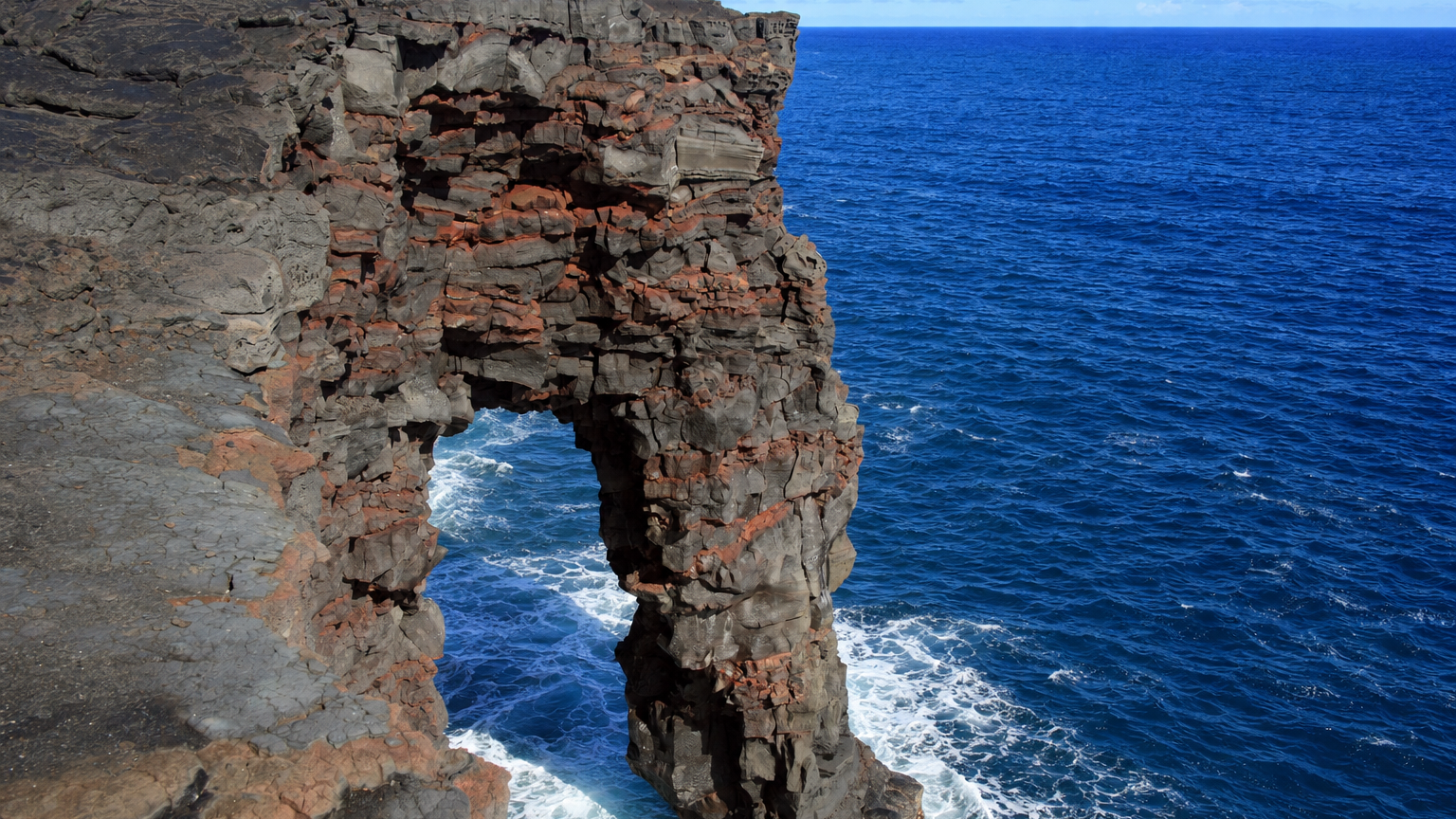
The National Park Service announced this week that the Hōlei Sea Arch had collapsed into the Pacific Ocean marking the latest change to the remote coastline of Hawai’i Volcanoes National Park on the Big Island. A park statement said the formation was still standing on September 23 but was gone by September 27 when the park reopened after closing for Tropical Storm Nolo with the exact timing of the collapse remaining unknown. The National Park Service urged visitors to stay away from unstable cliff edges which drop vertically into the ocean and present serious falling hazards according to its October 1 release. Officials noted that photos on social media showed people entering closed areas near the former arch site putting themselves and potential rescuers at risk of falling or drowning.
According to the National Park Service the 90-foot arch formed roughly 550 years ago when lava from an eruption reached the sea and was subsequently carved by waves through differential erosion in which softer rock wears away faster than harder layers. A CNN report drawing on park data detailed how the coastline flanking the arch had exhibited instability for years with earthquakes from the 2018 Kīlauea eruption and summit collapse damaging nearby cliffs. In January 2020 new cracks prompted the closure of the original viewing area and the opening of a safer one further back in March of that year. Later in 2020 massive surf from Tropical Storm Darby broke off a significant chunk from the lower part of the arch the National Park Service reported.
The National Park Service had long described the arch as temporary in geological terms and stated that others will replace it as the cliff slowly migrates inland over time. Wikipedia entries updated after the event and cross-referenced with United States Geological Survey information note that the arch was made of basalt and took its name from the Hōlei Pali escarpment on the slopes of Kīlauea. A 2022 statement from park interpretation manager Ben Hayes told USA Today that the constantly changing landscape is very much part of a visit to Hawai’i Volcanoes National Park. This process of creation and destruction through marine erosion continues to shape the southern coast of the island according to multiple scientific accounts.
Hawai’i Volcanoes National Park officials emphasized in their release that the arch stood at the end of Chain of Craters Road which was cut short by lava flows from Pu’u ‘O’o crater since 1990 making it a key tourist attraction for years. KITV and SFGate reports confirmed that four people have fallen to their deaths at the site in the past decade underscoring the inherent dangers of the wave-swept cliffs. The park has now reinforced warnings against approaching the edges or entering restricted zones as the volcanic coastline can collapse without warning. Such incidents have increased following the arch’s disappearance with visitors drawn to document the altered landscape.
A Fox Weather analysis tied the collapse to a series of recent tropical systems including Hurricane Nolo which reached Category 4 strength offshore and brought high surf to the Big Island though the National Park Service stopped short of attributing the failure directly to the storm. The surrounding area experienced significant rainfall and wave action during the closure period according to local weather service data. Prior events such as the 2018 volcanic activity and 2020 storm damage had already weakened the structure progressively over time. Experts monitoring the park’s geology expect further transformations along this stretch of coastline as erosion persists.
The National Park Service release distributed via official channels reminded the public that the loss of the arch aligns with the dynamic nature of Hawaii’s volcanic islands where new land is continuously formed and reshaped. Hawai’i Public Radio coverage noted that the feature had become one of the park’s most photographed spots before its demise drawing thousands of visitors annually to witness the power of natural forces. In the aftermath social media reactions from past visitors expressed a sense of loss while park rangers focus on safety and education about ongoing geological processes. This event adds to a pattern of coastal changes observed across the Hawaiian chain according to long-term monitoring by federal agencies.