ع
ع


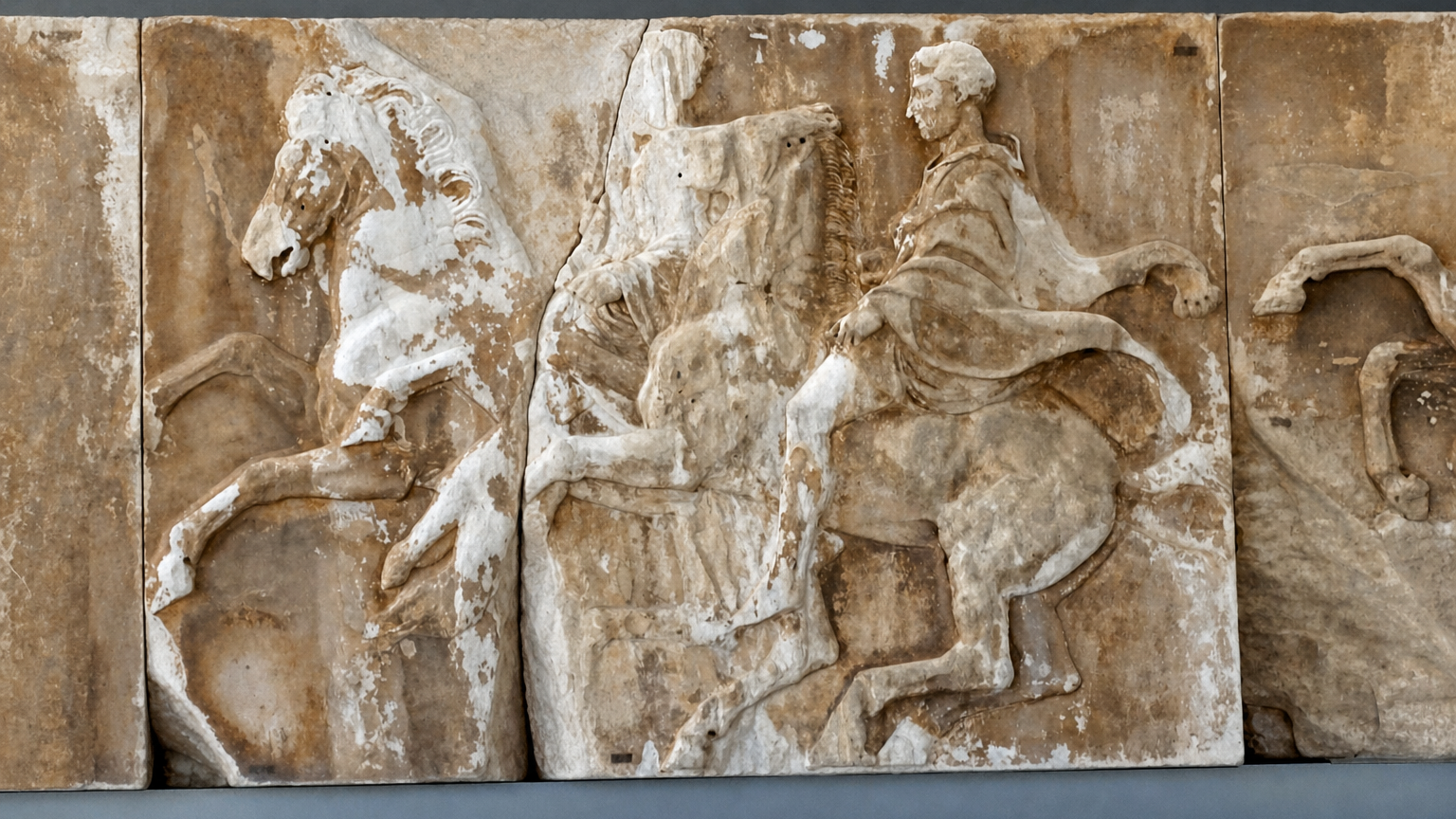
In an opinion piece published in The Guardian on Thursday, Greek Prime Minister Kyriakos Mitsotakis urged UK Prime Minister Andy Burnham to return the Elgin Marbles permanently and dismissed proposals for a loan arrangement similar to that applied to the Bayeux Tapestry. Mitsotakis wrote that Greece cannot accept any arrangement that would require it to recognise the British Museum’s ownership of the sculptures or a scheme that would mean borrowing parts of its own monument. The prime minister added that the Parthenon presents the reverse situation where integral parts of the monument were forcibly removed and dispersed, making permanent reunification the objective. Greek PM urges UK PM to return Elgin Marbles permanently as part of restoring the physical, aesthetic and conceptual integrity of the ancient site.
Reports in The Telegraph indicated that talks between the Greek government and the British Museum on repatriation have collapsed, prompting Mitsotakis to intervene publicly through the newspaper column. The Greek leader recalled that in 2023, before becoming prime minister, Andy Burnham had urged that the sculptures be sent back with no strings attached. Mitsotakis stated he could not agree more with that position and called for political will and courage to transform the dispute into an act of cultural friendship between the two nations.
An Associated Press explainer on the dispute details how Lord Elgin removed the sculptures from the Parthenon between 1801 and 1815 while serving as British ambassador to the Ottoman Empire, which then controlled Greece. The pieces were sold to the British government and entered the British Museum collection in 1816, five years before Greek independence. Greece has maintained that the removal lacked valid authorisation and that the surviving fragments should be displayed together in the Acropolis Museum, which opened in 2009 with space reserved for the full set.
The British Museum holds 17 pedimental figures, 15 metopes and 247 feet of the frieze while the Acropolis Museum displays the complementary sections, according to data compiled by Greek authorities and cited in the Associated Press report. A Turkish culture ministry official told the Associated Press in 2024 that searches of Ottoman archives found no evidence of a firman granting Elgin permission to take the marbles. The British Museum has consistently maintained that the sculptures were legally acquired and has proposed a Parthenon partnership involving reciprocal loans and joint exhibitions.
Arts minister Sir Chris Bryant told a parliamentary debate in April 2025 that existing UK law puts paid to hopes of a permanent return, as the British Museum Act 1963 requires the institution to retain its treasures and limits loans to temporary periods of no more than three years. Downing Street spokespeople have reiterated after recent bilateral meetings that the government has no plans to change the law and considers the issue a matter for the British Museum trustees. Greek officials nevertheless continue to highlight shifting public opinion in Britain and precedents set by other museums returning cultural items as factors that could influence future discussions.
Mitsotakis stressed that the case for reunification does not amount to an argument for emptying the world’s museums and concerns only the specific circumstances of a dismembered monument of outstanding universal value. He noted that the Acropolis Museum was designed precisely to allow the sculptures to be viewed in visual relationship with the Parthenon itself. The Greek prime minister said his government had held detailed discussions with the British Museum in recent years and remains prepared to explore mutually beneficial cooperation without undermining its position.