ع
ع


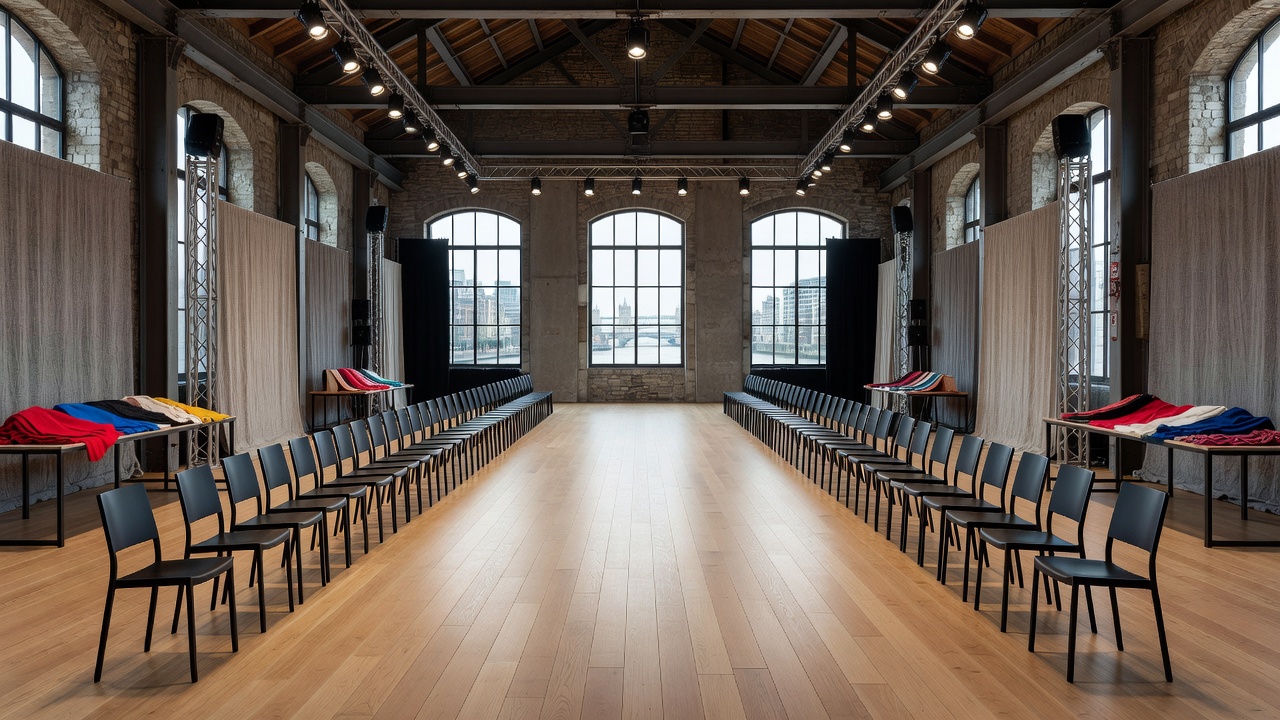
The British Fashion Council reported renewed commercial momentum at the September 2026 edition of London Fashion Week with accredited international buyer attendance rising 41 percent year on year, yet several established British names opted to present elsewhere as the schedule featured 47 catwalk shows and 23 presentations. WWD reported that brands including Knwls have shifted to Milan while Kiko Kostadinov aligned with Paris Fashion Week, continuing a pattern seen with Victoria Beckham’s move to the French capital three years ago. According to a Guardian assessment, the trend has intensified debates about the event’s distinct identity when key talents no longer appear on its official calendar.
British Fashion Council data places the wider industry’s annual contribution to the UK economy at £68 billion while supporting more than one million jobs, though London Fashion Week itself generates an estimated £269 million in direct impact each year. A POLITICO review of post-Brexit conditions highlighted how clothing exports fell more than 60 percent from £7.4 billion in 2019 to £2.7 billion in 2023, with added customs costs and bureaucracy cited as factors pushing smaller brands toward continental fashion weeks. Guardian reporting noted that Brexit, combined with pandemic supply chain issues and reduced sponsorships, has made staging shows in London financially prohibitive for many emerging labels.
British Fashion Council chief executive Laura Weir, who assumed the role in April 2025, described her mandate to restore the sector’s global standing as “herculean” in an interview with the Guardian. Weir has focused on embedding fashion within trade deals, attracting international brands back to London and scouting talent beyond the capital, while waiving schedule fees for participating designers this season. The council’s latest figures also showed 89 percent awareness of London Fashion Week among UK adults, with particular engagement among younger demographics.
Comparisons with rival cities underscore the gap, as Confcommercio data for Milan Fashion Week placed its latest women’s edition economic impact at €217 million with more than 132,000 visitors while Paris consistently records earned media values exceeding $400 million per season according to Launchmetrics analyses. Lefty tracking placed London Fashion Week’s earned media value at $36 million for one recent cycle against $500 million for Paris, reflecting differences in celebrity attendance and luxury brand presence. Industry observers have noted that buyers and press often prioritise the larger French and Italian events where infrastructure and sales opportunities appear more robust.
Glossy interviews with participating designers revealed that even modest runway productions can cost £30,000 while larger ones run into millions, with many brands reporting no clear return on investment as marketing budgets shift toward direct consumer activations. Alice Temperley, a long-time London Fashion Week participant, told Glossy that a show can easily reach £100,000 with limited immediate commercial payback compared with multiple targeted events. Several labels including 16Arlington and Rejina Pyo have consequently reduced or eliminated traditional shows in favour of presentations, dinners or digital formats.
Recent parliamentary discussion of London Fashion Week, the first of its kind, highlighted its potential to inspire young people across the country according to MP Rosie Wrighting, who previously worked as a fashion buyer. Weir has avoided pressing designers who left to return if the business case does not align, instead emphasising measurable outcomes such as increased investment and retail partnerships. Updated buyer attendance data from the September 2026 edition suggests early signs of recovery even as the broader conversation about the balance between creativity and commercial viability continues.