ع
ع


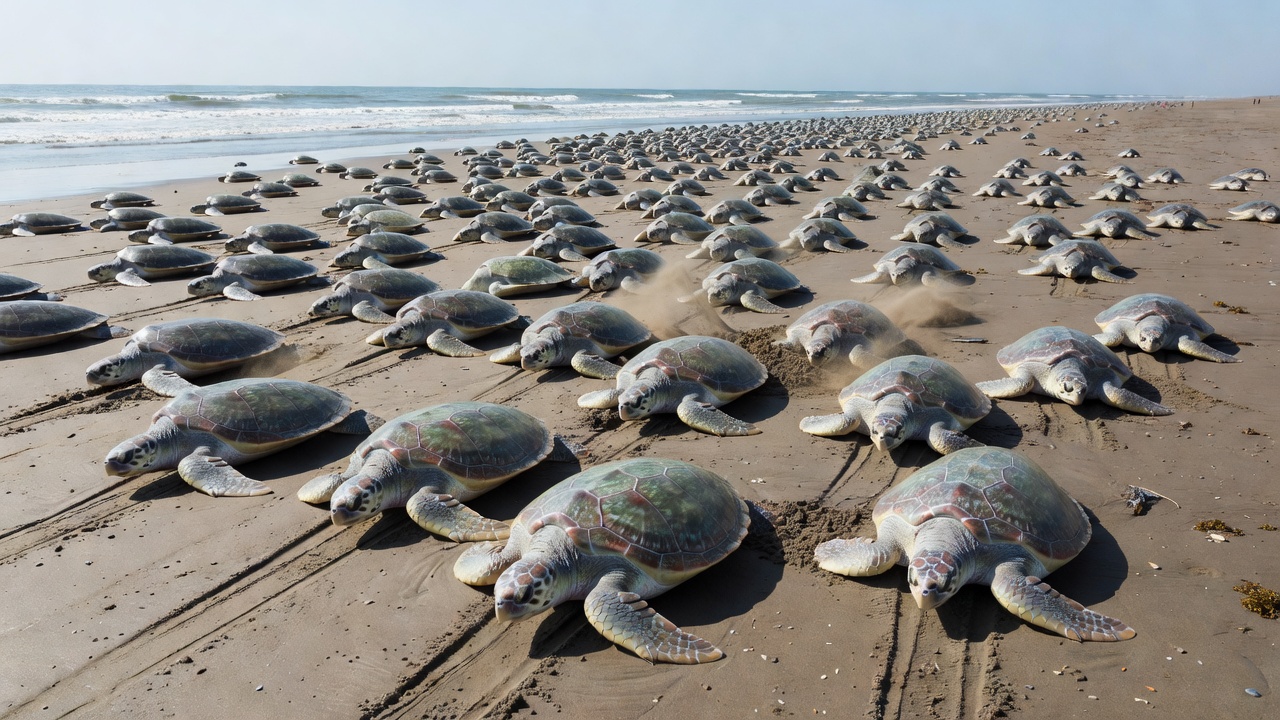
The arribada phenomenon drew hundreds of thousands of olive ridley turtles to the protected shoreline in southern Mexico, where females deposited clutches of eggs across the sand in a synchronized rush that defines this annual spectacle. Al Jazeera reported that more than 300,000 of the turtles surged ashore in the latest event at the sanctuary. This marked the sixth such wave since nesting activity began in March, according to details shared with BBC News.
La Escobilla ranks as the planet’s most significant nesting beach for the species, a status reinforced by consistent high volumes that have followed legal protections enacted decades ago. Profepa figures from the prior season documented nearly 270,000 turtles arriving during one September arribada alone, projecting more than 26 million potential hatchlings from that wave based on an average of 100 eggs per nest. A Phys.org review of longer-term trends showed annual nesting rebounding from roughly 120,000 turtles in the 1980s to peaks exceeding 4 million across Mexican Pacific sites after the 1990 ban on harvesting.
Patrols by Profepa and the Mexican navy have intensified along the 13-kilometer sanctuary stretch to deter poachers, who targeted more than 2,000 eggs during earlier waves in the previous year. The olive ridley remains listed as endangered under Mexican law, with natural survival from hatchling to adult estimated at well below one percent. Hotter and drier weather patterns linked to climate change have added pressure on incubation success, an Al Jazeera dispatch observed from the current season.
Females excavate nests using rear flippers before laying their eggs and returning to the sea, a behavior that concentrates activity into brief intense periods known as arribadas. A Smithsonian Magazine examination of related turtle species described this mass approach as predator swamping, in which overwhelming numbers improve the chance that at least some young will evade birds, crabs and fish waiting along the beach or in nearshore waters. Incubation lasts around 45 days before hatchlings emerge and scramble toward the ocean, with sanctuary teams relocating vulnerable clutches to shielded zones when needed.
Communities bordering the sanctuary have embraced guardianship roles that support both biodiversity and local economies through regulated eco-tourism visits during peak periods. Records compiled by Profepa indicate the beach produced more than 80 million eggs in the 2025 calendar year across multiple waves, underscoring the site’s productivity. Comparable synchronized nesting occurs at a handful of other beaches in Mexico as well as in Costa Rica and India, though La Escobilla maintains the largest consistent scale according to global sea turtle status reports.