
 ع
ع


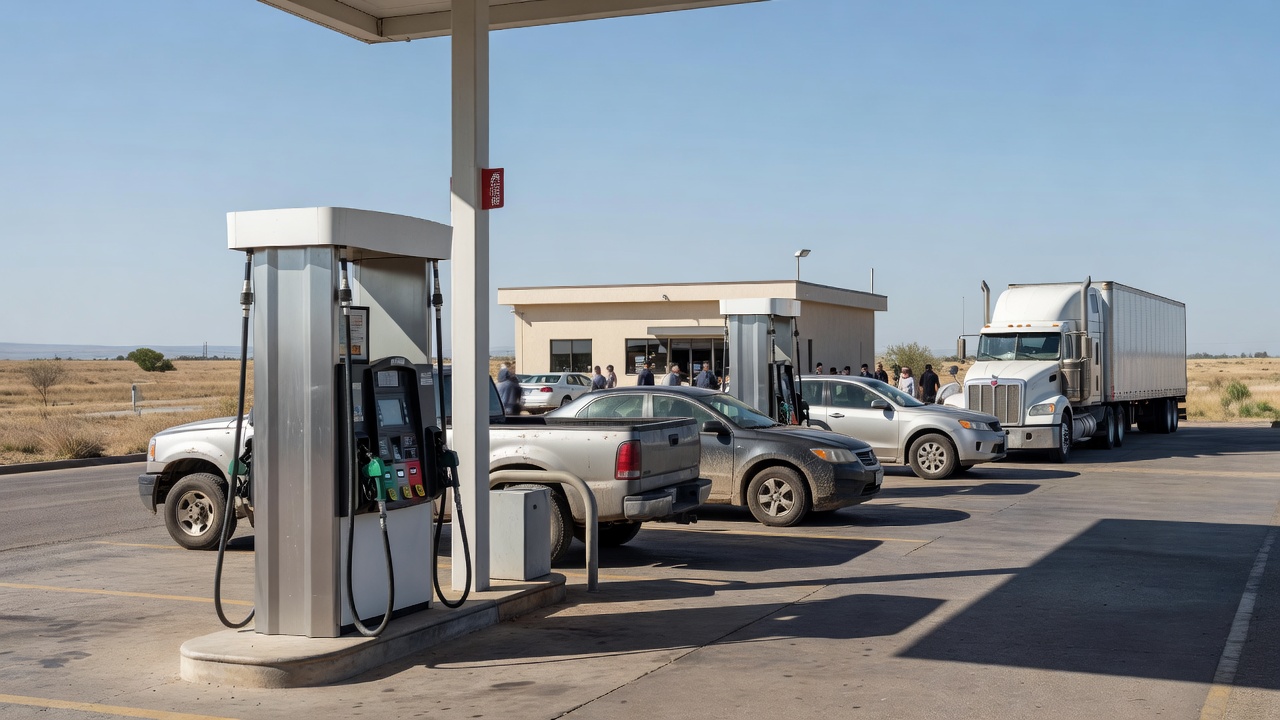
BBC News correspondent Sarah Smith spoke with attendees at the Republican Party’s midterm convention in Texas where the rising cost of fuel emerged as a central concern ahead of the November elections. Many voters and officials deflected questions about whether Trump bore responsibility for the increase, pointing instead to escalations in the Middle East that have disrupted global supply lines. The interviews captured a party eager to maintain unity behind the president’s foreign policy even as domestic prices climb, with several participants arguing that confronting Iran was necessary regardless of the economic fallout. Smith pressed attendees on the potential electoral impact, highlighting how the issue could sway independent voters sensitive to household budgets.
Oil prices jumped more than 3 percent on Wednesday with Brent crude settling at $101.21 a barrel for its highest close since May, Reuters data shows. West Texas Intermediate futures climbed to $96.05 a barrel according to the same figures, marking the sharpest one-day gain in weeks amid attacks on tankers in the Gulf and Houthi strikes on Saudi facilities. The Energy Information Administration revised its forecast upward this week, now projecting Brent to average $91 per barrel for the year, up from an earlier $87 estimate as the conflict stretches supply routes through the Strait of Hormuz. CNN Business reported that these developments have pushed U.S. gasoline averages to $4.22 a gallon while diesel reached a record $5.94.
President Donald Trump told reporters at Joint Base Andrews on Wednesday that oil prices would tumble immediately after the midterms once the Iran conflict ends, according to a CNBC report on his remarks. He framed the military action as essential to prevent a nuclear Iran, stating that voters would understand the temporary pain at the pump when asked if they preferred allowing Tehran to develop weapons. Trump added that the war, now in its seventh month, had already achieved key objectives even if resolution would wait until after the ballots are counted, a position his team repeated at the Dallas gathering. The comments marked a shift from earlier downplaying of the conflict’s duration.
Politico reported that senior Republicans expressed private dismay over the timing of the price spike as they convened in Dallas, with several lawmakers acknowledging the threat to their midterm message on affordability. Senator Susan Collins told the outlet that gas prices could not be hidden from voters but defended the administration’s Iran strategy as a long-term necessity that would ultimately stabilize energy markets. Other figures, including Sen. Tim Scott, placed the onus on Congress to address spending while conceding that the president’s actions against Iran had contributed to current costs, according to the same account. The gathering underscored a broader anxiety that the issue might overshadow recent policy wins on tariffs and deregulation.
The U.S. strategic petroleum reserve has fallen below 300 million barrels this year after releases intended to blunt the war’s impact, a Boston Globe analysis of Energy Department data found. This depletion comes as global benchmarks remain elevated, with Goldman Sachs and other banks lifting their price outlooks for late 2026 in response to persistent Hormuz disruptions. Industry observers noted that diesel prices in particular have strained logistics and farming sectors, amplifying the political pressure on Republican candidates in rural districts. Reuters surveys of market participants indicated that roughly 70 percent expect the Federal Reserve to hold rates steady next week amid the inflation signals from energy.
A Washington Post-ABC News-Ipsos poll conducted in July placed Trump’s economic approval at 35 percent, with 28 percent of Republican voters saying his policies had worsened conditions, up from 18 percent earlier in the year according to Pew Research Center data referenced in Newsweek. The survey found that while most in the party still credit Trump with confronting Iran, a growing minority links the resulting energy inflation directly to his decisions. GOP strategists cited in the coverage warned that sustained prices above $4 for gasoline could erode support in key battlegrounds if the conflict shows no signs of abating before November. Party officials at the convention sought to redirect focus toward Democratic alternatives on energy production.