ع
ع


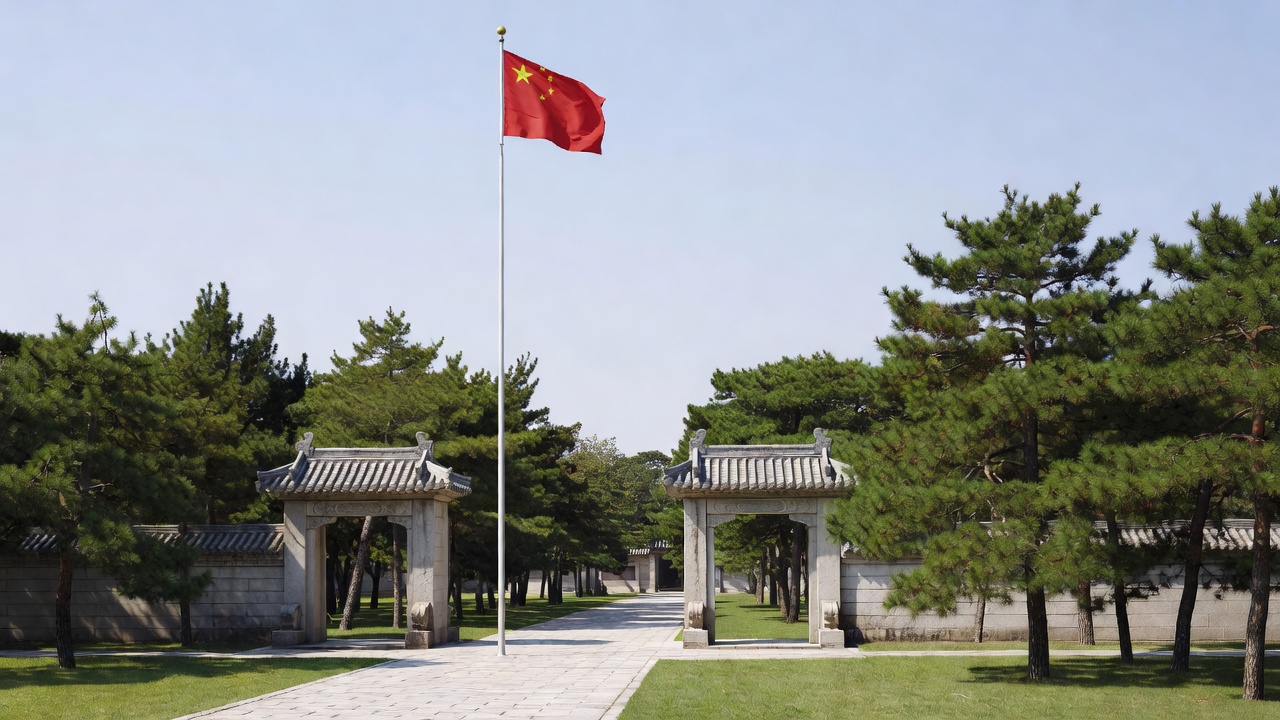
China conducted the funeral for former premier Zhu Rongji at Babaoshan Revolutionary Cemetery in Beijing on Tuesday with President Xi Jinping, Premier Li Qiang and former president Hu Jintao among those in attendance, state media reported. The ceremony remained low-key with no footage released to the public while flags flew at half-mast at government sites nationwide including in Hong Kong, Macau and overseas diplomatic missions, according to Xinhua. Security vehicles filled central Beijing districts as authorities managed public reactions to the death of the 97-year-old reformer who passed away on August 12, Reuters reported from the scene.
Online tributes to Zhu have faced strict controls with many posts removed from social media platforms shortly after appearing, The New York Times reported. An essay by economist Zhao Jian that recalled life during Zhu’s time in office was taken down from WeChat the day after it circulated, according to the BBC. Comments describing Zhu as “a good premier for the people” also disappeared as censors worked to contain any wave of nostalgia, the newspaper added.
Authorities appeared wary that public mourning could shift into veiled criticism of the current leadership, a pattern Reuters noted in coverage of the subdued handling of recent former premiers’ deaths. A Citizen Lab analysis of the 2023 death of former premier Li Keqiang documented similar surges in censorship across search platforms including Weibo and Baidu when users raised comparisons to the present. The New York Times recalled how mourning for Hu Yaobang in 1989 had escalated into wider protests, a precedent that continues to shape official responses.
Zhu served as premier between 1998 and 2003 and drove changes that an Associated Press report credited with helping maintain annual economic growth above 8 percent from 2000 to 2010, a period that peaked at 14.2 percent in 2007. His government completed China’s entry into the World Trade Organization in 2001 after years of negotiations, a step the AP said transformed the country into the world’s largest exporter. Those reforms included large-scale restructuring of state-owned enterprises that reduced urban state-sector employment by 34 million jobs or 30 percent in Zhu’s first four years, according to a Brookings Institution assessment from the period.
A Reuters commentary highlighted how Zhu’s 1994 fiscal overhaul strengthened central government revenue collection yet left local authorities dependent on land sales and off-balance-sheet financing, dynamics that still weigh on the economy. The country’s trade surplus swelled to a record $1.2 trillion last year amid weakening domestic demand and global pushback against Chinese exports, the outlet’s analysis found. Such outcomes have fueled online reflections on the contrast between Zhu’s market-oriented push and more recent policy directions.
Social media users shared photographs of Zhu with Jiang Zemin and recounted his direct speaking style even as platforms limited broader discussion, the BBC reported. In one circulated excerpt from a documentary Zhu declared, “I’m not here to talk about pros and cons. I am here to talk about how to get things done.” South China Morning Post coverage indicated that while some government websites turned black-and-white in tribute, street-level conversations in Beijing stayed restrained with residents declining to comment on the sensitive topic.