ع
ع


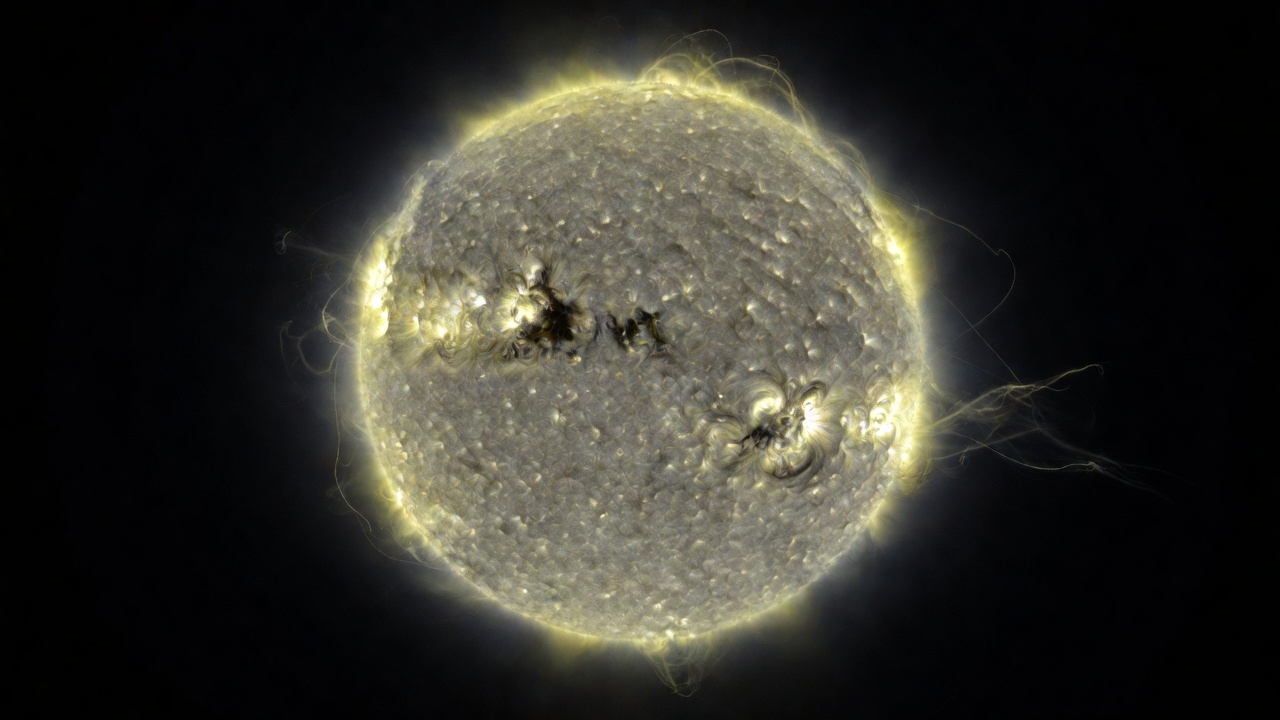
Researchers led by Prof R Ramesh at the Indian Institute of Astrophysics analysed observations from the Visible Emission Line Coronagraph instrument on Aditya-L1 of an energetic coronal mass ejection that occurred on 5 August 2024. The data revealed that tangled magnetic field lines reconnected within roughly 10 hours after the eruption, reconfiguring the corona’s energy. Prof Ramesh stated that if the corona were not replenished it would cool rapidly with serious implications for the Sun and Earth. He added that the study supplies a benchmark for addressing fundamental physics questions about the star’s atmosphere.
The Sun’s corona reaches temperatures between 2 million and 40 million degrees Celsius while its visible surface sits at around 5,500 degrees, a disparity that has challenged physicists for decades according to multiple international assessments. Coronal mass ejections originate in this outer layer and can trigger auroras or disrupt terrestrial technology when directed at Earth. The Indian Institute of Astrophysics assessment found that surface waves generated by boiling motions supply only 7 percent of the required energy while magnetic reconnection delivers the remaining 93 percent. Such findings align with broader efforts by agencies including NASA and ESA to model space weather impacts.
Times of India reports indicated that Aditya-L1’s Solar Low Energy X-ray Spectrometer captured iron fluorescence during 47 powerful X-class solar flares in its first year of operations from the L1 point. These observations, published in the journal Solar Physics, provide new details on flare origins high in the solar atmosphere. The instrument detected characteristic 6.4 kiloelectronvolt X-rays produced when flare emissions strike neutral iron atoms in the photosphere. ISRO data from the mission has similarly documented coronal dimming of up to 50 percent during a separate July 2024 ejection event.
A separate study drawing on Aditya-L1 measurements together with six American spacecraft examined the May 2024 extreme solar storm known as Gannon’s storm. The Astrophysical Journal Letters paper identified a magnetic reconnection zone inside the associated coronal mass ejection measuring roughly 1.3 million kilometres across or nearly 100 times the diameter of Earth. This scale had not been captured in prior observations and helps explain the event’s exceptional intensity. The coordinated data sets have advanced forecasting capabilities for events that threaten satellites, power grids and communication networks.
Aditya-L1 launched aboard a PSLV rocket in September 2023 and reached its halo orbit around the Sun-Earth L1 Lagrange point 1.5 million kilometres from Earth in January 2024 according to ISRO announcements. The spacecraft carries seven instruments including the Solar Ultraviolet Imaging Telescope that simultaneously views multiple atmospheric layers to track energy transfer. ESA provided ground station support from deep-space antennas in Australia, Spain and Argentina during the mission’s critical phases. The Visible Emission Line Coronagraph has delivered India’s first spectroscopic views of coronal mass ejections in visible wavelengths.
ISRO has released substantial data sets from the mission’s first full year of science operations with additional papers emerging through 2025 and into 2026. These include detections of plasma ejections travelling at 1,500 kilometres per second and detailed mapping of solar wind particles. The findings contribute to an international fleet of solar observatories that includes NASA’s Parker Solar Probe and ESA’s Solar Orbiter. Continued analysis is expected to refine models of chromospheric and coronal heating processes central to understanding the Sun’s 11-year activity cycle.