ع
ع


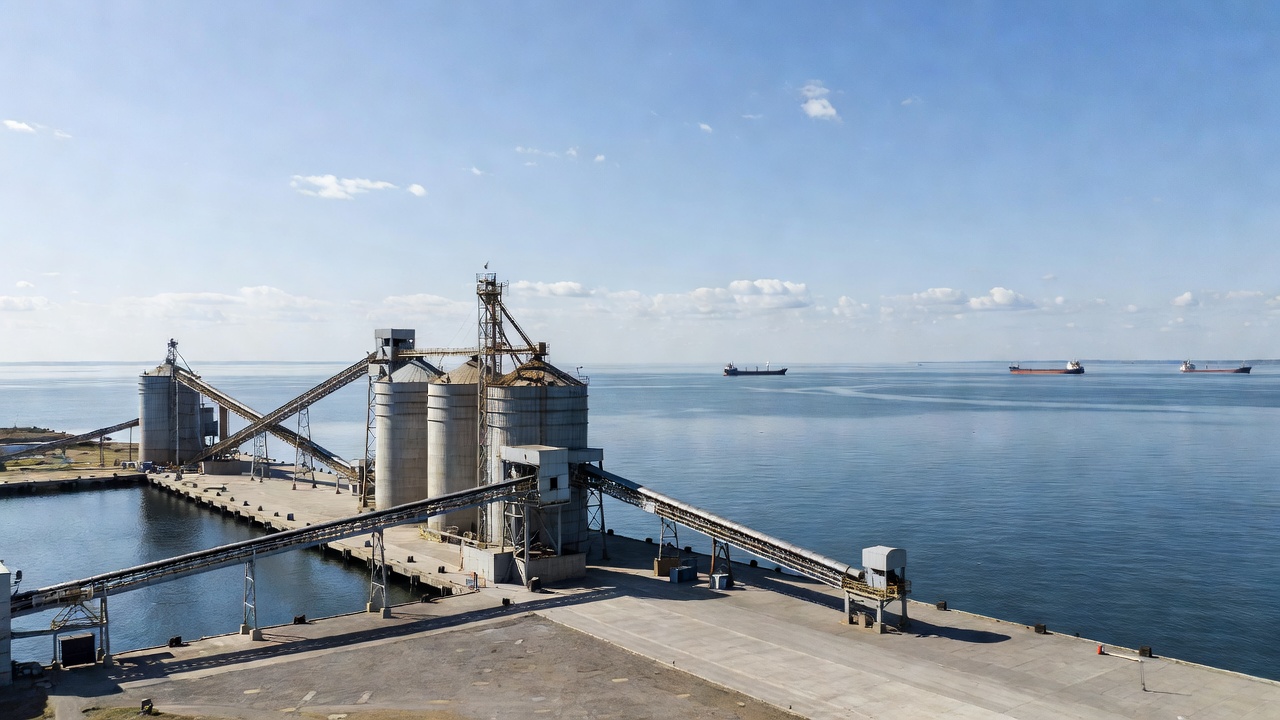
Reuters reported that two of Russia’s biggest grain terminals at Novorossiysk suspended operations following the overnight Ukrainian strikes, with the Novorossiysk Grain Terminal owned by Demetra Holding sustaining damage to a loading gallery and truck unloading facility that forced an immediate shutdown pending assessment. The NKHP terminal, which has an annual export capacity of 7.1 million metric tons, was also hit and halted work, according to its principal owner OZK which said in a statement that nobody had been hurt there and that further details would follow. A third facility known as KSK sustained damage as well, people familiar with the matter told Bloomberg. The Russian agriculture ministry said it was redirecting cargo flows toward ports in the Baltic and Caspian Seas plus land routes while taking into account current logistical constraints.
The assault also targeted Russia’s last major naval base on the Black Sea, where most of its fleet has been stationed since Sevastopol in occupied Crimea became too vulnerable to attack. Ukraine’s military stated that four Russian warships including two frigates were hit during what President Volodymyr Zelensky called a unique operation involving rockets, jet drones and naval drones. Zelensky posted on social media that the occupying fleet and all the infrastructure that supports it will not be safe as long as Russian aggression continues. Russia has offered no comment on the warship claims.
Local officials said three people including an eight-year-old child were killed and 24 others injured in Novorossiysk, where an emergency situation was declared after the drone barrage damaged pipelines and suspended the city’s water supply. Krasnodar region Governor Veniamin Kondratyev reported that a man was killed by drone debris elsewhere in the area, with several locations struck by several hundred drones overnight and dozens of buildings including homes damaged. Repeated explosions rang out as Russian air defences engaged the incoming objects throughout the night.
Russian forces for their part conducted aerial strikes that killed at least 11 civilians in Ukraine between Tuesday and Wednesday, with the majority dying in the southern city of Zaporizhzhia after ballistic missiles and glide bombs hit, Ukrainian authorities said. The Novorossiysk attack fits an uptick in Black Sea exchanges this summer following a period of relative calm in the maritime theater. SovEcon agriculture consultancy projected that Russian wheat exports for August could fall to between 3 million and 3.4 million tonnes, the lowest level since the 2016-17 season.
Ukraine’s agriculture minister told Reuters earlier in the week that Kyiv had cut its 2026-27 grain export forecast to 38-40 million tons from a prior 43 million projection after Russian attacks effectively halted shipments from the Odesa port hub. Russia’s Union of Grain Exporters and Producers warned that prolonged shutdowns of Black Sea export routes could reduce the country’s wheat exports by 30 million to 35 million tonnes this season. The International Food Policy Research Institute has noted that Russia and Ukraine together accounted for about 32 percent of global wheat trade in the 2025-26 period, most of it moving through the Black Sea.
Russian foreign ministry spokeswoman Maria Zakharova accused Ukraine of carrying out strikes on grain and agricultural infrastructure that have driven higher global food prices and growing shortages. She added that Russia would continue striking facilities that Ukraine’s armed forces use on the Black Sea to destabilise the navigation situation until the full elimination of threats to security projected to the Sea of Azov and the Black Sea. The mutual port and vessel attacks have disrupted flows for both countries since Russia launched its full-scale invasion in 2022, ending the 2022 Black Sea Grain Initiative after Moscow resumed targeting Ukrainian maritime corridors the following year.