

 ع
ع


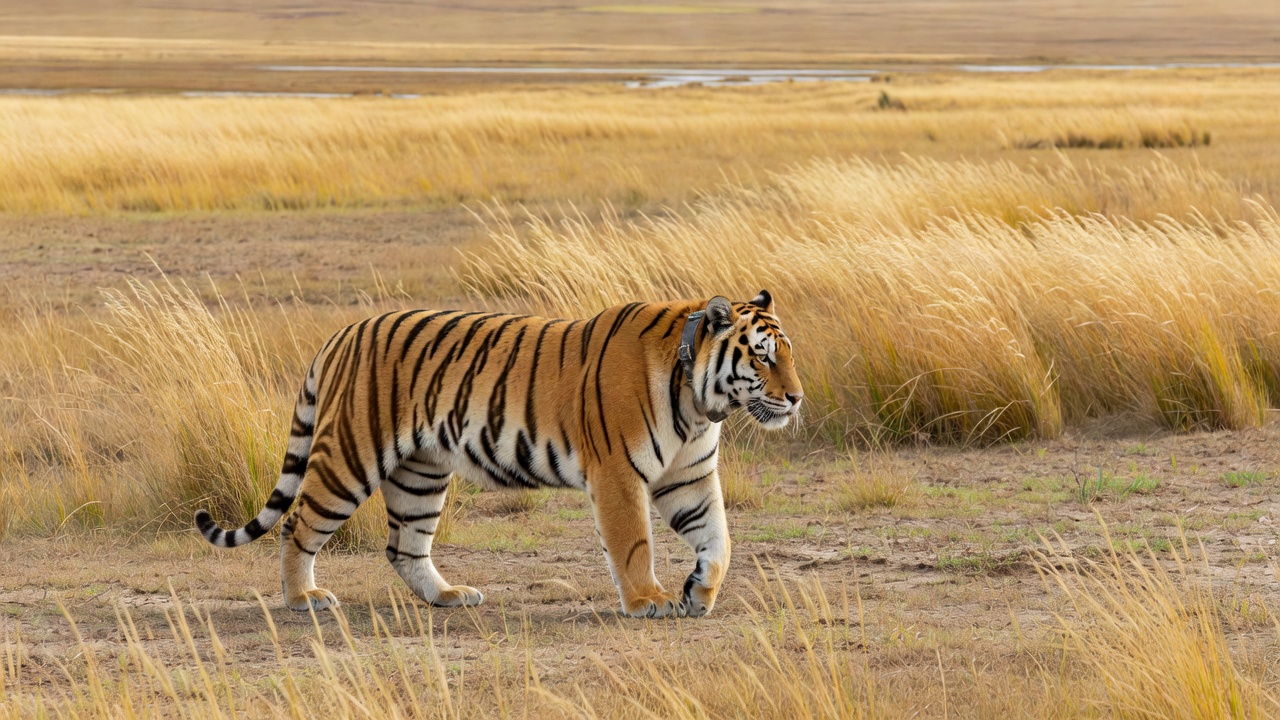
Kazakhstan’s environmental authorities oversaw the release of the adult female Amur tiger into a carefully prepared section of the Ile-Balkhash State Nature Reserve last week. Umit had spent several months in an acclimatisation enclosure to familiarise herself with local conditions and prey according to updates from the national conservation programme. Video footage of the event circulated by international broadcasters including the BBC captured her emerging from the crate and surveying the surrounding landscape before moving off into the reserve. Monitoring equipment fitted to the animal will transmit location data to specialists for the coming months.
The initiative forms part of a larger effort to reintroduce tigers to Central Asia more than seven decades after the Caspian tiger vanished from the region. Historical records compiled by the UNDP indicate the last Caspian tiger in Kazakhstan was killed in 1948 with poaching agricultural expansion and prey depletion cited as primary causes. Amur tigers sourced from the Russian Far East serve as the closest living relative and have been selected for their genetic compatibility in the rewilding project.
Project planners aim to establish a minimum viable population of 50 tigers within the reserve by 2035 according to documentation for the Siberian Tiger Introduction Project. The protected area spans thousands of square kilometres where prey species have been deliberately bolstered over recent years to support the returning predators. The UNDP has backed the multi-year project which began planning over a decade ago and entered active implementation in 2021.
Four Amur tigers were transported from Russia in the first half of 2026 as the initial cohort for the reintroduction the Astana Times reported ahead of their arrival. Umit’s positive adaptation during quarantine and trial periods led to her selection as the first to enter the wild with the other three scheduled for phased releases pending her progress. Collaboration between Kazakh Russian and international conservation bodies has been central to every stage from animal selection to logistical planning.
The UNDP project for reintroducing the Turan tiger lists December 2026 as its current end date with progress reports issued annually. Kazakhstan first signalled interest in the Amur tiger substitution approach more than ten years ago paving the way for the current releases. Additional tigers from the initial group of four are set to follow Umit once her integration is confirmed through field observations.