
 ع
ع


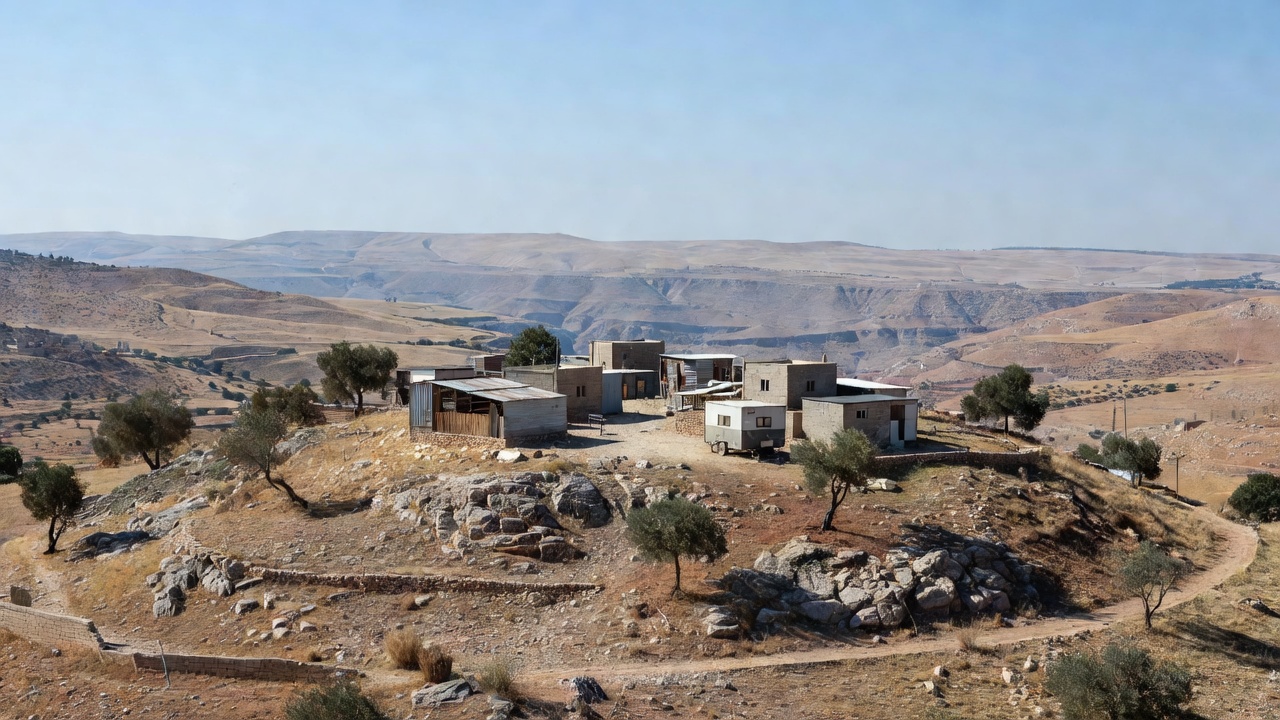
Yehuda Shimon, a lawyer who represents Israelis detained for violence against Palestinians, spoke with the BBC at the Havat Gilad outpost in the occupied West Bank. According to the broadcaster, Shimon justified a recent wave of settler attacks on Palestinian villages following the death of an Israeli security guard from the outpost in a confrontation the previous Friday in Tal village. The BBC reported that four Palestinians and an Israeli soldier were killed in the ensuing violence, with the original cause of the incident remaining disputed. Shimon told the outlet that such actions were necessary retaliation, naming the villages of Tal, Sarra, Jit and Farata as targets.
In the interview with the BBC, Shimon equated the value of one Jewish life with millions of Palestinian ones and acknowledged that his position could be interpreted as racist while attributing it to a belief that God chose the Jewish people. The settler added that Palestinians in the area should either live quietly under Israeli ownership of the land, emigrate voluntarily to other countries or face elimination if they resisted. According to the BBC account, Shimon also criticised the Israeli government and army for not sufficiently backing Jewish settlers or using lethal force against Palestinians, claiming this hesitation led to Israeli deaths. He further accused media organisations of adopting the Palestinian narrative and called for removing Palestinians from the region entirely.
Havat Gilad was established more than two decades ago in memory of a murdered Israeli security officer and was granted legal status by the Israeli government in 2018, according to records compiled by the Foundation for Middle East Peace. Peace Now monitoring group data indicate that parts of the outpost were built on privately owned Palestinian land from the villages of Tell, Jit and Farata, prompting recent Israeli Civil Administration declarations of additional state land nearby in 2025 to facilitate further development rather than full retroactive approval. The group reported that the Israeli army protects the site, which houses dozens of families, even as international law deems such outposts in occupied territory illegal. B’Tselem, an Israeli human rights organisation, has tracked similar outpost expansions as contributing to ongoing friction with surrounding Palestinian communities.
United Nations Office for the Coordination of Humanitarian Affairs figures show 1,420 incidents of settler violence across the West Bank in 2024, an increase from 1,189 the previous year and the highest annual total since monitoring began in 2006. The agency documented at least five Palestinians killed by settlers that year along with 356 injured, while Amnesty International reported in a June 2026 assessment that settler attacks had displaced more than 5,900 Palestinians between January 2023 and April 2026, with 117 communities affected fully or partially. B’Tselem data places the sharpest rise in both frequency and severity of such attacks after October 2023, describing a pattern of ethnic cleansing in certain areas through violence, intimidation and restricted access to land. A separate academic analysis published in 2025 found Palestinian death rates from conflict in the West Bank exceeded those of Israelis by a factor of more than five over the preceding decade.
Israeli President Isaac Herzog condemned settler violence as shocking and serious in a November 2025 statement reported by PBS, urging state authorities to eradicate the phenomenon. The Israeli army chief of staff echoed that position, telling reporters that the military would not tolerate a minority of criminals undermining broader security efforts, according to the same coverage. A United Nations inquiry released in June 2026 found Israeli forces often shielded settlers during attacks on Palestinians, a claim that Israeli authorities rejected as biased while reiterating their condemnation of violence and commitment to counterterrorism operations. Prime Minister Benjamin Netanyahu directed forceful measures including home demolitions and permit revocations in response to specific incidents, Al Jazeera reported in July 2026.
Palestinian residents near Havat Gilad told the BBC they felt unprotected by Israeli forces, which they said prioritised settler security over their own safety during the weekend attacks. One villager described the situation as very bad, with constant uncertainty about when the next incident might occur. The broadcaster noted that the outpost’s expansion under successive right-wing Israeli governments, including with far-right ministers, has heightened tensions in the Nablus area. According to OCHA updates, settler-inflicted injuries have averaged more than three per day in recent years, compounding the displacement and property damage tallied in annual reports.