ع
ع


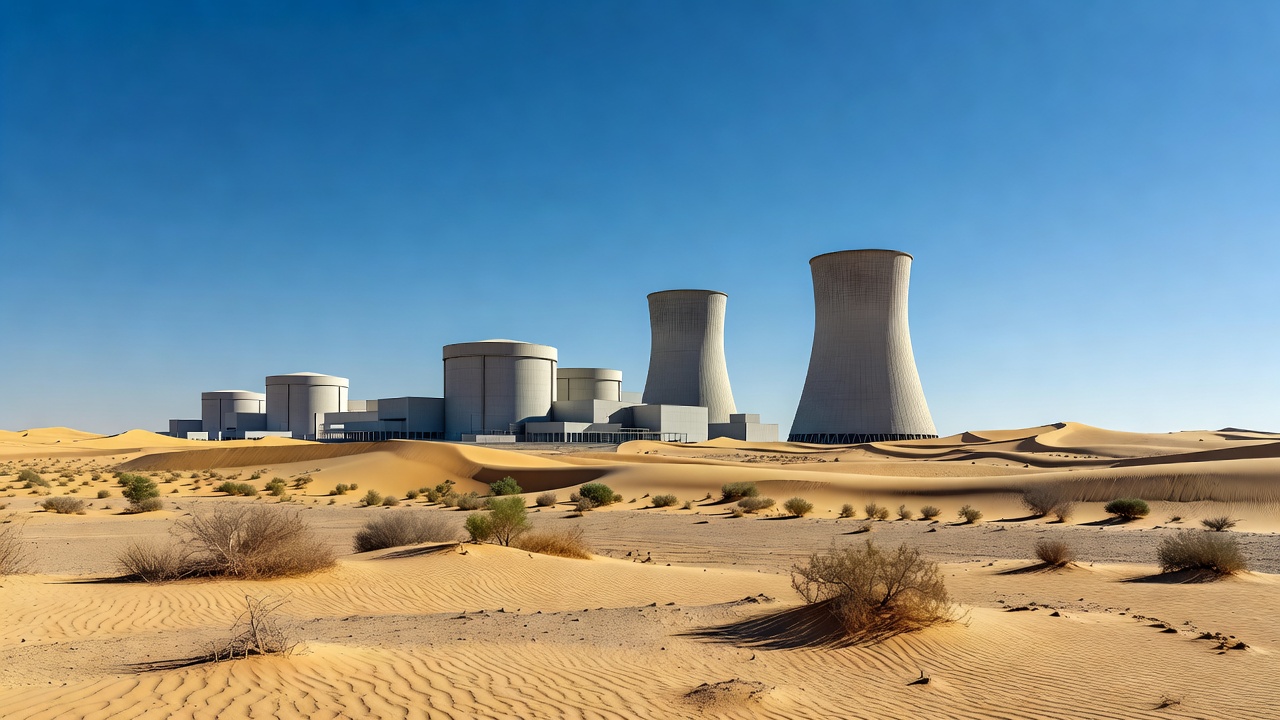
The agreements consist of a peaceful nuclear co-operation pact and a bilateral safeguards accord whose texts have not been released to the public, the US Department of Energy reported. Secretary of Energy Chris Wright said in an accompanying statement that the pacts uphold the highest standards of nuclear safety, security and nonproliferation while relying on American technology. A Reuters analysis published the same day noted that the deal would allow US companies to construct nuclear facilities on Saudi soil, potentially including enrichment capabilities for reactor fuel that previous American administrations had resisted granting.
Saudi Crown Prince Mohammed bin Salman has pursued nuclear energy as a cornerstone of the kingdom’s Vision 2030 diversification strategy since its launch in 2016, according to a 2025 International Energy Agency assessment that projected the country’s power demand doubling by 2030. The International Atomic Energy Agency documented Saudi Arabia’s plans to deploy up to 17 gigawatts of nuclear capacity by 2040 through reactor construction and associated fuel-cycle infrastructure. Bloomberg reported that American firms such as Westinghouse are positioned to secure contracts worth several billion dollars under the new partnership, shifting potential business away from Russian and Chinese suppliers that had previously engaged Riyadh.
US Secretary of State Marco Rubio stated that Washington would not conclude any nuclear agreement risking proliferation in the Middle East. The bilateral safeguards mechanism draws on the precedent of the 2009 US-UAE accord, which prohibited local uranium enrichment and required reliance on internationally supplied fuel, a Congressional Research Service report from June 2026 recalled. Arms Control Association analysts told Reuters that confirmation of domestic enrichment rights for Saudi Arabia would mark a policy departure with long-term implications for regional stability.
The signing occurs against a backdrop of intensified US-Iran hostilities during which Iranian proxies have launched multiple strikes on American bases hosted by Saudi Arabia, according to a Pentagon summary released in March 2026. A separate Defense Priorities assessment flagged the Houthi maritime blockade in the Red Sea as further evidence of the unstable environment surrounding any nuclear expansion. Rosemary Kelanic, a senior fellow at Defense Priorities, described potential US approval of Saudi enrichment facilities on their soil as quite shocking because Washington has never before assisted another country with such infrastructure.
Congress must still review the agreements, where Democratic lawmakers have already voiced strong reservations tied to Saudi human rights practices and Yemen policy. Senator Edward Markey said the deal would allow a belligerent and authoritarian nation to develop nuclear weapons technologies while the United States pursues conflict with Iran under the pretext of stopping an Iranian bomb. Energy consultant Bob McNally countered that the pact represents a win by securing a major Middle Eastern country’s nuclear partnership with the United States rather than with rival suppliers.
Saudi efforts to secure a civilian nuclear agreement with Washington date to the George W Bush administration, yet earlier talks repeatedly stalled over nonproliferation conditions and demands for Israeli diplomatic normalization that have now been dropped, a State Department historical review indicated. The International Energy Agency’s latest World Energy Outlook placed Saudi Arabia among the fastest-growing prospective nuclear markets in the Gulf, forecasting that regional capacity could triple by 2035 if current plans proceed. Industry filings reviewed by Reuters show that multiple US engineering groups have maintained preparatory teams in Riyadh for more than two years awaiting precisely this type of bilateral framework.