ع
ع


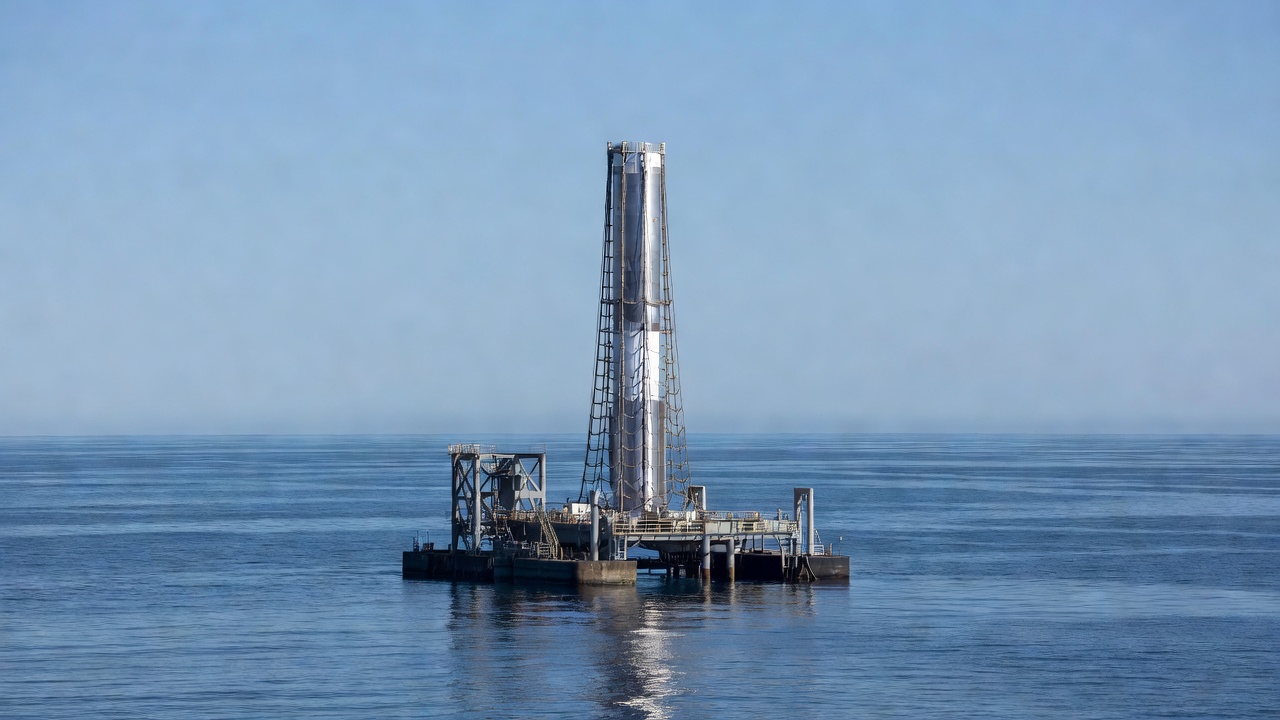
The China Aerospace Science and Technology Corporation launched the Long March 10B from the Hainan Commercial Space Launch Site at 12:15 p.m. local time on July 10, 2026, with the first stage separating and returning vertically roughly six minutes later. State broadcaster CCTV reported that the booster was captured using a net and cable system on an offshore platform rather than deploying landing legs. CASC officials wrote in a statement that “The launch and first-stage recovery missions were a complete success.” The agency added that the recovered booster could be reflown before the end of the year.
The two-stage vehicle stands 63 meters tall and can deliver at least 16 metric tons to low-Earth orbit when configured for reusability, according to technical specifications reviewed by Space.com. Unlike the Falcon 9, which has performed autonomous landings on pads or drone ships since its first success in December 2015, the Long March 10B relies on four hooks to snag the sea-based net, a Reuters dispatch from Beijing explained. This approach marks a deliberate design choice for China’s initial orbital recovery system.
China has now become the second country to recover an orbital-class booster following the United States, multiple space tracking outlets including Space.com confirmed on July 10. A SpaceNews compilation of industry data shows that SpaceX’s Falcon 9 has flown more than 100 missions per year in recent cycles with individual boosters flying as many as several dozen times. Such reuse has substantially lowered per-launch costs for satellites and crewed flights, a benchmark Chinese developers aim to match through iterative tests.
Earlier domestic attempts at recovery included a Long March 10A booster that achieved a controlled splashdown near a platform in February 2026, state media archives indicate. Private firms encountered setbacks, with LandSpace’s Zhuque-3 reaching orbit in December 2025 but crashing its first stage on a recovery pad rather than landing softly, an Ars Technica summary of those flights noted. CASC had signaled its reusable rocket roadmap to lawmakers in 2024 with test targets set for 2025 and 2026, a deputy to the National People’s Congress told China News Service at the time.
Shares in several Chinese space-related companies rose by the maximum 10 percent allowed under market rules immediately after the recovery was announced, according to trading records cited by Reuters. The reaction reflects expectations that operational reusability will expand China’s commercial launch capacity and support growing satellite constellation projects. Industry observers highlighted the flight as fulfilling long-standing national plans to close the gap with American reusable launch providers.
The test forms part of a broader push by both state-owned enterprises and private Chinese firms to develop multiple reusable rocket families, a 2024 SpaceNews assessment of CASC and commercial timelines found. Companies such as Deep Blue Aerospace have conducted their own vertical landing demonstrations with smaller vehicles in recent years, adding momentum across the sector. Further refinements to the net recovery technique are expected as CASC scales the technology toward routine operations.