ع
ع


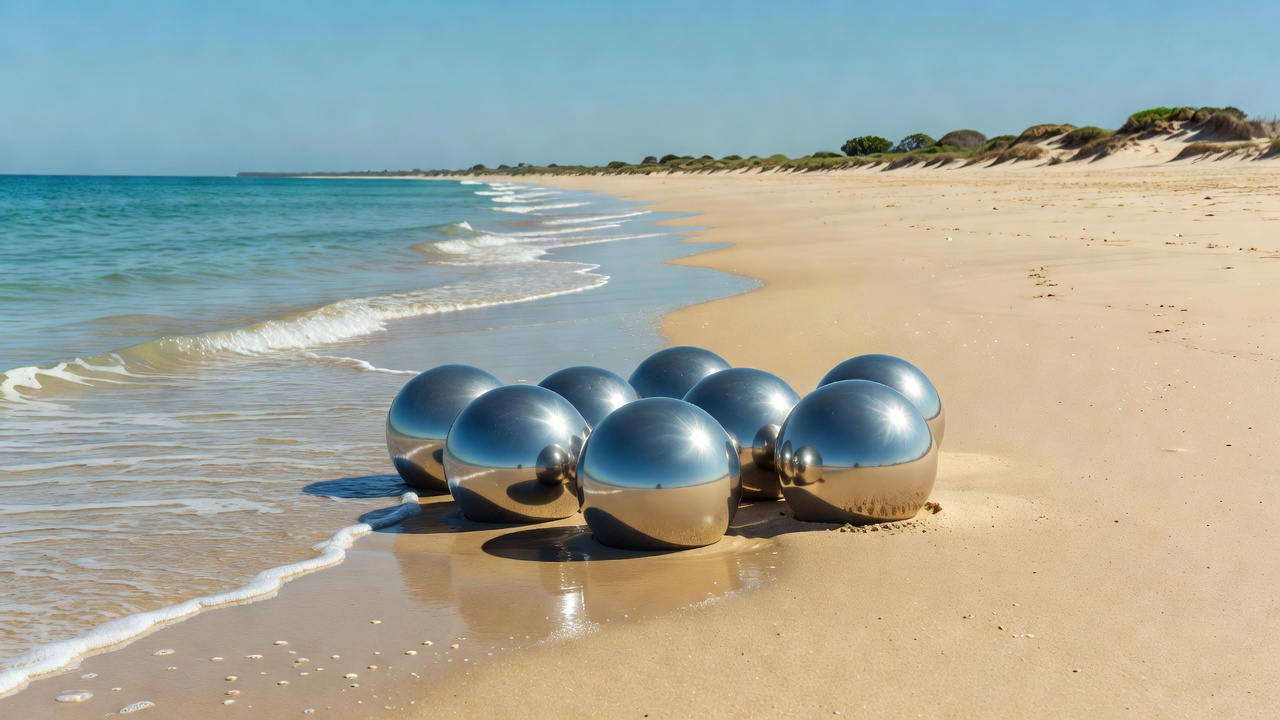
The discovery began when a fisherman spotted the unusual objects along the shoreline around 2.30pm on Friday, prompting an immediate call to emergency services that escalated into a coordinated response involving multiple agencies. According to 7News, four mysterious metallic canisters initially washed ashore at Forrest Beach, with two more found the following day, leading police to maintain 50-metre exclusion zones around each while Queensland Fire Department crews in protective suits secured them into hazmat drums. The department warned that additional debris could appear in coming days and advised residents to avoid any suspicious items and contact authorities immediately.
Reports from local police and emergency services confirmed the spheres as space debris likely serving as propellant tanks from a satellite or rocket, with the highly toxic and flammable hydrazine fuel posing risks of chemical exposure if compromised. A national security team was deployed to oversee the operation, which included a temporary closure of sections of the beach stretching up to three kilometres in some accounts. The objects have since been rendered safe for further analysis and removal by partner agencies.
In a statement, the Australian Space Agency said it was supporting local authorities in relation to the suspected space debris located at Forrest Beach in North Queensland as efforts continued to identify the precise source. The agency has not yet pinpointed which spacecraft or launch produced the tanks, though speculation centers on standard components used in orbital missions. This incident marks another example of re-entering debris reaching inhabited coastlines.
Forrest Beach Takeaway owner Lisa Scobie told ABC that the quiet community experienced a surge of excitement from the unusual activity and heavy emergency presence. She noted that little typically happens in the area, making the event a notable distraction for locals. “It’s very quiet, not a lot happens here. So having a lot of extra activity… that definitely created a little bit of excitement,” Scobie said.
Similar objects have appeared on Australian shores before, including a giant metal dome confirmed by India in 2023 as part of a Polar Satellite Launch Vehicle that washed up near Perth in Western Australia. According to earlier assessments, a comparable spherical tank was discovered in Namibia in 2011 and assessed by experts as a fuel bladder containing hydrazine from an unmanned rocket. These cases highlight the global challenge of tracking space hardware that survives atmospheric re-entry.
The European Space Agency data shows that more than 6,050 launches over six decades have created some 56,450 tracked objects in orbit, with around 28,160 still circling the planet as of recent counts. NASA’S Orbital Debris Program Office figures indicate that an average of one cataloged piece of debris has fallen back to Earth each day for the past 50 years, though most incidents cause no confirmed injuries or property damage as they land in oceans or remote areas. The office notes that components surviving the intense heat of re-entry often end up in regions such as the Australian outback.
Current operations focus on safely disposing of the secured canisters while the multi-agency team analyzes any markings or features that could reveal their spacecraft of origin. Authorities continue to monitor the coastline for further arrivals as the investigation proceeds. No injuries have been reported in connection with the finds.