

 ع
ع


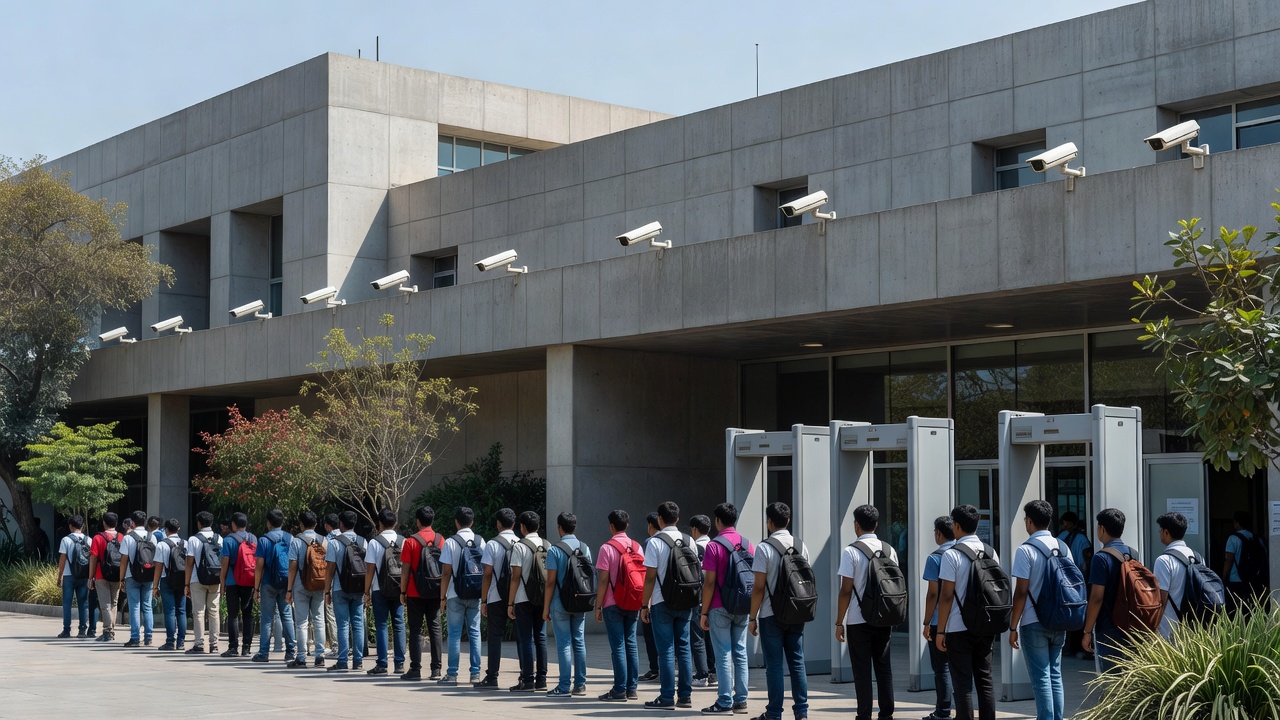
Tight Security as Indian Students Resit NEET-UG Exam After Alleged Paper Leak
Millions of students across India faced stringent security protocols including metal detectors, biometric scans and signal jammers as they resat the NEET-UG medical entrance exam on Sunday, weeks after the original test was scrapped over paper leak claims, according to the National Testing Agency. The agency reported deploying police, paramilitary and even the Indian Air Force for secure transport of papers to more than 5,440 centres nationwide. The cancellation on May 3 affected nearly 23 lakh aspirants seeking admission to undergraduate medical courses, the Times of India reported.
The National Testing Agency installed more than 1.3 million CCTV cameras across over 95,000 exam rooms and used 51,311 jammers to block potential electronic interference during the three-hour-and-15-minute test covering physics, chemistry and biology. Nearly 39,000 staff were assigned to frisk candidates who were also subject to strict dress codes banning items like closed shoes, the agency said in its briefing on security arrangements. It further advised students to disregard social media rumours about further leaks designed to cause stress, according to the NTA statement.
The Central Bureau of Investigation has arrested 13 individuals in connection with the paper leak from cities including Delhi, Jaipur, Gurugram, Nashik, Pune, Latur and Ahmednagar, an All India Radio news alert stated on May 27. The case was handed over to the CBI shortly after the May exam, which saw evidence of questions circulated prior to the test, the Times of India reported on May 13. This marks the first complete cancellation of the NEET-UG since the NTA began conducting it in 2019, according to the same report.
Education Minister Dharmendra Pradhan told students ahead of the resit, “Sit fearlessly, without worry, and you will definitely do well.” His comments came after the initial scandal triggered protests and calls for his resignation, which he resisted, a BBC report noted. One student named Diksha told Reuters there was fear because “the paper has leaked once already. This is not a one-off thing, it happens every year.”
In a similar 2024 NEET-UG controversy, the CBI identified at least 155 students who directly benefited from a leak, according to submissions to the Supreme Court detailed in The Free Press Journal. That incident also led to nationwide protests and a partial retest for some candidates, Wikipedia’s compilation of reports from the period shows. The recurring issues have drawn attention to vulnerabilities in India’s highly competitive medical admissions process, where success rates remain low for the millions who appear each year.
The NTA’s Sunday measures also included temporary blocking of the Telegram app until Monday over cheating concerns and deployment of drones and dog squads at some centres, India Today reported. Pictures from venues showed personnel checking candidates’ accessories and hair for prohibited items. Despite the precautions, concerns persisted among participants who had to prepare again within a short timeframe after the original sitting, one candidate told Reuters.
The exam’s competitiveness has long attracted organised crime elements seeking to exploit it for profit through fraud, multiple Indian media accounts have reported in recent years. The leak probe continues with the CBI, which has emphasised thorough investigation across multiple states to prevent future occurrences, according to updates from Air News. Results from the resit will determine placements for the upcoming academic year in medical institutions nationwide, the National Testing Agency said.