ع
ع


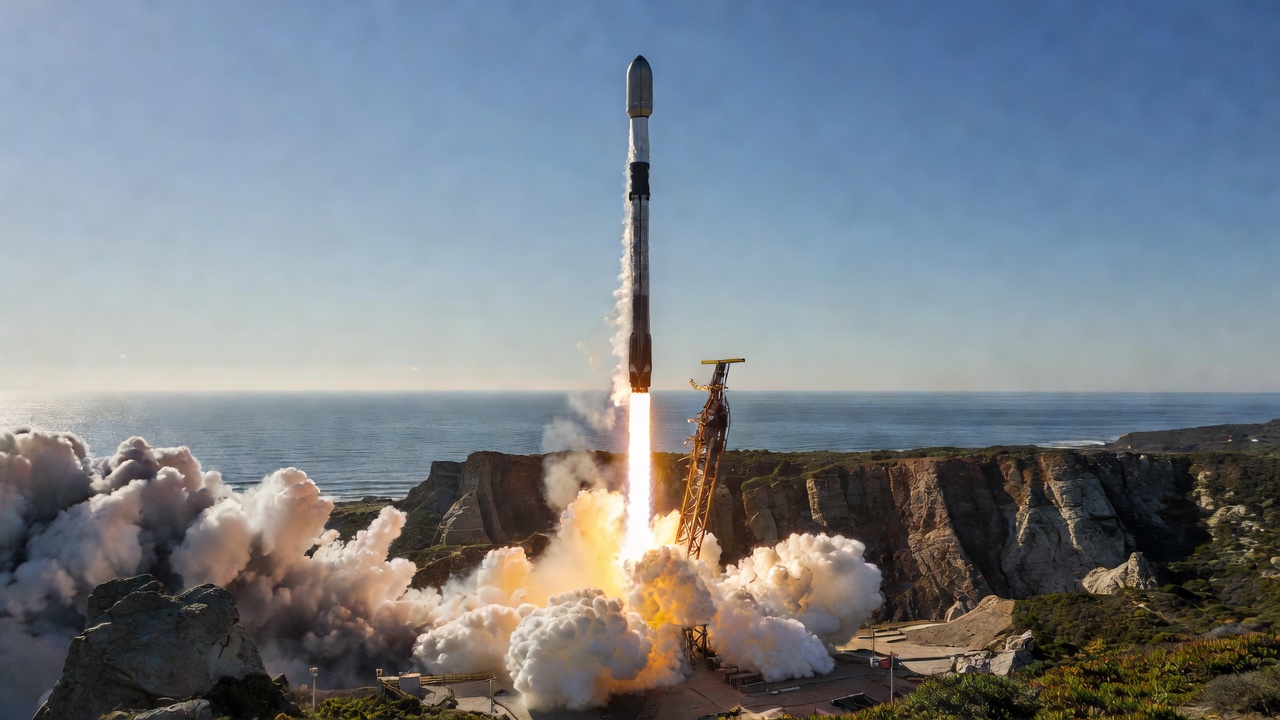
SpaceX launched 24 Starlink satellites aboard a Falcon 9 rocket from Vandenberg Space Force Base on June 15, 2026, the Emirates News Agency reported. The mission successfully deployed the satellites into low-Earth orbit, adding to a constellation that Wikipedia data places at more than 12,430 launched as of June 28, 2026. This launch supports the expansion of broadband internet services globally, including in the UAE where Starlink officially began operations earlier this year.
The WAM article detailed that all 24 satellites were confirmed deployed into their target orbit following the launch. SpaceX stated that the rocket’s first stage successfully landed on a drone ship after completing its boost back burn and entry maneuvers. This marks another routine success in the Starlink program, which has seen dozens of similar missions in the past year alone. A Spaceflight Now report on the mission noted the liftoff time and the polar orbit configuration used for the Group 17 series.
According to a Spaceflight Now report on the mission, liftoff occurred at 8:34 a.m. PT from Space Launch Complex 4 East. The satellites are part of the Starlink Group 17-44 mission, designed for a sun-synchronous polar orbit. Deployment was confirmed roughly 60 minutes after launch, with the satellites expected to raise their orbits using onboard propulsion in the coming weeks. This particular launch was noted as occurring in a period of sustained deployment activity for the network.
Starlink services became officially available in the UAE in March 2026, a Wamda report from that period showed. Residential plans start at AED 230 per month with additional hardware costs, the report added. The UAE has also announced partnerships with Starlink to support digital education in remote communities worldwide, according to an Economy Middle East post. These developments align with the increased satellite capacity from launches like the recent one.
Wikipedia’s list of Starlink launches indicates that Group 17 missions from Vandenberg typically carry 24 v2 mini satellites. The cumulative total has grown steadily, with thousands of v2 mini variants launched to date based on the tracker. The constellation provides broadband speeds suitable for streaming, video calls and other data-intensive applications in areas without traditional infrastructure. SpaceX’s launch page figures show multiple Starlink missions scheduled monthly from U.S. sites.
SpaceX’s launch cadence has accelerated in 2026, with multiple Starlink missions scheduled every month from both U.S. coasts, the company’s launch page figures show. Boosters are frequently reused, with some reaching 15 or more flights before retirement. This efficiency has allowed the company to maintain a high rate of satellite deployment. Industry data from various tracking sources confirm the first stage for recent missions had flown prior Starlink and national security payloads.
In addition to consumer internet, Starlink supports enterprise applications such as maritime connectivity, aviation and remote business operations, a space.com report on similar launches noted. Several GCC countries have granted approvals for various use cases, building on the UAE’s early adoption. The latest batch of satellites will contribute to reducing latency and increasing capacity for these growing sectors, according to statements in the WAM coverage.